Français (France)
  Nederlands (nl-NL)
 Cremation on the beach in Denpasar, in the Indonesian state of Bali, is a funeral practice notable for its open and collective setting. It forms part of Balinese Hindu tradition, where the sea is associated with purification and transition. Families and communities take part in these ceremonies, which, beyond their religious dimension, also serve as important social gatherings. Public cremations reflect the connection between spiritual life and the island environment, and they stand as a distinctive expression of Balinese culture today.
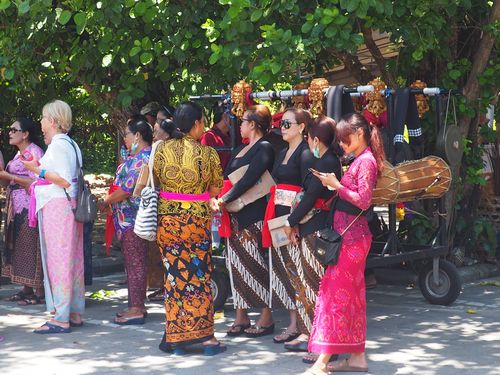
Denpasar • Cremation on the beach
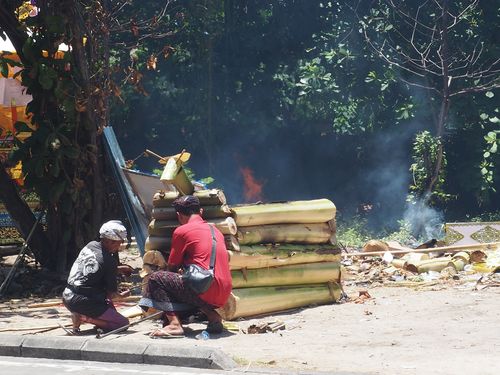
Denpasar • Cremation on the beach
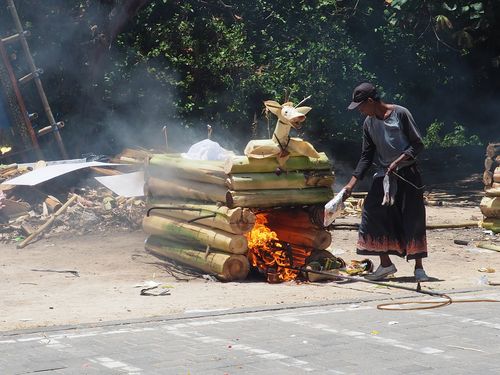
Denpasar • Cremation on the beach
Tradition profile
Cremation on the beach
Tradition category: Hindu celebrations
Tradition family: Religious traditions
Tradition genre: Religious Festivals and Celebrations
Cultural heritage: Hindu
Geographic location: Denpasar, Tirta Empul, Sukawati • Bali • Indonesia
• Links to •
• List of videos about Denpasar, Tirta Empul, Sukawati on this site •
Indonesia • Bali • The island of the Spirits
The History of the Beach Cremation Tradition in Denpasar
The tradition of cremation on the beach, practiced in Denpasar on the island of Bali, is one of the most distinctive expressions of Balinese Hindu culture. Known locally as ngaben or pelebon depending on the social status of the deceased, the ritual combines fire and the sea to mark the passage of the soul to the spiritual realm. Its history reveals a complex interplay of religious beliefs, political authority, social organization, and cultural resilience that has allowed this practice to survive and evolve over centuries.
Political and Social Context of Emergence
The cremation tradition in Bali emerged during the period of Hinduization from around the 9th to 10th centuries. Influenced by Indian models, particularly the funeral practices along the Ganges, Balinese elites adopted cremation as the preferred means of releasing the soul (atma) from the physical body. In Denpasar, the choice of the beach as a setting for the ritual reflected both practical and symbolic factors. The sea was associated with purification and dissolution, while open coastal spaces allowed large numbers of participants to gather.
Politically, cremation ceremonies became a tool for legitimizing authority. Rulers of Bali and aristocratic families staged elaborate cremations to demonstrate their wealth and spiritual merit. The brahmanical priestly class codified the rituals, while communities participated as carriers, artisans, and musicians. This system reinforced the hierarchical order of Balinese society, with nobles and priests at the center and villagers supporting the collective endeavor. Rivalries between dynasties or noble houses often led to increasingly spectacular ceremonies, turning funerary rites into demonstrations of prestige and political power.
Major Historical Events
The cremation tradition was shaped by major historical transformations. Under the Majapahit Empire in the 14th century, Balinese rituals were reorganized to align more closely with Javanese Hindu models, yet the essence of the practice was preserved.
During the Dutch colonial period in the 19th and early 20th centuries, authorities viewed large cremations with suspicion, fearing they might serve as occasions for resistance or communal mobilization. While not banned outright, they were subject to stricter regulation. Despite these constraints, Balinese nobles continued to organize grand cremations, which became symbols of cultural persistence under colonial rule.
Following Indonesian independence in 1945, the tradition regained visibility and official recognition. Leaders of the new republic, seeking to celebrate Indonesia’s cultural diversity, promoted Balinese ceremonies as markers of regional identity within the nation. In Denpasar, high-profile cremations were sometimes supported or publicized by local institutions, embedding them in both religious and civic life.
Global Context at the Time of Emergence
The rise of cremation on the beach in Bali occurred within a broader context of ritual developments worldwide. In India, cremation by the Ganges was a well-established practice. In Southeast Asia, funerary customs varied: burial, secondary burial, or cremation depending on local traditions and religious influences. In China and Japan, Buddhism introduced cremation for monks and elites, though burial remained common for the general population.
In contrast, Europe during the early medieval period had abandoned cremation, favoring Christian burial as the dominant form of funerary practice. This divergence highlights the specificity of Bali’s tradition: while aligning with an Asian pattern of cremation, it developed its own adaptation by integrating the sea as a ritual space.
Transformations of the Tradition
Over time, the beach cremation ritual evolved in its scale, form, and accessibility. Initially reserved for royalty and high-ranking nobles, it gradually spread to other social groups, though differences in scale persisted. Collective cremations, in which several deceased individuals are cremated together, became common as a means of sharing costs and reinforcing communal bonds.
Because the ceremonies are costly—requiring artisans to build funeral towers (wadah), effigies (lembu), musicians, and large quantities of wood—it is common for bodies to be temporarily buried. They may remain in the ground for months or years until families have accumulated sufficient resources or until auspicious dates align, after which they are exhumed for cremation. This practice underscores both the economic and social weight of the ritual.
In the 20th century, Denpasar’s urban growth altered the settings of these ceremonies. While some still take place directly on beaches, others occur in designated open areas or adapted ritual grounds. Tourism has also introduced new dynamics: ceremonies are often witnessed by foreign visitors, and though still religious in essence, they sometimes adopt more elaborate forms that resonate with public visibility.
The Role of the Tradition Today and Its Cultural Importance
In contemporary Bali, cremation on the beach remains a central ritual. For Hindus, it ensures the proper liberation of the soul and its reintegration into the cosmic cycle. It is also a collective celebration that mixes solemnity with festivity: music, dance, and offerings coexist with prayers and purification rites.
The ritual plays a role in shaping social relations. Castes and community groups have clearly defined responsibilities, from priests conducting mantras to villagers carrying funeral towers. The ceremonies reinforce intergenerational bonds, with younger participants learning songs, dances, and crafts essential to the ritual.
On a broader scale, the tradition symbolizes Balinese cultural identity. Within Indonesia, it is presented as a distinctive marker of regional heritage. Internationally, it is recognized as a striking example of living tradition, often highlighted in cultural tourism and academic studies.
State of Preservation and Modern Challenges
The preservation of the beach cremation tradition faces multiple challenges. Urban expansion in Denpasar limits available space for large ceremonies. Tourism, while providing economic benefits, risks turning rituals into spectacles that dilute their religious meaning. Globalization and modernization also affect younger generations, some of whom may question or distance themselves from traditional practices.
Environmental concerns are increasingly relevant. The use of wood for pyres, the presence of waste materials, and the impact on beaches have raised questions about sustainability. In response, local authorities and communities have implemented measures such as designated cremation grounds, better waste management, and regulations on ritual practices.
Although not yet inscribed on UNESCO’s list of intangible cultural heritage, the tradition has been the subject of discussions regarding heritage recognition. Local institutions and cultural organizations in Bali actively promote its safeguarding through education, documentation, and financial support for families.
Conclusion
The beach cremation tradition in Denpasar is a living testimony to the resilience of Balinese Hindu culture. Emerging from the island’s Hinduization, it has adapted to dynastic change, colonial rule, independence, and globalization while maintaining its fundamental purpose: the release of the soul through fire and purification by the sea. Its history demonstrates how ritual practices can embody political authority, social cohesion, and cultural identity. Today, it continues to unite communities, attract global attention, and raise pressing questions about preservation and sustainability. The future of this tradition will depend on the balance between adaptation to modern realities and fidelity to its enduring spiritual and cultural significance.
The Characteristics of the Beach Cremation Tradition in Denpasar
The tradition of beach cremation in Denpasar, Bali, is one of the most recognizable elements of Balinese Hindu culture. Known as ngaben or pelebon, depending on the status of the deceased, it combines ritual fire and the presence of the sea as part of a complex set of practices that release the soul from the body and guide it toward reincarnation or spiritual liberation. This tradition is not only a religious ceremony but also a social and cultural event that reflects the hierarchical structure, artistic creativity, and communal identity of Balinese society.
Origins and Context of Emergence
The tradition emerged during the process of Hinduization in Bali around the 9th and 10th centuries. Local communities, influenced by Indian religious practices, incorporated cremation into their funerary customs as a means to free the soul. The choice of the beach as a setting was shaped by both symbolic and practical considerations: the sea was associated with purification and cosmic transition, while the open coastal space allowed the gathering of large crowds.
Initially, cremation rituals were primarily reserved for nobility and priestly families, reinforcing their authority by displaying their ability to orchestrate elaborate ceremonies. The brahmanical class provided spiritual legitimacy, while aristocrats financed and organized the process. Over time, the practice extended to broader social groups, though differences in scale and display remained strong indicators of social hierarchy.
Constituent Elements and Practices
The cremation on the beach is highly structured and involves several stages. Preparation begins with the wrapping of the body in white cloths, signifying purity, and the placement of the remains in a tall, decorated funeral tower (wadah). This tower, often constructed from bamboo and papier-mâché, is carried in procession from the family home through the streets of Denpasar to the beach.
The procession is accompanied by traditional gamelan music, chants, and dances, which transform the ceremony into a collective performance blending solemnity and festivity. Upon arrival, the body is transferred into a wooden effigy, often in the form of a bull (lembu), which symbolizes strength and serves as a sacred vehicle. The funeral pyre is then lit by priests, who recite mantras guiding the soul toward liberation.
Because of the high costs involved—requiring artisans, musicians, priests, and significant material resources—it is common for bodies to be buried temporarily. They may remain in the ground for months or years before being exhumed for cremation, often during collective ceremonies that allow families to share expenses. The expertise required for building funeral towers, sculpting effigies, composing ritual music, and coordinating processions is transmitted through generations, ensuring continuity of knowledge and skills.
Symbolism and Meanings
Every element of the ceremony carries symbolic weight. Fire is the ultimate purifier, dissolving the physical form to release the soul. The proximity of the sea emphasizes purification, dissolution, and the passage between worlds. Colors play a key role: white denotes purity, black symbolizes dissolution, and bright decorations highlight vitality and the collective strength of the community.
Music and chants create a ritual atmosphere, structuring the emotional experience of participants. The rhythm of gamelan underscores the progression of the ritual, while the mantras establish a direct connection with the divine. Variants exist among local communities: some emphasize particular effigies, while others adjust the size of towers according to available resources, but the symbolic essence remains constant.
Evolution and External Influences
The beach cremation tradition has undergone significant changes. In earlier centuries, royal cremations were displays of grandeur, inspiring common families to adopt smaller-scale or collective versions. Dutch colonial authorities in the 19th century attempted to regulate the ceremonies, perceiving them as ostentatious and politically sensitive, but they never managed to eradicate them.
After Indonesian independence in 1945, the tradition was reasserted as a symbol of Balinese cultural identity. The rise of tourism in the second half of the 20th century introduced a new dimension: ceremonies became visible to global audiences. While retaining their sacred role, they also attracted attention as cultural spectacles, leading to some adaptations in scale and timing to accommodate visitors.
International comparisons highlight both similarities and differences. The ritual parallels Indian Hindu cremations along the Ganges but distinguishes itself by incorporating the coastal environment and communal processions. In contrast, contemporary European societies practiced burial, and cremation reappeared only in modern secular contexts. The Balinese version therefore embodies both universal concerns with death and uniquely local adaptations.
Social Organization and Communal Impact
Beach cremation is deeply embedded in Balinese social organization. Castes define roles: brahmanas conduct rituals, nobles provide financial and organizational leadership, and villagers contribute physical labor, music, and dance. Generational roles are also well defined: elders guide, adults organize and carry, and youth perform artistic and logistical functions.
The ritual strengthens communal cohesion. Far from being a private affair, cremation on the beach mobilizes entire neighborhoods. It marks the collective calendar and serves as a moment of shared responsibility and cultural transmission. Families demonstrate their status through the scale and decoration of the towers, but the community at large affirms its unity by participating in the event.
Statistics, Anecdotes, and Notable Accounts
The ceremonies can involve hundreds or even thousands of participants. Collective cremations, which may include dozens of deceased individuals, are common, reducing costs while enhancing the community dimension. The length of the ritual varies: some take a full day, others extend over several days when preparation and processions are elaborate.
Anecdotal stories reinforce the tradition’s depth. Local legends tell of spirits reluctant to leave the body, requiring particularly grand ceremonies for release. Historical figures, especially Balinese rulers and aristocrats, have had cremations that mobilized entire cities, leaving a lasting impression on the memory of the community.
Recognition and Preservation Challenges
Today, beach cremation is widely recognized as part of Bali’s cultural heritage. It is supported by local institutions and is often promoted as an example of Indonesia’s cultural diversity. However, preservation faces several challenges. Urban expansion in Denpasar reduces available space, while mass tourism risks turning sacred rituals into spectacles. Globalization and modernization influence younger generations, raising concerns about long-term transmission.
Environmental pressures are also significant. Large amounts of wood and materials are consumed, and waste management has become a pressing issue. Local authorities and communities have begun to introduce adaptations: designated cremation areas, new regulations, and educational initiatives aimed at safeguarding both the ritual and its ecological setting.
Although not yet recognized as UNESCO intangible cultural heritage, the tradition is often mentioned as a potential candidate, given its significance as a living cultural practice. Local organizations and international researchers collaborate on documentation, training, and awareness programs to ensure its continuity.
Conclusion
The beach cremation tradition in Denpasar illustrates how a community integrates religion, social order, and cultural expression into a single practice. Emerging from Hindu influences, it has maintained continuity through dynastic change, colonial regulation, independence, and globalization. Its constituent elements—ritual gestures, music, effigies, processions, and symbolism—create a coherent system that expresses both individual passage and collective identity.
Today, it continues to serve as a powerful affirmation of Balinese heritage, uniting generations, reinforcing communal ties, and projecting a unique image of cultural resilience. Its preservation will depend on the ability to balance ritual authenticity with modern challenges, ensuring that the beach cremation remains a living tradition for centuries to come.
 Links to the main sections of the site