Français (France)
  Nederlands (nl-NL)
 Batak tribal dance refers to several traditional dance forms practiced by Batak communities in Sumatra, particularly around Lake Toba in northern Indonesia. These dances play an important role in community ceremonies, weddings, family gatherings, and social or religious events. Performances combine coordinated body movements, traditional music, and ceremonial costumes associated with Batak cultural identity. Musical accompaniment commonly includes percussion instruments and regional ensembles linked to local ritual traditions. Today, Batak dances remain part of community life while also being performed during cultural festivals, public celebrations, and heritage events throughout Indonesia. They continue to represent an important expression of regional identity and cultural continuity within Batak society.
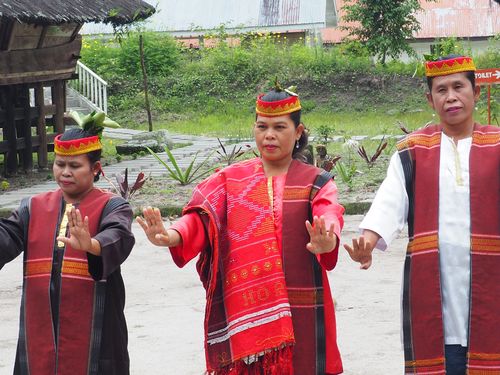
Sumatra • Batak tribal dance
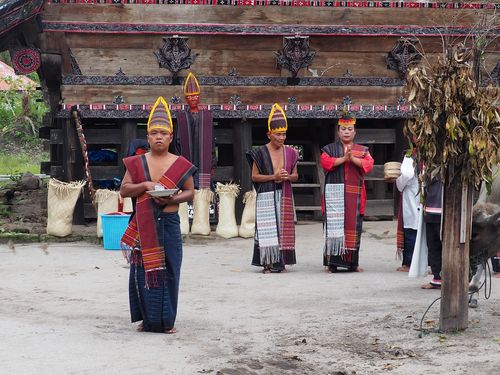
Sumatra • Batak tribal dance
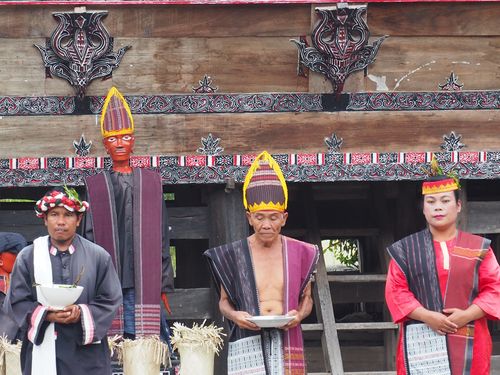
Sumatra • Batak tribal dance
Tradition profile
Batak tribal dance
Tradition category: Traditional Dance
Tradition family: Traditional dance
Tradition genre: Performing arts
Geographic location: Sumatra • Sumatra • Indonesia
• Links to •
• List of videos about Toba Lake on this site •
Indonesia • Sumatra • Lake Toba, homeland of the Bataks
Batak Tribal Dance Traditions and Their Historical Development in Sumatra
Origins and Early Community Functions
Batak tribal dances developed among the Batak populations of northern Sumatra, particularly around Lake Toba and the surrounding highlands. The different Batak groups — including the Toba, Karo, Simalungun, Pakpak, Angkola, and Mandailing communities — each preserved distinct ceremonial dances linked to their own social structures and customary practices. Early forms of these dances were closely associated with clan ceremonies, ancestral rites, agricultural gatherings, and communal celebrations held within village environments.
Dance traditionally formed part of the broader adat system, the customary social framework governing Batak society. Performances accompanied important family events such as marriages, funerals, alliance ceremonies, and collective rituals involving kinship obligations. Movements, formations, and musical accompaniment reflected social hierarchy and the relationships between clans participating in ceremonies.
The dances were not originally intended as stage performances. Their primary role was social and ceremonial, serving to reinforce collective identity and maintain continuity between generations within the Batak communities.
Historical Development and Religious Transformations
Batak dance traditions evolved significantly during the nineteenth and twentieth centuries as northern Sumatra underwent political, religious, and economic changes. Christian missionary activity among the Toba Batak transformed several ritual practices connected to ancestral belief systems. Some ceremonial dances lost their original religious functions, while others continued within social and cultural contexts linked to family celebrations and communal gatherings.
Among the Mandailing and Angkola Batak groups, earlier Islamic influence also affected ceremonial traditions and performance practices. Certain ritual elements were adapted to new religious norms while preserving local choreographic structures and musical forms.
During the Dutch colonial period, Batak dances were documented by missionaries, administrators, and ethnographers. These records often focused on public ceremonies and village rituals, though much of the knowledge surrounding the dances continued to be transmitted orally within communities. Formal written codification remained limited for a long time, and practical learning through participation continued to dominate transmission.
In the twentieth century, changing social conditions and the growth of urban migration altered the traditional contexts in which these dances were performed. Nevertheless, many ceremonial forms survived through weddings, funerary rites, and regional cultural events.
Social and Cultural Significance
Batak dances continue to play an important role in expressing collective identity and reinforcing social relationships within Batak communities. In many ceremonies, dance functions as a visible representation of kinship structures and customary obligations between families and clans.
Certain forms, especially the tortor among the Toba Batak, remain strongly associated with ceremonial exchanges and formal gatherings. The sequence of participation often reflects social status, age, and clan position. Dances may accompany symbolic gift exchanges, ritual speeches, or communal meals connected to customary law and family relations.
Music forms an essential component of these traditions. Drum ensembles, gongs, and other traditional instruments create rhythmic structures guiding the dancers’ movements. The interaction between musicians and participants remains central to the ceremonial atmosphere of Batak performances.
The dances also contribute to regional identity within Indonesia. They are frequently presented during cultural festivals, official ceremonies, and educational programs representing the heritage of northern Sumatra.
Contemporary Adaptations and Public Performances
In recent decades, Batak tribal dances have increasingly moved beyond their original ceremonial framework. Cultural organizations, schools, and regional art groups now perform adapted versions during festivals, tourism events, and public cultural presentations. These staged performances are often shorter and more standardized than traditional village ceremonies.
Urban Batak communities living outside northern Sumatra also use dance as a means of preserving cultural ties with their ancestral regions. Community associations frequently organize rehearsals and performances during family celebrations and cultural gatherings.
This wider visibility has contributed to the preservation of several choreographic traditions, but it has also encouraged partial simplification of certain ceremonial elements. Some performances now prioritize visual presentation and stage organization over the complex ritual functions originally associated with the dances.
Transmission and Preservation Challenges
The transmission of Batak dance traditions still relies heavily on family and community participation, particularly during ceremonies where younger generations observe and join the performances. However, urbanization and changing social habits have reduced the frequency of some traditional gatherings in rural areas.
Cultural institutions and local organizations increasingly support documentation projects, workshops, and educational programs dedicated to Batak performing arts. Regional festivals in Sumatra also contribute to maintaining public visibility for these traditions.
Despite modern influences and changing ceremonial practices, Batak tribal dances continue to preserve important aspects of social organization, collective memory, and cultural identity within the Batak communities of northern Sumatra.
Choreographic Structure and Performance Features of Batak Tribal Dances in Sumatra
General Organization of Performances
Batak tribal dances are generally performed within collective ceremonial settings involving dancers, musicians, family representatives, and community participants. Performances take place during weddings, funerary ceremonies, clan gatherings, harvest celebrations, and regional cultural events organized by Batak communities in northern Sumatra. The dances are commonly held in open communal spaces, village courtyards, traditional Batak houses, or temporary ceremonial platforms prepared for specific occasions.
The sequence of performances often follows customary social hierarchy. Certain dance segments are reserved for elders, clan representatives, or specific family groups according to Batak adat traditions. Participants may enter the performance space in a predetermined order reflecting kinship relations and ceremonial roles.
In larger ceremonies, several dance sequences can follow one another over extended periods. Slow ritual movements may alternate with more rhythmic collective sections accompanied by gong ensembles and percussion groups. The continuity of movement and the interaction between dancers and musicians form a central part of the performance structure.
Unlike stage choreography designed around individual performers, Batak dances emphasize collective coordination and ceremonial participation. The performance space remains open and integrated into the surrounding social environment rather than separated from the audience.
Movements, Gestures, and Choreographic Techniques
Batak dances rely primarily on synchronized upper-body movements, controlled gestures of the arms and hands, and measured rhythmic steps. The choreography generally avoids rapid acrobatic movement and instead emphasizes repetition, coordination, and ceremonial rhythm. Dancers frequently move in circles, lines, or semi-open formations adapted to the available communal space.
Among the Toba Batak, the tortor remains one of the most recognizable ceremonial dances. The movements involve gradual arm gestures, controlled shoulder rotations, and steady footwork synchronized with the musical rhythm. The choreography appears restrained compared to highly theatrical dance traditions, but the movements follow strict ceremonial codes understood by participants.
Changes in tempo are typically directed by the musicians. Drum and gong patterns indicate transitions between sections of the performance and regulate the rhythm of collective movement. Certain sequences involve symbolic exchanges between groups of dancers representing different families or clans participating in the ceremony.
The posture of the dancers often includes slightly bent knees and a stable body position allowing continuous rhythmic motion. Hand gestures may function as signs of respect, invitations to participate, or symbolic acknowledgments exchanged during the ceremony.
In some regional variations, dancers advance gradually toward the center of the ceremonial space before returning to the outer formation. These repeated patterns reinforce the collective and processional character of the performance.
Costumes, Textiles, and Ceremonial Objects
Traditional Batak dance costumes prominently feature ulos textiles, woven ceremonial cloths associated with social identity and ritual exchange. These fabrics are worn over the shoulders, wrapped around the waist, or incorporated into ceremonial dress according to the status and role of the participants.
The most common textile patterns combine red, black, and white geometric motifs. Variations in weaving style and decoration distinguish different Batak groups such as the Toba, Karo, or Simalungun communities. Certain ceremonies also include headdresses, jewelry, or metal ornaments associated with customary status and family rank.
The dancers themselves generally use few handheld objects during performances. The visual focus remains on coordinated movement and the interaction between textiles, music, and collective formations. However, some ceremonies incorporate ritual staffs, offering trays, or symbolic objects connected to customary exchanges and ancestral rites.
Traditional Batak houses often form an important architectural backdrop for the dances. Their elevated wooden structures, sharply curved roofs, and carved façades contribute to the visual identity of ceremonial performances held in village environments.
Decorative textiles may also be suspended around the ceremonial area, reinforcing the social importance of the gathering and visually defining the dance space.
Music, Rhythms, and Vocal Expressions
Music forms an essential structural component of Batak dance traditions. Ceremonial ensembles include drums, suspended gongs, metallophones, bamboo flutes, and occasionally string instruments depending on the regional tradition and type of ceremony being performed.
Among the Toba Batak, gondang ensembles frequently accompany ceremonial dances. The musicians produce repetitive rhythmic cycles that regulate the dancers’ movements and coordinate transitions between performance segments. Variations in rhythm correspond to changes in ceremonial sequence and social interaction between participants.
Vocal expressions may accompany certain dances through collective chants, ritual calls, or alternating responses between singers and musicians. These vocal elements can refer to kinship relations, ancestral memory, blessings, or ceremonial greetings addressed to participants.
The sound environment during Batak ceremonies combines musical performance with conversations, ritual speeches, and audience reactions. In larger gatherings, spectators often remain physically close to the dancers, creating a fluid boundary between performers and participants.
The resonance of the gongs and drums plays a particularly important role in shaping the atmosphere of the performance. Rhythmic repetition contributes to the continuity of movement and reinforces the ceremonial character of the event.
Participants and Ceremonial Roles
Batak dances typically involve broad community participation rather than a strict separation between performers and observers. Family members, clan representatives, elders, musicians, and invited guests all occupy defined positions within the ceremonial structure.
Certain dances distinguish male and female roles according to local customs and the nature of the event. Elders often supervise the order of participation and ensure that ceremonial rules connected to adat traditions are respected throughout the performance.
Musicians occupy a central functional position. Their rhythmic signals regulate movement, determine transitions between sequences, and guide the timing of ceremonial exchanges. Communication between musicians and dancers remains continuous during the performance.
In contemporary cultural festivals and staged presentations, the dances are often adapted to shorter formats suitable for public performance. Even in these modified contexts, collective formations and traditional rhythmic structures generally remain visible.
Spatial Organization and Distinctive Visual Features
Batak tribal dances are distinguished by their emphasis on coordinated collective motion and gradual rhythmic continuity. The choreography favors repeated gestures and structured group movement rather than individual display.
Open ceremonial spaces allow dancers to form wide circles or extended lines surrounding the musicians. This arrangement facilitates visual interaction between participants and reinforces the communal dimension of the performance.
The contrast between traditional textiles, wooden ceremonial architecture, and metallic percussion instruments contributes strongly to the visual identity of Batak dance ceremonies. The synchronized movement of arms and shoulders, combined with the steady rhythms of gongs and drums, remains one of the most recognizable characteristics of Batak tribal dance traditions in Sumatra.
 Links to the main sections of the site