Français (France)
  Nederlands (nl-NL)
 The village of Tarpal, located in the Indian state of Rajasthan, offers an overview of rural life still present in many parts of the country. Daily organisation often depends on neighbourhood ties, agricultural activities, management of local resources, and seasonal rhythms. The village also forms an important social setting where practical knowledge, community customs, and mutual support are passed on. Such rural areas play an essential role in the regional economy and in preserving certain collective habits. They illustrate continuity between local traditions and contemporary change.
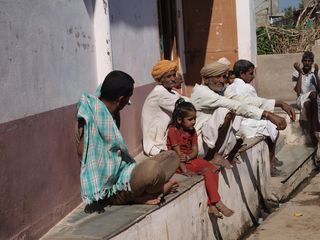
Tarpal • A village in Rajasthan
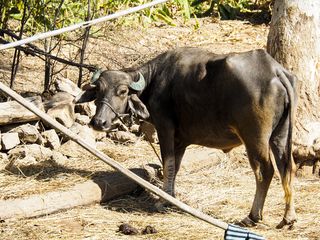
Tarpal • A village in Rajasthan
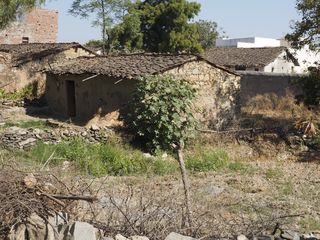
Tarpal • A village in Rajasthan
Tradition profile
A village in Rajasthan
Tradition category: Life at countryside
Tradition family: Traditional practices and lifestyle
Tradition genre: Agricultural and rural traditions
Geographic location: Tarpal • Rajasthan • India
• Links to •
• List of videos about Raipura Brahman on this site •
India, scenes of life in the countryside • Rajasthan, Haryana, Bihar, India
Village of Tarpal in Rajasthan: History and Continuity of Rural Life
Origins and Formation of the Settlement
The village of Tarpal, located in the Indian state of Rajasthan, represents an old form of rural settlement based on agriculture, livestock keeping, and community organisation. Like many villages in north-western India, its probable development resulted from the gradual establishment of families seeking cultivable land, reliable water access, and a stable collective environment.
Villages in this region commonly formed around kinship networks, occupational groups, and local authorities responsible for land use, dispute settlement, and management of shared resources.
Historical Development
For centuries, village life formed the foundation of the regional economy. Residents depended mainly on grain cultivation, animal husbandry, and exchange with nearby markets. Agricultural rhythms were closely linked to seasonal rainfall, temperature, and the availability of wells, ponds, or irrigation systems.
Under princely administrations and later during British colonial rule, villages became more integrated into structured taxation systems. Land productivity, harvest levels, and rural populations were increasingly monitored for revenue purposes. Despite these changes, daily organisation often remained largely local.
Social Structure and Community Role
A rural village traditionally performs several functions at once: place of residence, production unit, social network, and setting for the transmission of practical knowledge. Neighbourhood ties and extended family relations usually play an important role.
Religious observances, marriages, seasonal work, and decisions concerning water or land use often reinforce internal cohesion. Skills linked to farming, household management, craft activity, and customary practices are commonly passed from one generation to the next.
Transformations in the Modern Period
Since the twentieth century, villages in Rajasthan have undergone major changes. Road access, electrification, wider schooling, healthcare services, and modern communication technologies have altered everyday life. Economic activity has also diversified through wage labour, trade, transport, and temporary migration to towns or larger cities.
These developments have modified some traditional structures without removing the village’s central social role. Housing styles, consumer habits, and expectations for younger generations have evolved significantly.
Present Importance
Today, Tarpal illustrates the persistence of rural life within a rapidly changing India. The village remains a space of agricultural production, local identity, and everyday mutual support. Rural settlements continue to hold major demographic importance, as a substantial share of India’s population still lives outside large urban centres.
Transmission and Contemporary Challenges
Current challenges include water management, employment opportunities for youth, agricultural modernisation, access to education, and balancing inherited customs with new aspirations. Environmental pressure and migration can also affect long-term stability.
The transmission of local knowledge, cooperative habits, and community-based organisation remains essential for maintaining the resilience of rural settlements such as Tarpal.
Daily Functioning of a Rural Village in Tarpal
General Settlement Pattern
The village of Tarpal typically shows a compact settlement pattern adapted to the climate of Rajasthan. Houses are often grouped along narrow lanes or arranged around inner courtyards. Building materials commonly include brick, stone, plastered earth, and more recent concrete additions. Flat roofs, terraces, and thick walls help moderate seasonal heat.
The village space usually combines residential areas, animal enclosures, storage zones, water points, small shops, and communal places used for meetings or ceremonies.
Daily Rhythm and Activities
The day often begins early, before the hottest hours. Domestic tasks may include preparing food, sweeping courtyards, collecting water, and caring for animals. Men and women then take part, according to household roles and seasonal needs, in farming work, livestock care, trade, or transport activities.
Fields surrounding the village are visited according to the agricultural calendar. Movement between home, fields, and neighbouring settlements takes place on foot, by bicycle, motorcycle, tractor, or small utility vehicles.
Agricultural Skills and Visible Practices
Rural life depends on repeated practical actions linked to ploughing, sowing, irrigation, weeding, harvesting, and storage. Tools may combine traditional hand implements with mechanised equipment. Everyday technical knowledge includes repairing structures, maintaining wells or pumps, preparing fodder, and preserving grain.
Animal husbandry often remains important. Feeding cattle, goats, or buffaloes, cleaning shelters, and managing fodder supplies are regular visible tasks.
Participants and Social Roles
Village life involves all generations. Adults manage production, household organisation, and economic relations. Older residents frequently retain advisory roles in family or community matters. Children attend school while sometimes helping with age-appropriate duties.
Teachers, shopkeepers, craft workers, itinerant traders, and public employees add further functions to the local social system.
Shared Spaces and Atmosphere
Roads and lanes serve not only for movement but also for social exchange. Residents meet, speak, observe daily activity, and maintain neighbourhood contact. Courtyards are important settings for meals, rest, domestic work, and family gatherings.
The sound environment commonly includes conversation, livestock, engines, agricultural tools, market calls, and religious broadcasts during festivals or specific observances.
Distinctive Features
This type of village is marked by the close relationship between home life, labour, and community interaction. Boundaries between domestic and economic space are often less rigid than in urban environments. Daily schedules remain strongly influenced by climate, water availability, and farming seasons.
Even where modern equipment has appeared, Tarpal retains visible features of a rural system based on proximity, multi-purpose work, and interdependence between households.
 Links to the main sections of the site