Français (France)
  Nederlands (nl-NL)
 The market of Balige, located on the island of Sumatra in Indonesia, is an important element of local economic and social life. It brings together vendors, farmers, fishermen and residents who participate in regular commercial exchanges. Market stalls offer a wide variety of goods including fresh food, household items and locally produced handicrafts from nearby villages. In addition to its role as a place of distribution, the market functions as a social space where people meet and exchange information. Its activity reflects local rhythms and everyday practices of trade that remain significant in many towns across the Indonesian archipelago.
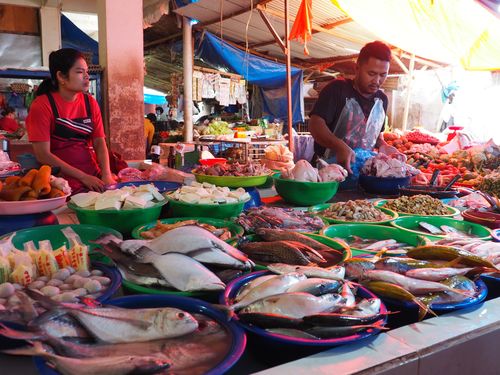
Balige • The Market

Balige • The Market

Balige • The Market
Tradition profile
The Market
Tradition category: Local market
Tradition family: Traditional markets and fairs
Tradition genre: Trade and Local Creativity
Geographic location: Balige • Sumatra • Indonesia
• Links to •
• List of videos about Balige, Sipoholon, Angkola Timur, Bukittinggi on this site •
Indonesia • Sumatra • from Toba lake to Minangkabau land
History of the Market Tradition in Balige (Sumatra, Indonesia)
Political and Social Context of Emergence
The tradition of the market in Balige developed within the broader historical framework of Batak societies surrounding Lake Toba in northern Sumatra. Before the formation of modern administrative structures, communities in this region were organized around clan-based systems in which social relations, land use and economic activities were structured through extended kinship networks. Villages functioned as relatively autonomous units that relied primarily on agriculture, fishing and small-scale craftsmanship. However, local production rarely covered all material needs, making regular exchange between communities necessary.
Markets emerged as institutionalized spaces where these exchanges could occur. They provided neutral meeting grounds where inhabitants of different villages could gather to trade agricultural surplus, livestock, textiles and everyday goods. In a landscape characterized by mountainous terrain and scattered settlements, markets also served as nodes connecting diverse local economies. The emergence of such trading places reflected the gradual development of regional networks linking rural communities around the lake.
Political authority in traditional Batak society was exercised by clan leaders and village elders. Although these authorities did not create centralized markets in the modern sense, they played a role in regulating the spaces where exchange occurred. By maintaining security and mediating disputes, they ensured that markets could function as stable environments for economic activity. Alliances between clans and communities often influenced where and when markets were held, reflecting broader patterns of cooperation and rivalry within the region.
Religion also contributed to the development of exchange networks. Prior to the widespread adoption of Christianity in the nineteenth century, Batak spiritual practices included rituals that required specific animals, textiles and ceremonial objects. Markets allowed communities to obtain these items, linking economic activity to ritual life and reinforcing the social importance of periodic gatherings.
Major Historical Events Shaping the Tradition
The market tradition in Balige evolved through several historical phases influenced by political and economic transformations. During the nineteenth century, the expansion of Dutch colonial power into the interior of northern Sumatra significantly altered the region’s social structure. Colonial administration introduced new territorial divisions, taxation systems and infrastructure, gradually integrating Batak territories into wider economic networks.
These developments strengthened the role of towns such as Balige as regional centers of exchange. Roads and administrative facilities encouraged the concentration of commercial activity in specific locations. Markets that had previously functioned primarily as periodic gatherings began to acquire more permanent characteristics as the volume of trade increased.
Missionary activity also played a role in reshaping local society. Protestant missions were particularly active among Batak populations, promoting education, literacy and new social institutions. As mission stations and schools were established, settlements grew and commercial exchanges intensified. Markets became important spaces where both traditional and newly introduced goods circulated.
Following Indonesian independence in 1945, national economic policies sought to stimulate rural development and integrate regional economies into a unified national market. Traditional markets remained central to these efforts because they facilitated the distribution of agricultural products and supported small-scale entrepreneurship. Although modern retail systems began to appear in urban areas, local markets retained their significance in rural and semi-urban regions such as Balige.
Throughout these historical transformations, the practice of gathering in a common place to exchange goods persisted. Even when the economic context changed, the social structure of the market—based on direct interaction between producers and consumers—remained largely intact.
Global Context and Historical Comparisons
The emergence of markets in Balige reflects a broader pattern observable in many agricultural societies around the world. Throughout history, communities with specialized production systems required mechanisms for exchanging goods. Markets therefore appeared as institutional solutions that facilitated trade between groups with different resources and skills.
In Southeast Asia, periodic markets were a common feature of rural economies. In regions of Indonesia, Thailand and Vietnam, rotating market systems allowed traders and villagers to move from one settlement to another according to weekly cycles. This pattern ensured that even relatively remote communities could participate in regional exchange networks.
Comparable systems existed in other parts of the world. In West Africa, for example, rotating market systems connected rural villages through regular trade gatherings. In medieval Europe, weekly markets and seasonal fairs played similar roles by linking agricultural producers with urban consumers.
The markets of Balige thus formed part of a broader global tradition in which commerce was closely integrated with social interaction. These spaces functioned not only as economic institutions but also as arenas where information circulated, alliances were negotiated and community life was reinforced.
Transformations of the Tradition
Over time, the market tradition in Balige underwent various transformations as a result of economic development, technological change and demographic growth. The expansion of transportation networks allowed goods to be transported more efficiently, enabling traders to bring products from more distant regions. As a result, the diversity of items sold in the markets increased significantly.
Traditional agricultural products such as rice, vegetables and fish continued to dominate the market economy, but they were gradually accompanied by manufactured goods, textiles and packaged foods. These changes reflected the integration of local economies into national and international trade systems.
Urban growth also affected the spatial organization of markets. Some trading areas evolved into more structured marketplaces with permanent stalls or covered halls designed to accommodate increasing numbers of vendors. Despite these infrastructural changes, the essential character of the market—open exchange, negotiation and direct contact between sellers and buyers—remained constant.
At certain times economic modernization created periods of decline for traditional markets, particularly when new retail formats appeared. However, these markets frequently adapted by incorporating new products and services, demonstrating a capacity for resilience in changing economic environments.
Contemporary Role and Cultural Importance
Today the market tradition in Balige continues to play an important role in the daily life of communities around Lake Toba. Markets function as central points where agricultural producers, fishermen and small-scale traders can sell their goods directly to consumers. This system supports local livelihoods and contributes to the regional economy.
Beyond their economic function, markets also serve as social meeting places. Residents gather there not only to conduct business but also to exchange news, maintain family connections and participate in the rhythm of communal life. These interactions reinforce social cohesion and strengthen the cultural identity of Batak communities.
Markets also contribute to the preservation of regional food traditions and artisanal practices. Local dishes, traditional textiles and handmade objects are often sold alongside everyday goods, illustrating the continuity of cultural knowledge within the community.
Preservation and Contemporary Challenges
Despite their continued importance, traditional markets in Balige face challenges associated with modernization and urban development. The expansion of supermarkets, convenience stores and modern retail infrastructure has begun to alter patterns of consumption, particularly among younger generations.
Tourism development around Lake Toba has also introduced new dynamics. While increased visitor numbers can create opportunities for local traders, they may also transform the nature of market activities by encouraging the sale of products oriented toward visitors rather than local consumption.
Urban planning and infrastructure projects may also affect historic market locations. As towns expand and transportation systems evolve, traditional trading spaces sometimes require relocation or redesign.
In response to these challenges, local authorities and community organizations have promoted initiatives aimed at preserving the vitality of traditional markets. Improvements to sanitation, infrastructure and accessibility are often implemented while maintaining the open and communal character of these spaces.
The future of the market tradition in Balige depends largely on its capacity to adapt to contemporary economic realities while preserving the social practices that have sustained it for generations. As both economic institutions and cultural gathering places, these markets remain essential components of the historical and social landscape of northern Sumatra.
Characteristics of the Market Tradition in Balige (Sumatra, Indonesia)
Origins and Context of Emergence
The market tradition in Balige developed within the historical and cultural environment of the Batak societies inhabiting the Lake Toba region in northern Sumatra. For centuries, the local economy was based on agriculture, fishing and small-scale craftsmanship organized within village communities connected through clan networks. Although villages were relatively autonomous, they were economically interdependent. Certain settlements specialized in rice cultivation, others in livestock, fishing or specific crafts. Markets therefore emerged as structured meeting points where these different forms of production could be exchanged.
Political organization in traditional Batak society was based on clan leadership and customary law. Village elders and clan leaders regulated communal life, including spaces where trade could occur. While markets were not necessarily founded through formal institutions, their functioning depended on a shared understanding among communities regarding rules of exchange, mutual respect and conflict mediation. These arrangements allowed markets to operate as neutral environments where members of different clans and villages could interact without threatening established social hierarchies.
Religious practices also contributed indirectly to the emergence of markets. Before the widespread spread of Christianity in the nineteenth century, Batak spiritual traditions involved ritual ceremonies requiring animals, textiles and specific food products. Markets allowed communities to obtain these items from other regions. In this way, economic exchange became closely linked to social and ceremonial life, reinforcing the importance of regular gatherings.
Within this broader cultural setting, the market in Balige gradually evolved into a recurring institution that connected the agricultural landscape around Lake Toba with a centralized point of exchange. Its original function combined economic necessity with social interaction, reflecting the interconnected nature of Batak community life.
Constituent Elements and Practices
The functioning of the market tradition in Balige involves a series of daily and periodic practices that structure the flow of goods and interactions between participants. Markets typically begin early in the morning when vendors arrive from surrounding villages with agricultural products such as vegetables, fruits, rice and fish. The timing reflects both climatic conditions and the rhythms of rural production.
The layout of the market generally follows informal patterns shaped by custom and practicality. Sections often develop where similar products are grouped together, including fresh produce, meat and fish, spices, textiles and household goods. This arrangement allows buyers to navigate easily through the market while also reinforcing specialization among vendors.
Several roles can be identified within this system. Producers bring goods directly from farms or fishing areas. Small-scale traders purchase products in bulk and resell them in smaller quantities. Food vendors prepare traditional dishes on site, contributing to the lively atmosphere of the marketplace. Customers include both local residents and visitors from surrounding villages.
Certain practices accompany the act of exchange. Negotiation over prices is a central feature of transactions, reflecting a tradition of direct interaction between seller and buyer. Gestures such as weighing products, arranging goods carefully on tables or mats, and offering small samples to potential buyers form part of the daily routine.
Knowledge related to trade and food preparation is frequently transmitted within families. Skills such as recognizing the quality of agricultural produce, preserving fish or preparing traditional Batak dishes are learned over generations. These practices ensure continuity in the functioning of the market while maintaining links between economic activity and cultural knowledge.
Symbolism and Cultural Meanings
The market in Balige carries symbolic significance beyond its economic function. It represents a space where the diversity of Batak society becomes visible through daily interaction. Different clans, families and social groups meet within the same environment, reinforcing networks of cooperation and communication.
The sensory characteristics of the market contribute to this symbolic dimension. Brightly colored fruits, vegetables and spices create visually distinctive displays, while the sounds of conversation, negotiation and movement form an audible expression of communal life. These sensory elements make the marketplace an important setting in the collective memory of the region.
Certain products sold in the market also have ritual importance. Animals, textiles and ceremonial foods may be purchased for traditional Batak events such as weddings, funerary rites or community gatherings. Through these transactions, the market becomes connected to broader cultural practices that structure social relationships.
Local variations in market practices may reflect cultural distinctions between villages or sub-regions around Lake Toba. Some markets emphasize agricultural exchange, while others highlight craft production or culinary specialties. These differences illustrate the diversity of traditions within the Batak cultural landscape.
Evolution and External Influences
Over time the market tradition in Balige has adapted to political and economic transformations affecting northern Sumatra. Colonial rule during the nineteenth and early twentieth centuries introduced new administrative structures and expanded regional trade networks. Infrastructure improvements such as roads increased mobility and enabled traders to bring goods from more distant areas.
These changes diversified the range of products available in local markets. Imported textiles, metal tools and manufactured goods gradually appeared alongside traditional agricultural products. Although these additions altered the commercial landscape, the core structure of the market remained based on direct interaction between producers and consumers.
Later economic development following Indonesian independence further transformed market practices. Urban growth and improved transportation increased the volume of trade and sometimes led to the construction of more permanent market facilities. Nevertheless, many traditional features—open stalls, informal negotiations and close personal relationships between vendors and customers—continued to characterize market life.
Comparable traditions exist in many other regions of the world. Rural markets in Southeast Asia, Africa and Latin America display similar patterns of direct exchange, community gathering and the integration of commerce with social interaction. These parallels highlight the universal role of marketplaces in societies where agriculture and small-scale trade remain central to local economies.
Social Organization and Community Impact
The market in Balige functions as an important social institution within the regional community. It provides economic opportunities for farmers, fishermen, artisans and traders, enabling them to participate in the circulation of goods and income generation. This network of exchange links rural producers to urban consumers and strengthens economic interdependence between villages.
Intergenerational interaction is a prominent feature of the marketplace. Older traders often work alongside younger family members, passing on knowledge about product selection, negotiation strategies and customer relationships. This process contributes to the continuity of the market tradition and reinforces family involvement in commercial activities.
Markets also serve as gathering places where information and social relationships circulate. Residents meet acquaintances, discuss local developments and maintain networks of mutual support. Through these interactions, the marketplace plays a role in reinforcing community cohesion.
During cultural celebrations or religious events, market activity may intensify as demand increases for specific foods, ceremonial goods and decorative items. In these periods, the marketplace becomes closely connected to the broader rhythm of collective life.
Statistics, Anecdotes and Notable Narratives
The markets of Balige can involve several hundred vendors, particularly during peak days when producers from surrounding villages arrive with fresh goods. Early morning hours usually represent the most active period, when both supply and demand are at their highest.
Local narratives sometimes mention families who have maintained market stalls across multiple generations. These stories illustrate the enduring relationship between family identity and participation in trade. In many cases, the location of a stall or the type of product sold becomes associated with particular households.
Municipal authorities and community associations have also contributed to the organization of markets by regulating stall arrangements, maintaining infrastructure and facilitating the flow of visitors. These administrative efforts highlight the recognition of the market as an essential component of local economic life.
Recognition and Preservation Challenges
Although the market tradition in Balige remains active, it faces several contemporary challenges. The expansion of supermarkets and modern retail facilities has begun to influence consumption habits, particularly among younger populations who may prefer standardized shopping environments.
Urban development and tourism growth around Lake Toba also affect traditional markets. While tourism can create new economic opportunities for vendors, it may also encourage the transformation of markets toward products aimed at visitors rather than local consumers.
Local authorities and community organizations have implemented initiatives aimed at preserving traditional markets while improving infrastructure and hygiene standards. Such efforts attempt to balance modernization with the preservation of long-standing commercial practices.
The continued vitality of the market tradition in Balige depends on its ability to adapt to changing economic conditions while maintaining the social relationships and cultural knowledge that have defined it for generations. As both economic centers and community gathering places, these markets remain a significant element of the cultural landscape of northern Sumatra.
 Links to the main sections of the site