Français (France)
  Nederlands (nl-NL)
 The distillation of Laolao, practiced in Ban Xang Hai, Laos, represents a longstanding local tradition. This artisanal process involves producing rice liquor using techniques passed down through generations. Ban Xang Hai has gained recognition as a production site where distillers continue to rely on manual methods. The practice, closely linked to rice cultivation and its social role, highlights the persistence of local knowledge that endures despite changing consumption habits.
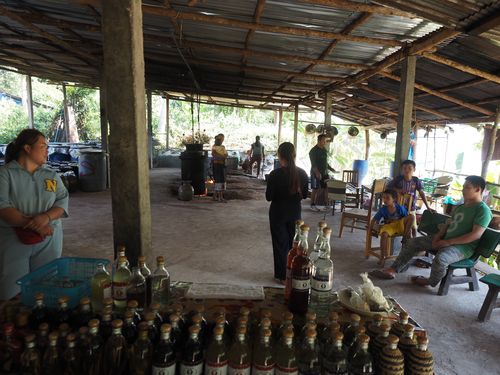
Ban Xang Hai • Distillation of Laolao
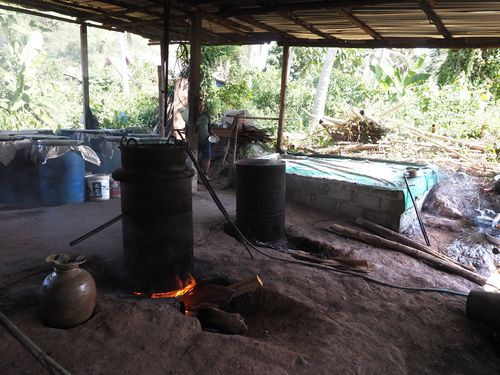
Ban Xang Hai • Distillation of Laolao

Ban Xang Hai • Distillation of Laolao
Tradition profile
Distillation of Laolao
Tradition categories: Craftsmanship, Work in the countryside
Tradition families: Crafts and professions • Traditional practices and lifestyle
Tradition genres: Trade and Local Creativity, Agricultural and rural traditions
Geographic location: Ban Xang Hai • Laos
• Links to •
• List of videos about Ban Xang Hai on this site •
Ban Xang Hai, the whisky village • Laos
Laos • Fabric Arts
History of the Tradition of Laolao Distillation in Ban Xang Hai, Laos
The distillation of Laolao, a rice-based spirit, represents one of the most recognizable traditional practices of Laos. Associated in particular with Ban Xang Hai, often referred to as the “village of jars,” this custom illustrates how a technical process has been embedded in political, social, and cultural structures over centuries. Exploring the historical background of this practice sheds light on its emergence, transformations, symbolic meanings, and current status as part of the cultural heritage of the Lao people.
Political and Social Context of Emergence
The origins of Laolao distillation are closely tied to the central role of rice in Lao society. In the agrarian communities of the Mekong basin, rice was not only the staple food but also a sacred resource with ritual value. The conversion of rice into alcohol can be seen as both a practical and symbolic innovation. On a practical level, surplus harvests were transformed into a preservable product with economic utility in exchange and trade. On a symbolic level, distilled rice liquor played a role in community rituals and ceremonies, reinforcing cohesion among households and villages.
The practice developed under a framework shaped by political and religious influences. Royal authorities in Luang Prabang and local elites recognized the importance of controlling the circulation of alcohol, which was both a commodity and a symbol of social integration. While Theravada Buddhism promoted moderation and discouraged intoxication, the use of rice liquor in offerings or communal gatherings was tolerated and even integrated into customary practices. Communities themselves, rather than centralized powers, ensured the continuity of distillation, making it part of everyday life while also embedding it in larger social networks. Early rivalries and alliances between local rulers and external traders also contributed to the visibility of Ban Xang Hai, where jars used for fermentation and storage gave the village its enduring reputation.
Major Historical Events
Over time, the practice of Laolao distillation encountered various historical challenges. The colonial period marked an important rupture. When French authorities extended their control over Laos in the late nineteenth and early twentieth centuries, they sought to regulate alcohol production, imposing taxes and monopolies. Although village-scale distillation persisted, it was often relegated to the informal sector, maintaining its cultural relevance but losing visibility in official frameworks.
Following independence in 1953, the Lao state oscillated between tolerating the practice as a form of local craftsmanship and restricting it due to concerns over health, economy, and political order. In some periods, alcohol production was encouraged as a source of local revenue, while at other times it was discouraged or limited. Despite these changes, Ban Xang Hai maintained its association with Laolao, adapting to shifting regulations. In the late twentieth century, as tourism developed, the village was deliberately promoted as a site where visitors could observe traditional distillation, thus reframing a domestic practice as cultural heritage.
Global Context at the Time of Emergence
The origins of Laolao must also be situated in a global context of distillation practices. In China, the distillation of grain-based liquors was already well established by the first millennium CE, and knowledge of fermentation and distillation circulated across Asia. In India and the Middle East, distillation was initially applied to medicines and perfumes, gradually extending to alcoholic beverages. In Europe, alcohol distilled from wine and cereals was connected with monastic medicine before becoming part of popular consumption.
Laolao thus reflects a global pattern: the transformation of staple crops into alcohol serving economic, ritual, and social purposes. The Lao variant, however, stands out for its integration into village-level practices and its symbolic link with glutinous rice. The contrast with European traditions highlights the diverse pathways of alcohol’s integration into society, while the similarities underscore universal patterns of cultural adaptation.
Transformations of the Tradition
Laolao has not remained static. Over centuries, its forms, codes, and actors have changed in response to broader transformations. The materials used in distillation evolved from earthen jars and bamboo containers to metal stills and glass bottles, reflecting technological adaptation. The actors involved also shifted: while traditionally women oversaw fermentation and men handled equipment, in the modern context roles have become more flexible.
Periods of decline alternated with moments of renewal. Colonial taxation, post-independence restrictions, and the rise of industrial alcohol threatened traditional distillation. Yet Laolao survived as a marker of identity, reinforced in recent decades by tourism. The framing of Ban Xang Hai as a “heritage village” has given new meaning to the practice, transforming it from a household activity to a cultural display.
Contemporary Role and Cultural Importance
In present-day Laos, Laolao distillation functions on multiple levels. Locally, it continues to provide families with income and to serve as a symbol of hospitality: offering Laolao to a guest remains a common practice. In religious and communal events, the liquor retains its ritual significance, whether as an offering to spirits, a component of weddings, or a marker of agricultural festivals. Nationally, it is regarded as a distinctive element of Lao identity, associated with the cultural resourcefulness of rural communities.
The practice also illustrates resilience in the face of modernization. Despite the availability of imported liquors, Laolao remains valued for its authenticity and affordability. Its association with Ban Xang Hai gives it visibility in the tourist economy, where it is both a product and a symbol of cultural continuity.
Current State of Preservation and Modern Challenges
The preservation of Laolao distillation faces significant challenges. Urbanization, migration, and generational change threaten the transmission of artisanal knowledge. Younger people often pursue education or employment outside the village, reducing the continuity of practice. Globalization also introduces new consumption models, placing Laolao in competition with industrial beverages.
Nevertheless, efforts are underway to safeguard the tradition. Local cooperatives and community organizations seek to maintain production standards and to present Laolao as a cultural attraction. Discussions about intangible cultural heritage recognition have emerged, and while UNESCO listing has not yet been achieved, the practice has been highlighted in national cultural discourse. The key to its preservation lies in balancing adaptation with continuity: maintaining traditional techniques while responding to modern health, economic, and social contexts.
Conclusion
The history of Laolao distillation in Ban Xang Hai demonstrates the interplay of subsistence, ritual, power, and identity in a local tradition. Born from the centrality of rice in Lao society, shaped by political regimes, colonial constraints, and global influences, it has adapted to changing circumstances while preserving its cultural significance. Today, it stands as both a living practice and a symbol of Lao heritage, facing the dual challenge of modernization and preservation.
Characteristics of the Laolao Distillation Tradition in Ban Xang Hai, Laos
The distillation of Laolao, a rice-based liquor traditionally produced in Laos, is one of the most distinctive cultural practices of the region around Luang Prabang. Ban Xang Hai, often associated with this craft, provides an illustrative case of how an artisanal technique is embedded in social structures, symbolic meanings, and community identity. An examination of its characteristics reveals both the technical aspects of production and the broader cultural functions it serves.
Origin and Context of Emergence
The emergence of Laolao distillation can be traced to the agricultural and social environment of the Mekong basin. Rice, cultivated as both staple food and ritual crop, provided the raw material for transformation into alcohol. The conditions that favored this practice were primarily agrarian surpluses, the need for products that could serve both ritual and social purposes, and the embedding of alcohol in communal life.
Politically, local rulers and authorities in the Luang Prabang area tolerated and sometimes regulated the production of rice liquor. Socially, it served as a marker of exchange and hospitality within and between communities. Religiously, despite Buddhism’s emphasis on moderation, rice liquor was incorporated into rituals as offerings or as a medium for strengthening social ties. The tradition thus arose from an interaction between agricultural abundance, cultural values, and communal practices, which placed Ban Xang Hai in a broader framework of village-level identity.
Constitutive Elements and Practices
Laolao distillation involves a series of codified gestures and skills. The process begins with cooking glutinous rice, which is then fermented with natural yeasts and water in large jars or containers. After several days of fermentation, the mixture is distilled in simple stills traditionally made from clay or bamboo but today often replaced by metal vessels. The resulting liquor is collected in reused bottles, gourds, or bamboo tubes.
The practice traditionally involves multiple participants. Women were often responsible for preparing the rice and monitoring fermentation, while men carried out tasks linked to the physical equipment and heating process. Although not associated with particular costumes, the activity could be accompanied by communal songs or festive music during periods of collective work. The sequence—cooking, fermenting, distilling, and storing—remains consistent, and the knowledge of timing, proportion, and heat management is transmitted orally and practically across generations. These technical skills constitute the intangible core of the tradition.
Symbolism and Meanings
Laolao distillation carries symbolic values that go beyond its utilitarian function. In village contexts, offering a glass of Laolao symbolizes hospitality and social recognition. During rituals, it conveys ideas of prosperity and continuity, linking the cycles of agriculture with communal wellbeing. Certain gestures, such as spilling a drop of liquor on the ground before drinking, embody respect for ancestors or protective spirits.
Colors and sounds also have meaning. The clear appearance of Laolao is associated with purity and transparency, while the accompanying songs express joy, remembrance, or solidarity. Local variations reinforce these symbolisms: in some groups Laolao is seen as a sign of vitality and masculine strength, while in others it emphasizes unity and collective identity. Such symbolic diversity highlights the way the same beverage can embody multiple social and cultural messages.
Evolution and External Influences
The tradition has changed over time, reflecting political and social transformations. Materials used in distillation shifted from clay jars to metal containers, while recycled glass bottles replaced traditional bamboo receptacles. External influences during colonial times attempted to regulate or restrict local alcohol production, but Laolao remained a resilient practice, often continuing in informal circuits.
The growing presence of tourism in the late twentieth century introduced a new dimension. Ban Xang Hai became a recognized site for visitors to observe traditional distillation, transforming the practice into a heritage attraction. Comparisons with similar practices elsewhere reveal both parallels and distinctions. Japanese sake, Indonesian arak, or Chinese baijiu share the use of rice or grains, but Laolao remains marked by its small-scale, household-based production and its integration into communal rituals rather than state or commercial frameworks.
Social Organization and Community Impact
Within the community, Laolao production has specific social roles. Families known for producing high-quality liquor gain prestige, and their products are sought during important ceremonies. The division of roles within families also reinforces generational continuity, as children learn by observing elders.
At the collective level, Laolao is central to major events. It is consumed at weddings, funerals, New Year celebrations, and harvest festivals, functioning as both a beverage and a ritual medium. It thus structures relations between households, between generations, and between social groups. The recognition of certain families as custodians of knowledge illustrates the way the tradition both reflects and reinforces social hierarchies and bonds.
Statistics, Anecdotes, and Notable Accounts
Exact statistics on production in Ban Xang Hai are not available, but it is estimated that dozens of families engage in distillation, with output varying seasonally. Production ranges from small domestic quantities to larger batches intended for visitors. Anecdotes link the name Ban Xang Hai—“village of jars”—to the historical use of large fermentation jars, which also gave the village symbolic visibility. Oral traditions suggest that Laolao was once offered to local militias or rulers, highlighting its role in political as well as social interactions. Elders of the community are often remembered for having preserved the craft during periods when restrictions threatened its survival.
Recognition and Preservation Challenges
The current status of Laolao distillation is that of a living but fragile tradition. It is recognized nationally as a marker of Lao cultural heritage and regionally as a distinctive practice of Luang Prabang. However, it faces challenges. Urbanization, changing consumer habits, and reduced intergenerational transmission threaten its continuity. Young villagers often pursue alternative livelihoods, and imported or industrial beverages create economic competition.
Preservation efforts include community cooperatives, integration into cultural tourism, and discussion of intangible heritage recognition. Although not formally inscribed on UNESCO lists, the practice is often cited in cultural documentation as representative of Lao identity. Safeguarding strategies focus on ensuring continuity of knowledge, maintaining sanitary standards, and supporting the community’s role in controlling its own heritage. The balance between adapting to modern contexts and preserving traditional methods remains the key issue.
Conclusion
The Laolao distillation tradition in Ban Xang Hai exemplifies how a technical process becomes a social institution. Emerging from the agricultural, political, and religious context of the Mekong basin, it has endured colonial regulation, modernization, and globalization. It continues to symbolize hospitality, unity, and identity, while functioning as an economic resource and a cultural emblem. Its preservation requires both local commitment and broader recognition, ensuring that this practice remains a vital element of Lao cultural life.
 Links to the main sections of the site