Français (France)
  Nederlands (nl-NL)
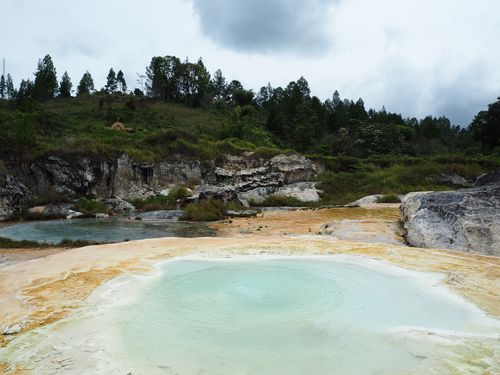
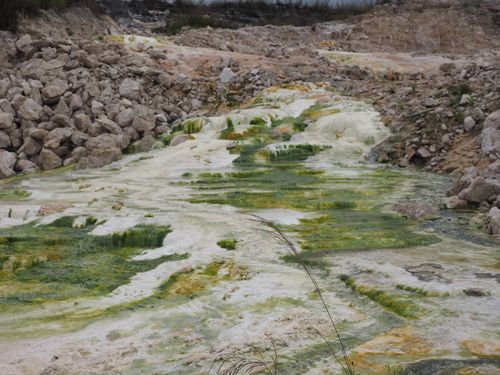
 The thermal springs of Sipoholon, located near Lake Toba on the island of Sumatra in Indonesia, represent a distinctive natural site linked to the region’s geothermal activity. Mineral-rich hot water emerges along rocky slopes marked by colorful deposits created through natural processes. These springs illustrate the influence of volcanic and geological forces that shape this part of Sumatra. The surrounding landscape includes rolling hills, mineral terraces and natural pools formed by geothermal circulation. The area attracts both visitors and local residents interested in observing these natural phenomena and experiencing the properties of the warm mineral waters.

Sipoholon • Hot Springs
Sipoholon • Hot Springs
Sipoholon • Hot Springs
Natural site profile
Hot Springs if Sipoholon
Natural site categories: Thermal springs
Natural site families: Seas, lakes and rivers • Volcanoes and calderas
Natural sites genres: Aquatic, Terrestrial
Geographic location: Sipoholon • Sumatra • Indonesia
• Links to •
• List of videos about Balige, Sipoholon, Angkola Timur, Bukittinggi on this site •
Indonesia • Sumatra • from Toba lake to Minangkabau land
The Thermal Springs of Sipoholon: Historical Drivers of Recognition, Regional Development, and Contemporary Preservation Challenges
A Geothermal Landscape within the Lake Toba Volcanic Basin
The thermal springs of Sipoholon, located in the highlands of North Sumatra near the town of Balige, form part of the broader volcanic environment surrounding Lake Toba. This immense caldera, created by one of the largest volcanic eruptions known in geological history, continues to shape the region through ongoing geothermal activity. The hot springs of Sipoholon emerge where groundwater heated deep beneath the surface rises through fractures in volcanic rock, bringing dissolved minerals to the surface.
Although the springs themselves are natural phenomena, their recognition and preservation have evolved through a combination of cultural traditions, economic development, and political initiatives aimed at promoting regional tourism and environmental awareness. Over time, these factors have gradually transformed the site from a locally known geothermal feature into a landscape valued for both its natural and cultural significance.
Early Cultural Significance among Local Communities
Long before formal tourism or scientific research reached the Lake Toba region, the geothermal springs were already known to the Batak communities living in the surrounding highlands. These communities traditionally regarded natural hot springs as places associated with health, relaxation, and sometimes spiritual reflection. The mineral-rich waters were believed to possess therapeutic qualities, and bathing in warm springs formed part of local practices related to well-being.
Such cultural perceptions often contributed to the preservation of geothermal sites. Because the springs were valued as natural resources linked to health and community life, they were typically protected through customary practices that discouraged destructive exploitation. In this sense, cultural traditions played an early role in safeguarding the integrity of the springs.
These attitudes reflect a wider pattern found across many parts of Asia, where geothermal springs have long been integrated into everyday life and traditional health practices.
Scientific Curiosity and the Colonial Era
During the nineteenth and early twentieth centuries, global scientific interest in volcanic landscapes increased significantly. Explorers, geographers, and geologists began studying the geological features of Southeast Asia, particularly regions associated with major volcanic systems.
The Lake Toba basin attracted considerable attention because of its extraordinary geological history. Although the thermal springs of Sipoholon were modest in scale compared with some geothermal systems elsewhere in the world, they represented visible evidence of the deep geothermal processes still active beneath the caldera.
The scientific study of volcanic regions during this period contributed to a growing awareness of the natural importance of geothermal landscapes. Similar research was being conducted in other volcanic regions, including Iceland, Italy, and parts of Japan, where scientists sought to understand the relationship between volcanic heat, groundwater circulation, and the formation of mineral deposits.
Economic Motivation and the Rise of Tourism
In the twentieth century, the Lake Toba region gradually became one of the most prominent tourist destinations in North Sumatra. Visitors were drawn to the dramatic volcanic scenery, the cultural traditions of the Batak people, and the unique geological features of the caldera landscape.
Within this broader context, geothermal features such as the Sipoholon springs began to attract attention as recreational sites. Local authorities and entrepreneurs recognized the potential economic benefits of promoting hot springs as tourist attractions. Basic bathing facilities and visitor access routes were gradually developed, allowing travelers to experience the warm mineral waters.
This tourism-driven interest contributed to the preservation of the springs. Protecting the visual and environmental quality of the landscape became important in maintaining the appeal of the region. As a result, economic incentives aligned with the need to preserve the geothermal formations.
Environmental Awareness and Regional Development Policies
By the late twentieth century, environmental concerns began to influence planning policies in many parts of Indonesia. The Lake Toba region, recognized as one of the country’s most distinctive volcanic landscapes, became the focus of initiatives aimed at balancing tourism development with environmental protection.
The geothermal springs of Sipoholon were indirectly included within these broader efforts. Conservation programs emphasized maintaining forest cover, protecting water resources, and promoting sustainable tourism practices throughout the caldera region.
Although the springs themselves were not always subject to strict protection measures, the surrounding environment increasingly benefited from policies designed to preserve the ecological and geological integrity of the Lake Toba basin.
Transformations of the Site Over Time
Over the centuries, the physical appearance of the Sipoholon springs has evolved through both natural processes and human intervention. Mineral-rich water flowing over the slopes has gradually created deposits of pale-colored rock that form terraces and ridges along the hillside. These deposits continue to grow slowly as minerals precipitate from the hot water.
Human activities have also altered parts of the landscape. The development of bathing areas, small visitor facilities, and improved road access has changed the immediate surroundings of the springs. These modifications reflect the transition from traditional local use toward organized tourism infrastructure.
At the same time, broader environmental changes have influenced the region. Variations in land use, deforestation in certain areas, and shifts in rainfall patterns have affected groundwater circulation systems that feed geothermal springs.
Global Context of Geothermal Heritage
The preservation and promotion of geothermal landscapes has become a common practice in many volcanic regions around the world. Countries such as Japan, Iceland, and New Zealand have developed sophisticated systems for managing geothermal sites, combining tourism, scientific research, and environmental conservation.
In Japan, hot spring culture evolved into a major economic sector centered around traditional bathing resorts. Iceland and New Zealand have emphasized geothermal landscapes as both scientific laboratories and tourist attractions.
Compared with these regions, Sipoholon remains relatively modest in scale. However, its location within the enormous Lake Toba caldera provides it with a geological context of global significance. The springs illustrate how geothermal processes operate within one of the largest volcanic structures on Earth.
Current State of Preservation
Today, the thermal springs of Sipoholon continue to function as both natural attractions and recreational bathing sites. Visitors come to observe the distinctive mineral formations and to experience the warm geothermal waters.
The preservation of the springs relies largely on local management and responsible tourism practices. Maintaining the visual character of the terraces and preventing excessive modification of the landscape are essential for sustaining the natural appeal of the site.
The springs also remain important as educational examples of geothermal processes associated with large volcanic systems.
Contemporary Challenges
Despite their scenic appeal, the Sipoholon springs face several challenges linked to modern development. Increasing visitor numbers may place pressure on fragile mineral formations and surrounding vegetation.
Infrastructure expansion, if poorly managed, could disrupt the delicate hydrological systems that feed the springs. Because geothermal features depend on stable groundwater circulation, environmental disturbances in the surrounding region can have long-term effects.
Climate variability and changes in land use may also influence the groundwater recharge systems that sustain geothermal activity.
Conclusion
The thermal springs of Sipoholon illustrate how natural geological features can acquire multiple layers of significance over time. Cultural traditions, scientific curiosity, economic development, and environmental awareness have all contributed to the recognition and gradual preservation of the site.
Today the springs represent both a visible expression of the geothermal forces beneath the Lake Toba caldera and a cultural landscape shaped by centuries of interaction between nature and human communities. Their continued preservation will depend on maintaining a careful balance between tourism development, environmental protection, and respect for the natural processes that sustain this unique geothermal environment.
The Thermal Springs of Sipoholon: Geological Processes and Ecological Dynamics in the Lake Toba Volcanic Landscape
A Geothermal Site within One of the World’s Largest Volcanic Calderas
The thermal springs of Sipoholon, located in the highlands of North Sumatra in Indonesia, form part of the remarkable geological environment surrounding Lake Toba. This immense lake occupies the caldera of a supervolcano whose eruption, approximately seventy-four thousand years ago, is considered one of the most powerful volcanic events known in Earth’s recent geological history. The geothermal activity visible today in the form of hot springs, mineral deposits, and fumarolic zones represents the long-term continuation of volcanic processes associated with that ancient eruption.
The springs emerge where groundwater, heated deep below the surface by residual geothermal energy, rises through fractures in volcanic rock. As the water travels upward through the Earth’s crust, it dissolves minerals from surrounding rocks. When it finally reaches the surface, the heated water releases these dissolved minerals, producing striking geological formations that characterize the Sipoholon landscape.
Geological Formation of the Mineral Terraces
One of the most distinctive features of the Sipoholon hot springs is the presence of extensive mineral deposits covering the slopes where geothermal waters flow. These formations appear as pale terraces and ridges created through the precipitation of dissolved minerals, particularly calcium carbonate and other mineral compounds.
As hot water emerges and begins to cool in contact with the air, its capacity to hold dissolved minerals decreases. The minerals gradually crystallize and settle onto the surface, forming thin layers that accumulate over time. Repeated flows of mineral-rich water slowly build these deposits into terraces that follow the natural contours of the terrain.
These formations are not static structures but dynamic geological features that continue to evolve. Each new flow of geothermal water can add microscopic layers to existing deposits, slowly altering their shape and texture. This gradual accumulation demonstrates how geothermal activity can reshape landscapes over extended geological timescales.
Topography and Hydrological Dynamics
The topography of the Sipoholon area plays a key role in shaping the appearance of the geothermal springs. The site lies on a hillside within the Lake Toba highlands, where fractures in volcanic rock allow heated water to reach the surface. Once the water emerges, gravity drives it downward across the slope, creating small channels, terraces, and pools.
This cascading flow contributes to the formation of the mineral terraces and produces a complex micro-landscape of ridges and basins. The gentle gradient of the terrain allows the mineral-rich water to spread across the surface before cooling completely, maximizing the deposition of minerals.
Hydrologically, the springs illustrate the interaction between groundwater systems and volcanic geology. Rainwater infiltrates the porous volcanic soils and fractured rocks of the region before descending into deeper layers where geothermal heat raises its temperature. The water then returns to the surface through faults and cracks created by tectonic activity.
Biological Adaptation in a Geothermal Environment
Although geothermal environments often appear hostile due to high temperatures and chemical concentrations, they can support specialized forms of life. Microorganisms capable of surviving in warm or mineral-rich waters may inhabit the edges of geothermal springs.
These thermophilic organisms are adapted to extreme conditions that would be unsuitable for most forms of life. In some geothermal systems around the world, such microorganisms play an active role in shaping mineral deposits by influencing chemical reactions occurring in the water.
At Sipoholon, biological activity tends to increase as water temperatures decrease further from the spring outlets. Vegetation typical of tropical highland environments grows on the surrounding slopes, creating a contrast between the pale mineral terraces and the dense green vegetation of the surrounding landscape.
This interaction between geothermal features and tropical ecosystems demonstrates how biological processes can adapt to and coexist with extreme geological conditions.
Global Geological Context
The geothermal activity observed at Sipoholon is closely linked to the tectonic environment of the Indonesian archipelago. Indonesia lies along the Pacific Ring of Fire, a vast zone of volcanic and seismic activity created by the interaction of several tectonic plates.
In this region, the subduction of oceanic plates beneath the Eurasian plate generates magma that fuels volcanic activity. Although the massive eruption that formed the Lake Toba caldera occurred tens of thousands of years ago, residual geothermal heat continues to circulate through the Earth’s crust.
The Sipoholon springs therefore represent a visible expression of deep geological processes that operate on a planetary scale. Similar geothermal systems occur in other volcanic regions such as Iceland, New Zealand, and parts of Japan, where hot springs, geysers, and fumaroles reveal the presence of underground geothermal energy.
Unique Characteristics of the Sipoholon Landscape
What distinguishes Sipoholon from many other geothermal sites is its location within a tropical volcanic landscape. The interaction between geothermal mineral deposits and lush vegetation produces a visually distinctive environment. Pale mineral slopes contrast sharply with surrounding forests and agricultural land.
Another remarkable feature is the continuous transformation of the terraces as new mineral layers accumulate. This gradual geological activity demonstrates how landscapes shaped by geothermal processes remain active long after major volcanic eruptions have ceased.
Temperatures in geothermal springs of this type can vary widely depending on the depth and path of groundwater circulation. Some of the springs in the region produce water warm enough for bathing, while others remain hotter and less accessible.
These variations illustrate the complex internal structure of geothermal systems within volcanic terrains.
Scientific and Educational Importance
Although Sipoholon is not widely known internationally compared with some geothermal sites, it holds scientific value as an example of geothermal activity associated with large volcanic calderas. Researchers studying geothermal systems can observe how mineral precipitation, groundwater circulation, and tectonic structures interact to create surface features.
The proximity of the springs to Lake Toba also enhances their geological importance. The caldera itself is a major subject of scientific research because of the enormous eruption that produced it and the global climatic effects believed to have followed that event.
Within this broader geological context, the Sipoholon springs provide a smaller but tangible example of how geothermal energy continues to influence the landscape.
International Recognition and Conservation Context
Unlike some geothermal areas that have been designated as protected natural parks or UNESCO World Heritage Sites, the Sipoholon springs do not currently benefit from a specific international conservation designation. However, their location within the Lake Toba region—an area recognized for its exceptional geological history—gives them indirect importance in discussions about regional heritage and conservation.
The springs attract visitors interested in both natural scenery and geothermal phenomena. Local tourism has encouraged the maintenance of the site as a natural attraction while also highlighting the need to preserve its geological features.
Contemporary Environmental Challenges
As tourism increases in the Lake Toba region, geothermal sites such as Sipoholon face challenges related to environmental management. Mineral terraces formed by geothermal deposition are fragile and can be damaged by uncontrolled visitor access.
Infrastructure development, including roads, bathing facilities, and visitor services, must therefore be carefully managed to avoid altering the natural hydrological pathways that sustain the springs.
Environmental changes affecting the surrounding region may also influence the geothermal system. Deforestation, land use changes, and climate variability can alter groundwater recharge patterns, potentially affecting the flow and temperature of geothermal waters.
Conclusion
The thermal springs of Sipoholon illustrate the enduring influence of volcanic activity on the landscapes of North Sumatra. Their mineral terraces, geothermal waters, and interaction with tropical ecosystems provide a vivid demonstration of geological and ecological processes operating together.
Formed through the circulation of groundwater heated by residual volcanic energy, the springs reveal how ancient geological events continue to shape modern environments. Although relatively modest in scale, the Sipoholon springs represent an important example of geothermal activity within one of the world’s most remarkable volcanic regions.
Their preservation depends on maintaining a balance between tourism development, environmental protection, and respect for the natural processes that continue to shape this evolving geothermal landscape.
 Links to the main sections of the site