Français (France)
  Nederlands (nl-NL)
 00:00 • intro | 00:41 • the surroundings of Mandalay, seen from the dumpster of the truck | 01:25 • monks and nuns | 04:19 • buddhist sculpture workshop | 07:35 • gold leaf making workshop
Personal creation from visual material collected during my trip Myanmar • Burma (2016)
Map of places or practices in Mandalay on this site
• Use the markers to explore the content •
Mandalay, Everyday Life and Living Traditions in Myanmar
A historic city shaped by religion and craftsmanship
Mandalay holds a central place in the cultural history of Myanmar. Located near the Irrawaddy River in the heart of the country, it became the last royal capital of the Burmese kingdom in the nineteenth century. Although political power later shifted elsewhere, Mandalay remained one of the nation’s most important religious, artistic and commercial centres. Monasteries, pagodas, workshops and busy streets continue to define its urban identity.
This video approaches the city through ordinary scenes rather than through famous monuments alone. Roads on the outskirts, monks and nuns moving through daily life, workshops producing Buddha images and artisans making gold leaf together create a vivid portrait of Mandalay. The result is a view of the city where devotion, labour and urban rhythm remain closely connected.
Streets, outskirts and the movement of daily life
The opening sequences showing the surroundings of Mandalay from the back of a truck offer a practical and revealing perspective. They introduce the networks that link the city to nearby settlements, fields and workshops. Such transport remains common in many parts of Southeast Asia, where utility often matters more than formal comfort.
These moving views also help explain how Mandalay relates to its wider region. The transition between countryside and city is gradual rather than abrupt. Roads pass through inhabited zones where commerce, agriculture, housing and small-scale industry often exist side by side. This continuity between urban and rural life is an important feature of central Myanmar.
Monks, nuns and the visible presence of Buddhism
Few places illustrate the public role of Buddhism as clearly as Mandalay. Monks and nuns are part of the everyday streetscape, not isolated figures seen only inside temples. Myanmar has one of the strongest Theravāda Buddhist monastic traditions, and religious institutions remain deeply integrated into society.
Monasteries often function as centres of learning, charity and community life. Many young people spend time in religious education, whether temporarily or for longer periods. The sight of saffron and pink robes moving through markets and neighbourhoods reminds visitors that religion here is not separate from civic life. It accompanies work, family life and the rhythm of the city.
Workshops of Buddha sculpture
Mandalay is widely known for traditional craftsmanship, especially the making of Buddha statues. The video’s workshop scenes reveal the skill behind objects that many visitors see only after completion. Artisans shape wood, plaster, stone or metal according to established iconographic conventions.
The proportions of the body, facial expression, hand gestures and seated or standing posture all carry meaning. A statue may be intended for a monastery, a pagoda, a domestic shrine or a donor’s commission. Production therefore combines artistic knowledge, religious symbolism and commercial demand.
These workshops also show the continuity of inherited skills. Techniques are often passed through families or local guild traditions, preserving a specialised urban economy rooted in sacred art.
The making of gold leaf
Another celebrated craft of Mandalay is the production of gold leaf. Thin sheets of gold are hammered repeatedly until they become delicate enough to apply to sacred images or religious structures. In Myanmar, placing gold leaf on certain Buddha statues is a common devotional act associated with merit and generosity.
The process requires patience, rhythm and physical endurance. Historically performed largely by hand, it represents a refined form of manual production in which repetition and precision are essential. The workshop scenes therefore reveal not only a craft industry, but also the material side of faith.
Gold leaf links the spiritual and the practical. What appears as decoration is also an offering, while what appears as commerce is connected to religious life.
Historical and cultural background
Mandalay was founded in 1857 by King Mindon as a planned royal capital centred on the palace and the sacred hill that overlooks the city. Although the royal period was relatively brief, it shaped the city’s prestige and identity. Mandalay became a major centre of scholarship, monastic learning and artistic patronage.
Its position in the middle of the country also encouraged trade and movement. River routes, caravan roads and later modern transport systems connected the city with other regions. This helped sustain both its markets and its craft traditions.
Even after political upheavals and twentieth-century transformations, Mandalay retained its reputation as a place where Burmese cultural traditions remain strongly visible.
What the videos on this site make especially clear
Videos built largely from carefully selected and animated photographs are particularly effective for a subject like Mandalay. Slow movement across a sculpted face, a workbench or a stack of gold leaf can reveal textures and techniques that would be missed in rapid footage. Details of tools, gestures and materials become easier to understand.
This format also clarifies relationships between scenes. The viewer moves from roads and outskirts to religious life, then from sacred imagery to artisanal production. Such transitions help explain how the city functions as an interconnected whole rather than as isolated attractions.
Careful framing and progressive sequencing turn everyday scenes into readable cultural evidence.
A city understood through ordinary scenes
Mandalay is more than a former royal capital or a collection of monuments. It is also a working city shaped by artisans, religious communities, transport routes and daily routines. This video offers a grounded and human view of that reality. To continue the exploration, the related pages on gold leaf production and Buddha sculpture provide deeper insight into two of Mandalay’s most enduring traditions.
Links to related pages










Audio Commentary Transcript
We made a triumphant entry into Mandalay, Myanmar's second city after the capital Yangon ... Our bus broke down about thirty kilometers from our destination and a charming truck driver took us to Mandalay in the dumpster of his truck ...
It gave us the opportunity to see the road differently.
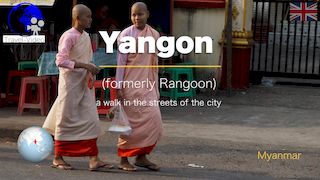
A scene from everyday life in a female monastery in Myanmar.
The novices of Buddhist monasteries may be monks, but above all they remain children.
The production of Buddha sculptures remains a very widespread activity in Myanmar.
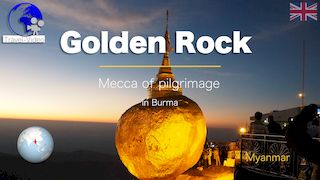
The fervor of the Buddhist faithful in Burma pushes them to cover with gold the statues of Buddha and certain sacred places like the Golden Rock. For this they use very fine gold leaves which are made in artisanal workshops like this one.

Music:
- - YouTube video library - Desert Catharsis
- - YouTube video library - Hookah Bar
- - YouTube video library - March to Victory
- - YouTube video library - Pooka
- - YouTube video library - Tuba Waddle
Disclaimer: Despite its appropriateness, copyright issues prevent the use of burmese traditional music in "Mandalay, scenes from everyday life • Myanmar ", hence the use of royalty-free music. Despite our careful selection, some might regret this decision, which is necessary to avoid potential lawsuits. Although difficult, this decision is the only viable solution.