Français (France)
  Nederlands (nl-NL)
 00:00 • intro | 00:58 • Karen women (giraffe-women) | 03:11 • Phaung Daw Oo Pagoda | 07:28 • Shwe Inn Dein Pagoda
Personal creation from visual material collected during my trip Myanmar • Burma (2016)
Map of places or practices in Inle Lake on this site
• Use the markers to explore the content •
Inle Lake Between Mountain Traditions and Buddhist Heritage
A Cultural Landscape in Eastern Myanmar
Located in Shan State in eastern Myanmar, Inle Lake forms one of the country’s best-known cultural and natural landscapes. Surrounded by hills, villages and agricultural areas, the region combines Buddhist religious traditions, ethnic diversity and mountain environments that differ significantly from the central plains of Myanmar. This video approaches the Inle Lake region from the land rather than from the water, focusing on religious monuments and local communities established around the lake and in the surrounding hills.
The scenes presented reveal a territory where daily life remains closely linked to both religion and local traditions. Buddhist pagodas, ethnic communities and mountain settlements illustrate the diversity of the region, which historically remained somewhat distinct from the major political centres of the Burmese kingdoms while maintaining strong religious and commercial connections with the rest of the country.
Karen Communities and Regional Diversity
One of the cultural aspects shown in the video concerns the Karen and Kayan communities sometimes associated with the so-called “giraffe women” tradition. In certain villages, women wear brass neck coils that gradually modify the appearance of the neck and shoulders. Although this custom is often presented in simplified or purely touristic terms, it reflects broader cultural traditions found among several ethnic groups living in the mountainous border regions between Myanmar and Thailand.
The images also provide a glimpse into the cultural diversity of eastern Myanmar, where different populations preserve distinct languages, clothing traditions and social practices. Around Inle Lake, Shan, Karen, Pa-O and other communities contribute to the complex cultural identity of the region.
Phaung Daw Oo and the Pagodas of Inn Dein
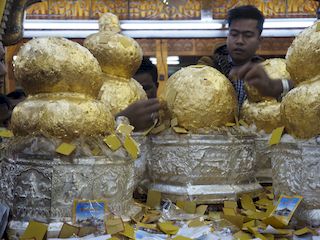
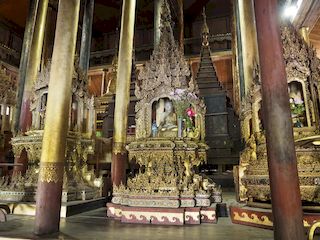
The Phaung Daw Oo Pagoda is among the most important Buddhist sanctuaries around Inle Lake. The site houses sacred Buddha images covered over centuries with layers of gold leaf applied by devotees. The pagoda remains a major religious centre for local communities and plays an essential role during the annual Phaung Daw Oo festival, one of the most significant religious celebrations in the Shan region.
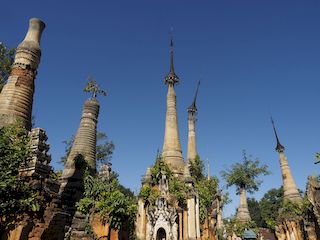
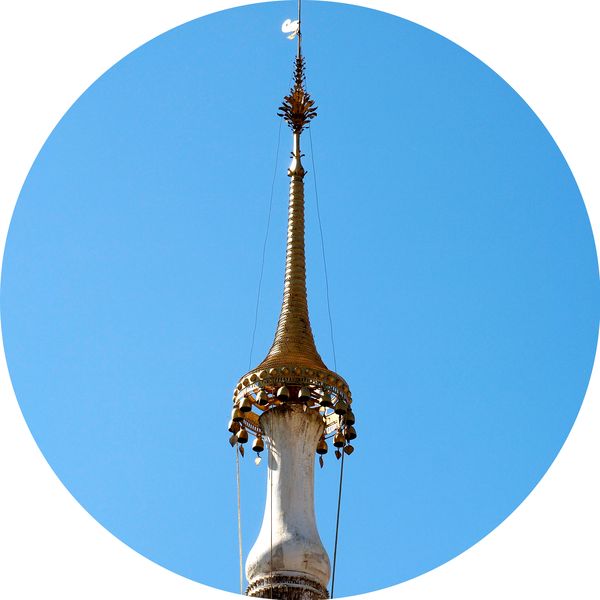
The pagoda complex of Shwe Inn Dein presents a very different atmosphere. Located in a hilly area west of the lake, the site contains a large concentration of ancient stupas built over several historical periods. Some structures remain partially covered by vegetation, while others have been restored more recently. Together, they create a striking landscape illustrating the long development of Theravāda Buddhism in the region. The architectural variety visible among the stupas reflects centuries of local patronage and successive phases of construction and restoration under Shan and Burmese influence.
Buddhism, Landscapes and Historical Influences
The Inle Lake region historically belonged to territories influenced by Shan principalities that maintained varying degrees of autonomy before their gradual integration into larger Burmese political structures. Buddhism has long played a central role in the organisation of religious and social life around the lake. Monasteries, pagodas and pilgrimage sites remain important landmarks throughout the surrounding villages and hills.
The natural environment also strongly shaped local settlement patterns. Wetlands, cultivated zones and mountain slopes influenced the development of villages and trade routes connecting the lake basin to other regions of eastern Myanmar. This combination of religious sites and mountain landscapes contributes to the distinctive identity of the Inle Lake area.
What the Videos on This Site Make Particularly Clear
The videos on travel-video.info make it possible to observe the architectural details of the pagodas and the surrounding landscapes with unusual clarity. The animated photographic sequences highlight the textures of ancient stupas, gilded decorations and the spatial relationships between religious monuments and the hills around the lake.
The gradual transitions between wide views and closer perspectives also help viewers better understand the organisation of the religious sites and the cultural diversity of the region. This visual approach makes it easier to compare architectural forms, landscapes and community traditions within the broader environment of Inle Lake.
A Major Cultural Region of Eastern Myanmar
Through Buddhist monuments, mountain communities and the landscapes surrounding Inle Lake, this video presents eastern Myanmar as a region shaped by both religion and ethnic diversity. The detailed pages dedicated to the pagodas and cultural sites of Inle Lake provide additional context for exploring one of the most distinctive cultural landscapes of Myanmar.
Links to related pages
















Audio Commentary Transcript
A bit like the fishermen of Lake India who live more from tourism than from fishing, these Padaung women (or Karen, often called giraffe women) have become tourist attractions.
The situation of these women who remained in Burma is however slightly more enviable than that of their counterparts who emigrated to Thailand where they are presented a little as beasts for the sake of the lens of tourists' cameras.
We met them at a souvenir and craft store.
Here also the ethical question arises in the face of this situation. But since you have to live well, is it better to pose for tourists while weaving their fabrics than to weave their fabrics and live in the greatest destitution ...?
These five shapeless statuettes are in fact Buddhas covered for decades with gold leaf offered by the faithful.
Music:
- - YouTube video library - A Fallen Cowboy
- - YouTube video library - Becoming
- - YouTube video library - Breathing Planet
Disclaimer: Despite its appropriateness, copyright issues prevent the use of burmese traditional music in "Inle Lake, on the banks • Myanmar", hence the use of royalty-free music. Despite our careful selection, some might regret this decision, which is necessary to avoid potential lawsuits. Although difficult, this decision is the only viable solution.