Français (France)
  Nederlands (nl-NL)
 00:00 • intro | 00:35 • lacquer art | 04:12 • corn cigar art
Personal creation from visual material collected during my trip Myanmar • Burma (2016)
• Use the markers to explore the content •
Bagan, Craftsmen and Living Traditions of Myanmar
Another Side of Bagan
Bagan is internationally renowned for its immense archaeological plain, where thousands of temples, stupas and shrines preserve the memory of medieval Myanmar. Yet the region is not defined only by monumental architecture. It is also a place of workshops, skilled hands and traditions that continue to shape daily life. This video offers that complementary perspective by turning attention from famous monuments to the people who maintain long-established crafts.
Through scenes of production and artisanal work, Bagan appears as a living cultural landscape rather than a site frozen in the past. Decorative objects, practical goods and inherited techniques all contribute to the identity of the region. Such activities reveal an essential dimension of heritage: culture transmitted not only through buildings, but also through gesture, patience and material knowledge.
This makes Bagan especially interesting. Visitors often come for the temples, but the surrounding communities preserve forms of craftsmanship that help explain how historical traditions remain present in contemporary life.
Lacquerware, a Signature Art of Bagan
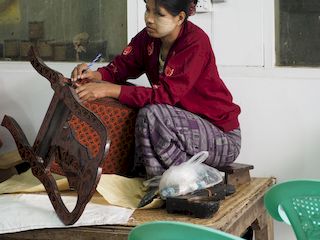
Among the best-known crafts associated with Bagan is lacquerware. This art form has long been one of the city’s most distinctive cultural products and remains closely linked to its reputation. The making of lacquer objects requires time, discipline and technical precision. A core structure is prepared, then coated in successive layers, dried, polished, engraved and coloured.
The finished pieces may include boxes, bowls, trays, containers or decorative objects. Their value lies not only in their appearance, but also in the lengthy process behind them. Every stage depends on careful workmanship and experience accumulated over generations.
Bagan became an important centre for lacquer production because of its historical role as a religious and commercial city. Workshops supplied objects for domestic use, ritual purposes and trade. Some pieces were connected with monasteries and offerings, while others entered ordinary households.
Today lacquerware remains one of the clearest expressions of local identity. It combines artistic creativity, manual discipline and continuity with older traditions. For many visitors, it offers a direct encounter with craftsmanship rooted in the history of the region.
Corn Leaf Cigars and Everyday Skills
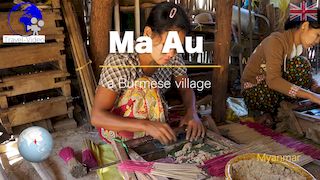
The video also introduces the making of traditional cigars wrapped in natural leaves, here presented through the use of corn leaf material. This activity represents another aspect of local heritage: practical crafts connected with daily habits, small-scale production and regional customs.
Unlike lacquerware, which is often appreciated as decorative art, cigar making belongs more directly to everyday economic life. It demonstrates how communities use available resources, develop efficient techniques and preserve modest but meaningful forms of production.
The rolling of each cigar, the preparation of the filling and the careful handling of wrapping materials all require dexterity and repetition. Such knowledge is often learned through observation and practice rather than formal instruction. In many places, these skills have been transmitted within families or neighbourhood workshops.
Showing this kind of craft broadens the understanding of Bagan. The region is not only an archaeological destination. It is also a place where people continue to make, sell and use products shaped by local tradition.
Historical Background and Cultural Continuity
Bagan flourished between the eleventh and thirteenth centuries as the capital of a powerful kingdom that helped unify large parts of present-day Myanmar. During this period, the concentration of religious monuments attracted monks, merchants, labourers, artists and specialised craftsmen. The growth of the city created strong demand for tools, household goods, ceremonial objects and artistic production.
Craft traditions often develop where religious institutions, urban life and trade networks meet. Bagan offered exactly such conditions. Workshops could serve monastic communities, local elites and travelling merchants, while practical skills remained necessary for everyday life.
Although Bagan later lost its political centrality, its cultural prestige endured. Pilgrimage, local settlement and historical memory helped preserve certain forms of craftsmanship. In modern times, tourism and changing markets have transformed these activities. Some workshops now adapt to new audiences, while others seek to maintain older methods.
This balance between preservation and adaptation is part of the present reality of Bagan’s artisan culture.
What the Videos on This Site Make Easier to Observe
The videos on travel-video.info, often created from carefully selected and animated photographs, are particularly effective for presenting craftsmanship. They allow viewers to focus on hands at work, the texture of materials, the use of tools and the sequence of production stages.
In the case of lacquerware, this format highlights polished surfaces, engraved motifs, colour contrasts and fine finishing details. For more modest crafts, it reveals the rhythm of work and the practical intelligence of repeated gestures.
Transitions between images also help connect workshops with their wider setting. Bagan is shown not as a museum isolated from modern life, but as a region where monumental heritage and contemporary activity coexist. The viewer better understands how living traditions continue beside celebrated historic sites.
This slower visual progression often provides clearer insight than a rapid visit, where many details can easily be missed.
A Land of Temples and Human Skill
Bagan fascinates through its temples and landscapes, yet its identity is also shaped by the artisans who continue to work there. Lacquerware and everyday crafts remind visitors that the history of a place survives not only in monuments, but also in techniques, objects and transmitted knowledge. Those wishing to explore further can continue with the detailed pages dedicated to local traditions and the wider heritage of Bagan.
















Audio Commentary Transcript
The ancient art of lacquer
In Myanmar, artisans have taken the art of lacquerware to its peak. How can you imagine that this pretty little shiny black bowl with its drawings required so much time and meticulous work.
Lacquer is a resin produced by shrubs. To make a lacquer object, you can use various supports. Whether it is wood, woven bamboo strips and horsehair, eggshells, the possibilities are endless.
The secret lies (apart from the extraordinary know-how of the artists) in patience and time. Multiple coats of lacquer are necessary and drying time essential between each coat.
When the object has become sufficiently solid, the artists proceed to their decoration.
It's so exciting to follow.
There are also Burmese cigars ... But if no one in the world is able to compete with lacquer artists, not sure that this also applies to the manufacture of cigars ...
And what about the art of rolling in peanuts ...

Music :
- - YouTube video library - Air to the throne
- - YouTube video library - Big Top
Disclaimer: Despite its appropriateness, copyright issues prevent the use of burmese traditional music in "Bagan • Crafts and Living Traditions of Myanmar", hence the use of royalty-free music. Despite our careful selection, some might regret this decision, which is necessary to avoid potential lawsuits. Although difficult, this decision is the only viable solution.