

 Français (France)
  Nederlands (nl-NL)
 00:00 • intro | 00:43 • a city excavated in the rock
Personal creation from visual material collected during my trip Myanmar • Burma (2016)
Map of places or practices in Pho Win Taung on this site
• Use the markers to explore the content •
A Rock-Cut City in the Landscapes of Myanmar
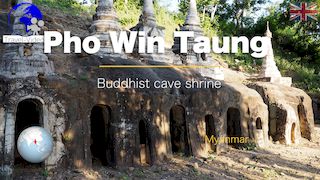
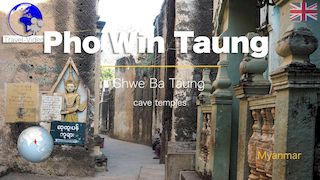
Located in the Pho Win Taung region of Myanmar, the Shwe Ba Taung complex presents a highly unusual aspect of Burmese Buddhist heritage. Unlike the monumental brick temples and gilded stupas found in many other parts of the country, this site is characterised by spaces carved directly into the rock itself. Stone stairways, narrow passages, excavated chambers and sculpted façades form an ensemble that resembles both a religious sanctuary and a true rock-cut settlement.
The video offers a gradual exploration of this mineral landscape through its carved corridors, hidden shrines and excavated spaces integrated into the surrounding cliffs. The images highlight the close relationship between architecture, natural relief and spiritual practices in a site that remains relatively little known outside Myanmar.
Rock-Cut Sanctuaries and Troglodytic Architecture
The main sequences reveal a complex network of cavities, staircases and structures directly shaped into the stone formations. Some areas contain small meditation chambers and niches housing Buddha images, while others resemble narrow streets enclosed between rock walls and sculpted façades.
This organisation gives the site a particularly distinctive atmosphere. Stairways cut into the rock connect different levels and progressively lead visitors towards hidden sanctuaries, carved openings and religious spaces embedded within the cliffs. The contrast between the dark interiors of the excavated chambers and the bright exterior landscapes further reinforces the singular character of the complex.
Small religious structures built above or beside the excavated sections also underline the importance of Buddhism in the development of the site. Certain architectural elements combine traditional Burmese forms with adaptations imposed by the rocky environment itself, creating an ensemble where natural landscape and constructed space become closely intertwined.
Between Sacred Landscape and Monastic Retreat
Like many rock-cut sites across Asia, Shwe Ba Taung belongs to a long tradition associating mountains and caves with spiritual retreat and meditation. Excavated spaces provided protected environments suitable for monastic life, contemplation and religious practice while remaining integrated into the surrounding landscape.
The site appears to have developed progressively over time. Some areas remain relatively simple, while others display more elaborate decorative carvings around entrances and sanctuaries. This variety contributes to the impression of a settlement that evolved gradually according to the natural forms of the cliffs rather than following a rigid monumental plan.
The rocky landscape itself plays a major role in the identity of the site. Cliffs, narrow corridors, carved stairways and excavated chambers create unusual perspectives that differ greatly from the more open religious complexes of central Myanmar. The alternation between enclosed spaces and panoramic openings strengthens the contemplative atmosphere of the site.
What the Videos on This Site Make Particularly Clear
The videos published on travel-video.info frequently rely on animated photographs and progressive transitions that allow detailed observation of monuments and landscapes. This visual approach makes it easier to understand complex sites where spatial organisation and architectural relationships are essential.
In the case of Shwe Ba Taung, the movements within the image emphasise the excavated volumes, the relationship between stairways and cliffs, and the differences in scale between intimate religious chambers and vast rocky surfaces. The gradual transitions also help reveal the almost labyrinthine character of certain passages and the constant integration of architecture into the natural terrain.
An Unusual Rock-Cut Heritage Site in Myanmar
Through its carved passages, Buddhist sanctuaries and troglodytic organisation, Shwe Ba Taung offers a different perspective on the religious heritage of Myanmar. The video reveals a site where landscape, spirituality and architecture remain closely connected. The detailed pages dedicated to the associated monuments allow visitors to continue exploring the history and architectural singularity of this remarkable rock-cut complex within the Pho Win Taung region.
Links to related pages













Audio Commentary Transcript
Located about forty kilometers from Moniwa in Myanmar, the Pho Win Taung site is famous for its excavated temples. Temples carved into the rock are part of Buddhist traditions. Pho Win Taung has around 800 caves carved into the rock and there are nearly 4,000 sculptures. There are also sanctuaries (monasteries, convents and stupas) whose walls are painted.
The excavations of Pho Win Taung date from the beginning of the 17th century.
About a kilometer from these caves, another more recent troglodyte site. Shwe Ba Taung dates from the end of the 19th century and the beginning of the 20th century. The influences of this other site are more eclectic, mixing Western architectural styles with the Buddhist tradition of Burma ...
Music:
- - YouTube video library - Beth
- - YouTube video library - Big Screen
Disclaimer: Despite its appropriateness, copyright issues prevent the use of burmese traditional music in "Shwe Ba Taung, excavated temples • Myanmar", hence the use of royalty-free music. Despite our careful selection, some might regret this decision, which is necessary to avoid potential lawsuits. Although difficult, this decision is the only viable solution.


