Français (France)
  Nederlands (nl-NL)
 00:00 • intro | 00:46 • Mingun Pahtodawgyi pagoda | 02:17 • Mingun Bell
Personal creation from visual material collected during my trip Myanmar • Burma (2016)
Map of places or practices in Mingun on this site
• Use the markers to explore the content •
Mingun and the Royal Ambitions Along the Irrawaddy
A Monumental Buddhist Site on the Banks of the River
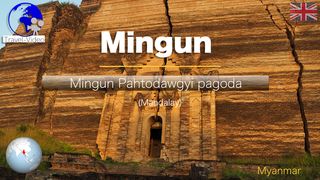
Located north of Mandalay on the western bank of the Irrawaddy River, Mingun occupies a distinctive place in the historical and religious landscape of Myanmar. The site is closely associated with the Konbaung dynasty and with the large-scale royal projects initiated during the reign of King Bodawpaya at the end of the eighteenth century. The video focuses on two of Mingun’s most important monuments: the unfinished Pahtodawgyi Pagoda and the famous Mingun Bell.
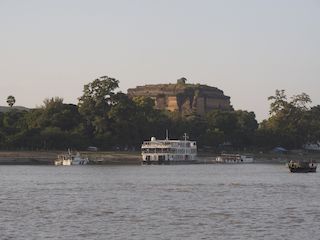
The setting plays an important role in the identity of the site. Wide riverbanks, open views across the Irrawaddy, and the isolated mass of the pagoda create a landscape very different from the dense urban environments of Myanmar’s larger cities. The monuments stand as both religious structures and symbols of royal authority linked to the final great Burmese dynasties before the colonial period.
The Pahtodawgyi Pagoda and the Scale of the Royal Project
The Pahtodawgyi Pagoda dominates Mingun through its enormous brick structure, visible from a considerable distance along the river. Construction began under King Bodawpaya, who intended the monument to become one of the largest Buddhist stupas ever built. The project reflected not only religious devotion, but also the ruler’s desire to reinforce royal prestige and dynastic power through architecture of exceptional scale.
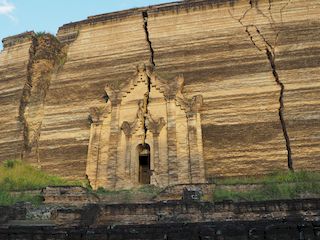
The pagoda was never completed. Economic pressures, political difficulties, and the immense cost of construction contributed to the interruption of the works. Today, the monument remains one of the most striking unfinished religious structures in Southeast Asia. Massive cracks visible in the brickwork also testify to the impact of earthquakes that affected the region over time.
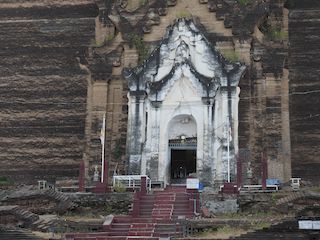
The video highlights the extraordinary dimensions of the structure through views of stairways, terraces, and towering walls of exposed brick. Even in its unfinished state, the pagoda conveys the scale of the original royal ambition and the technical effort required to construct such a monument.
Nearby, the Mingun Bell represents another element of Bodawpaya’s ambitious building program. Cast to accompany the great pagoda, the bell became famous for its exceptional size and for remaining suspended and functional. Beyond its religious role, it also reflects the technical capabilities and ceremonial culture of the Konbaung court.
Architecture, River Landscape, and Historical Context
Mingun illustrates the close relationship between Buddhism, royal authority, and monumental architecture in pre-colonial Burma. Large religious projects financed by the Konbaung rulers served both spiritual and political purposes. By commissioning major Buddhist monuments, kings reinforced their legitimacy as protectors of the faith while also displaying dynastic prestige.
The architecture of the Pahtodawgyi differs from the richly ornamented temples found in other Burmese sites such as Bagan. Its visual impact depends primarily on scale, mass, and geometry rather than on decorative detail. The exposed brick surfaces, broad terraces, and heavy volumes create an impression of raw monumental power.
The Irrawaddy River remains essential to understanding Mingun. Historically, it functioned as the principal communication route linking Upper Burma’s political and religious centers. The visibility of the pagoda from the river strengthened its symbolic role within the royal landscape of the Konbaung kingdom.
What the Videos on This Site Make Easier to Observe
The visual construction of the videos on travel-video.info makes it possible to examine Mingun progressively and in detail. Carefully animated photographs and slow transitions help reveal the immense scale of the pagoda, the texture of the brick surfaces, and the relationship between the monuments and the river landscape.
This approach is particularly effective for observing structural details such as the earthquake cracks, the organization of the terraces, and the proportions of the bell in relation to visitors and surrounding buildings. Wide views place the monuments within the open environment of the Irrawaddy, while closer framings allow a clearer reading of architectural forms and construction techniques.
A Major Testimony to Royal Burmese Architecture
Mingun remains one of the most remarkable examples of royal religious architecture from the Konbaung period. The combination of the unfinished Pahtodawgyi Pagoda and the monumental Mingun Bell offers a particularly revealing insight into the political ambitions, religious culture, and architectural practices of late pre-colonial Burma. The detailed pages dedicated to these monuments provide further information about their history and architectural characteristics.
Links to related pages













Audio Commentary Transcript
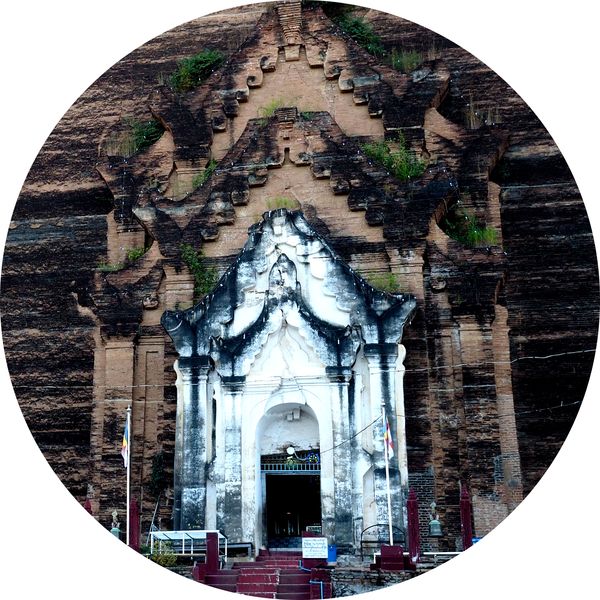
This eerie gate is located at the back of this no less ominous unfinished pagoda by the Irrawaddhy River north of Mandalay.
This pagoda is the result of an excessive royal ambition. King Bodawpaya ordered the construction of the pagoda in 1790 and used thousands of prisoners of war and slaves to build a huge pagoda that was to reach 150 meters high.
The prisoners and the slaves were not the only ones to suffer from this pharaonic project. Taxes were considerably increased and the state coffers suffered greatly from this construction.
The king was extremely superstitious and all that was needed was a prophecy that the day the pagoda was completed, the land would immediately disappear. So the king decided to slow down the work because he did not want his country to disappear. And upon his death, the work was abandoned. The pagoda had reached 50 meters high, a third of what was expected.
An earthquake in 1839 damaged it by creating large cracks still visible today. It is probably these cracks that explain the great tourist craze for this unfinished monument.
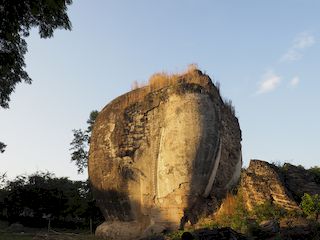
At the entrance of the pagoda, a huge brick lion also destroyed by the earthquake, but what remains is a dream.
Music:
- - YouTube video library - A Fallen Cowboy
- - YouTube video library - Vacation Casual
Disclaimer: Despite its appropriateness, copyright issues prevent the use of burmese traditional music in "Mandalay, Mingun Pahtodawgyi Pagoda • Myanmar", hence the use of royalty-free music. Despite our careful selection, some might regret this decision, which is necessary to avoid potential lawsuits. Although difficult, this decision is the only viable solution.