Français (France)
  Nederlands (nl-NL)
 00:00 • intro | 00:42 • manufacturing incense sticks | 01:14 • basketry | 02:23 • goldsmith | 03:25 • the village | 03:55 • pagodas
Personal creation from visual material collected during my trip Myanmar • Burma (2016)
Map of places or practices in Ma Au on this site
• Use the markers to explore the content •
Craftsmanship and Daily Life in the Burmese Village of Ma Au
A village shaped by craft traditions and religious life
The village of Ma Au offers a view into everyday life in a part of Myanmar where artisanal production remains closely connected to domestic activities, religious practices and local economic networks. Through its workshops, streets and communal spaces, the video presents an environment in which several traditional crafts continue to play an important role in the organisation of village life.
The scenes shown in the film reveal different aspects of this rural setting. Incense-stick production, basket weaving and metalworking coexist with residential areas and Buddhist religious structures visible throughout the village. Together, these elements illustrate a cultural landscape where craftsmanship, spiritual life and daily routines remain strongly interconnected.
The atmosphere of Ma Au differs noticeably from the rapidly changing urban centres of Myanmar. The rhythm of manual work, the use of local materials and the modest scale of the built environment all reflect a village economy still largely organised around traditional forms of production and exchange.
Workshops, village spaces and religious structures
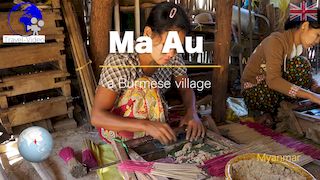
One of the central themes of the video is the manufacture of incense sticks, an activity closely associated with Buddhist devotional practices throughout Myanmar. The different stages of production allow viewers to observe the preparation of materials, the shaping of incense sticks and the drying processes used in small-scale workshops. These scenes also show how religious customs continue to support local artisanal activities.
Basket weaving represents another important aspect of village craftsmanship. The woven containers and household objects visible in the film demonstrate the continued use of traditional techniques adapted to everyday needs. The work requires precise manual gestures and the use of plant-based materials that remain widely available in rural Myanmar.
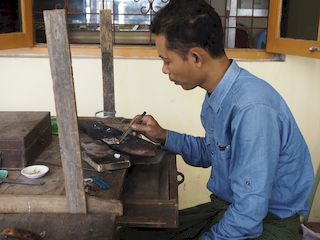
The goldsmith and metalworking activities shown in the video reveal a more specialised form of craftsmanship often linked to jewellery, ritual objects or decorative elements used in Buddhist contexts. Even in relatively modest workshops, these activities reflect the long-standing importance of metalworking traditions in Burmese cultural life.
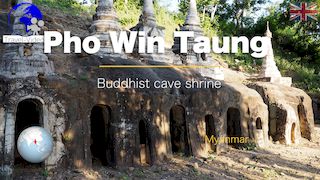
The views of the village itself provide insight into the organisation of residential and working spaces. Houses, workshops and circulation paths form a coherent environment shaped by local customs and practical needs. The pagodas visible in and around Ma Au reinforce the central role of Buddhism within the cultural and social structure of the community.
Cultural continuity and local traditions in Myanmar
The artisanal practices observed in Ma Au belong to a long tradition of village-based production that has existed in Myanmar for centuries. Many rural communities historically developed specialised activities linked to agriculture, religion and regional trade networks. These traditions often remained organised around family transmission and local apprenticeship.
The production of incense and certain forms of decorative craftsmanship are closely related to Buddhist religious life. Offerings, rituals and temple activities continue to generate demand for objects used in ceremonies and devotional practices. In this context, craftsmanship remains connected not only to economic activity but also to cultural identity and religious continuity.
The architecture visible in the village reflects practical adaptation to the tropical climate and to artisanal work. Open structures, shaded working areas and lightweight materials contribute to an environment designed for ventilation and manual production. Although industrial products and modern economic changes have altered some aspects of village life, many traditional techniques remain visible in places such as Ma Au.
What the videos on this site make especially clear
The videos on travel-video.info make it possible to observe artisanal gestures, textures and workshop organisation with particular clarity. Because many sequences are built from carefully selected and animated photographs, viewers can study details that are often difficult to perceive in conventional moving footage.
The gradual transitions between wider views and close framing also help explain the relationship between workspaces, religious structures and village organisation. This visual approach makes it easier to understand how craftsmanship, spiritual practices and everyday life coexist within the same environment.
A closer look at traditional village life in Myanmar
Through its workshops, pagodas and scenes of daily activity, this video presents Ma Au as more than a simple rural settlement. It offers a detailed view of artisanal traditions and local practices that continue to shape parts of Myanmar today. The detailed pages related to incense-stick production provide an opportunity to explore these traditional activities and their cultural significance in greater depth.
Links to related pages




















Audio Commentary Transcript
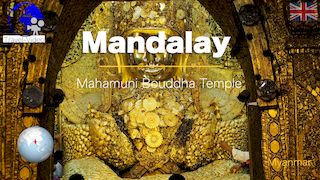
Ma Au is a village in the Monywa region of Myanmar. I don't know if it's a really typical village because there are really a lot of temples and stupas and quite active crafts. A workshop for manufacturing incense sticks, basketwork and goldsmith workshops.
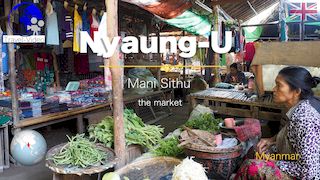
But there is also a market, people, life, and very few tourists.

Music:
- - YouTube video library - Clouds
- - YouTube video library - Lurking
Disclaimer: Despite its appropriateness, copyright issues prevent the use of burmese traditional music in "Ma Au, a Burmese village • Myanmar", hence the use of royalty-free music. Despite our careful selection, some might regret this decision, which is necessary to avoid potential lawsuits. Although difficult, this decision is the only viable solution.