Français (France)
  Nederlands (nl-NL)
 00:00 • intro | 00:49 • Sas Bahu temple
Personal creation from visual material collected during my trip India • Rajasthan and Varanasi (2015)
Map of places or practices in Nagda on this site
• Use the markers to explore the content •
Nagda and the Sas Bahu Temple, Sculpted Heritage of Rajasthan
An Ancient Site of Water, Stone and Memory
Nagda, in Rajasthan, is today a quiet archaeological location whose surviving monuments recall the importance of this region in earlier centuries. Once associated with the rulers of Mewar, the site preserves traces of an old settlement set within a landscape of lakes, low hills and open ground. Among its most remarkable remains are the temples commonly known as Sas Bahu.
This video introduces the site through its principal monument, allowing viewers to appreciate both the historical atmosphere of Nagda and the refined stone craftsmanship that still defines the complex. The setting combines natural calm with the enduring presence of medieval architecture.
The Sas Bahu Temple Complex
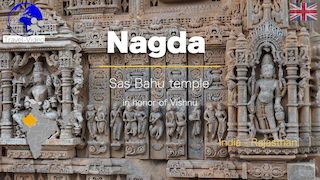
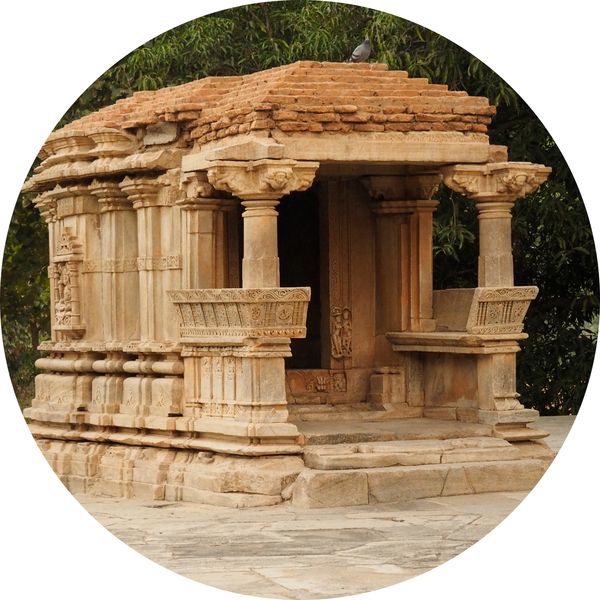
Despite the singular name often used today, Sas Bahu refers to a pair of neighbouring temples rather than a single structure. One is larger and architecturally dominant, while the second repeats many of the same principles on a smaller scale. Their relationship creates a balanced sacred ensemble rather than two unrelated buildings.
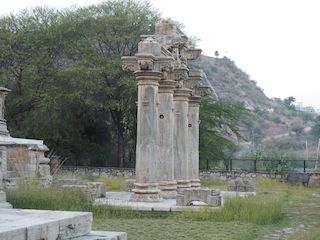
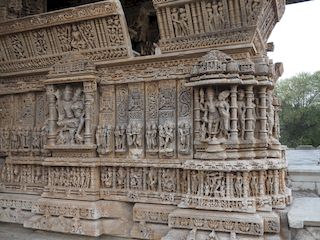
The video highlights elevated platforms, ceremonial stairways, carved pillars and richly decorated exterior walls. Doorframes, niches, friezes and structural details reveal the skill of the craftsmen who shaped the monument. Even where upper portions have been lost, the temples remain highly readable in plan and form.
Visitors can still recognize the movement sequence typical of Hindu temple architecture: an approach from the exterior platform into columned halls and then toward more restricted inner sacred zones. This surviving clarity is one of the site’s greatest strengths.
Historical and Architectural Context
The temples were built in the eleventh century during a period of regional prosperity linked to the kingdom of Mewar. At that time, temple construction was both a religious act and a statement of prestige, patronage and political legitimacy. Nagda appears to have been an important centre before later shifts in regional power reduced its status.
Architecturally, the complex belongs to the broader North Indian temple tradition. The original towers rose above the sanctuaries, while walls were articulated with projections, recesses and sculptural programs. Decorative surfaces combine divine imagery, floral motifs, geometric bands and miniature shrine forms.
Over time, warfare, neglect and natural weathering damaged parts of the complex. Several upper sections disappeared, yet major structural and decorative elements survive. What remains is sufficient to understand the ambition and refinement of the original design.
The name Sas Bahu is commonly translated as “mother-in-law and daughter-in-law,” though this popular interpretation is later than the construction itself. The historical dedication of the principal temple is linked to Vishnu rather than to any domestic legend.
What These Videos Make Especially Clear
A monument such as Sas Bahu rewards careful visual observation, and this is where the photographic video format becomes especially effective. Animated still images make it possible to move gradually across façades, approach sculpted pillars and compare the two neighbouring temples without distraction.
Close views reveal carving depth, stone texture and ornamental precision. Wider perspectives clarify the relationship between buildings, platforms and surrounding landscape. Because the sequence is controlled, the viewer can follow the logic of the architecture step by step.
This approach is particularly useful for partially ruined monuments. It helps reconstruct how the complex once functioned and how separate elements were originally connected. Details that may be overlooked during a brief visit become easier to understand through slow visual progression.
A Lesser-Known Masterpiece of Rajasthan
Less famous than some of Rajasthan’s major palace or fortress sites, the Sas Bahu temples of Nagda remain one of the region’s finest examples of medieval sacred architecture. This video offers an accessible introduction to a place where history, sculpture and spatial design meet with unusual elegance. Related detailed pages allow visitors to explore the monument more deeply after viewing.
Links to related pages
• Main dynasties that ruled the region • •


















Music:
- - YouTube video library - Immortality
Disclaimer: Despite its appropriateness, copyright issues prevent the use of indian traditional music in "Nagda Sas Bahu temple • Rajasthan, India ", hence the use of royalty-free music. Despite our careful selection, some might regret this decision, which is necessary to avoid potential lawsuits. Although difficult, this decision is the only viable solution.