Français (France)
  Nederlands (nl-NL)
 00:00 • intro | 00:28 • outside the palace | 01:15 • in the palace
Personal creation from visual material collected during my trip Unknown India • Ladakh, Karnataka, Telangana (2022)
Map of places or practices in Mysore on this site
• Use the markers to explore the content •
Mysore Palace: Royal Architecture and the Legacy of the Wodeyar Dynasty
A Landmark of Southern Indian Royal History
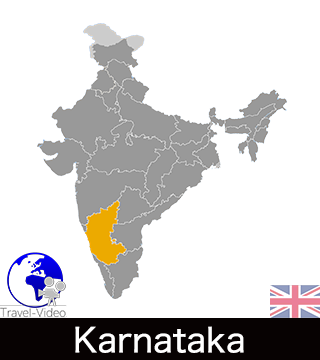
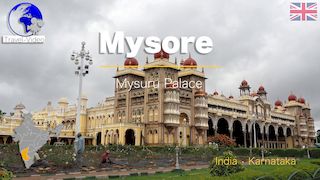
Mysore Palace is one of the most recognizable royal monuments in southern India. Located in the historic center of Mysore, in the state of Karnataka, the palace reflects the political and cultural importance of the Wodeyar dynasty, which ruled the Kingdom of Mysore for several centuries. The present structure was built in the early twentieth century after the destruction of an earlier palace by fire, and it represents both the ambitions of the princely rulers and the architectural transformations associated with the colonial period.
The video explores the palace from both exterior and interior perspectives, revealing its ceremonial role as a royal residence, administrative center, and symbol of dynastic authority. Through its domes, galleries, towers, and richly decorated halls, the monument illustrates the way architecture was used to express political prestige within the princely states of India.
Monumental Facades and Ceremonial Interiors
The exterior views emphasize the scale and symmetry of the palace complex. Large arcades, domed towers, and extended façades create a monumental composition that dominates the urban landscape of Mysore. Open spaces surrounding the building help clarify the relationship between the palace and the ceremonial areas historically associated with the royal capital.
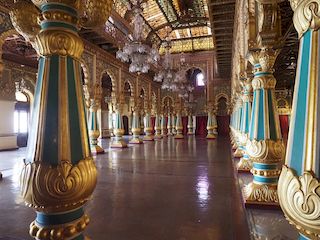
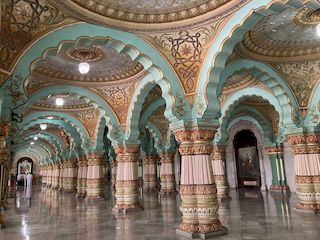
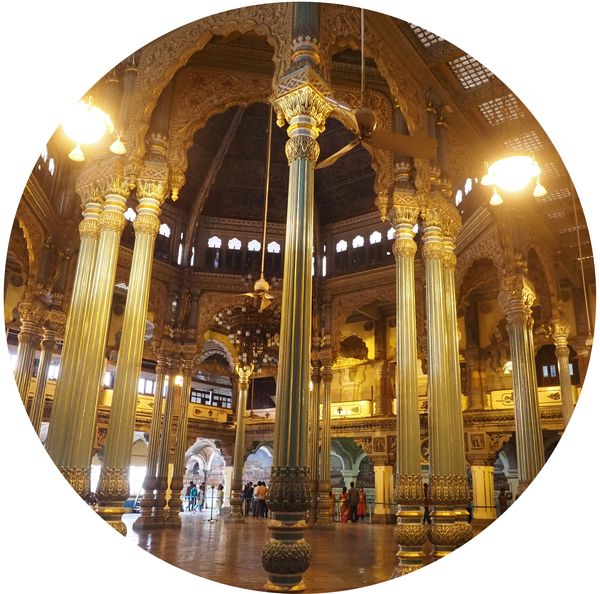
The interior sequences reveal richly ornamented halls designed for receptions, official ceremonies, and courtly gatherings. Painted columns, decorative ceilings, stained glass elements, and patterned floors demonstrate the high level of craftsmanship employed throughout the palace. These interiors were intended not only for practical royal functions but also for the visual representation of authority and refinement.
The video also highlights the contrast between large public halls and more functional spaces integrated into the palace complex. This diversity helps explain how the building operated simultaneously as a ceremonial monument and as a center of political administration.
Historical Context and the Wodeyar Dynasty
The palace is closely linked to the history of the Wodeyar rulers, who governed Mysore from the late medieval period onward. The dynasty played a major role in shaping the political and cultural identity of southern Karnataka. During the eighteenth century, the kingdom experienced major political upheavals associated with Hyder Ali and Tipu Sultan, before the Wodeyars eventually regained authority under British supervision.
The current palace was constructed during a period of urban modernization and princely renewal at the end of the nineteenth century and the beginning of the twentieth century. Its architecture reflects this historical context by combining Indian traditions with European influences and modern engineering techniques. Indo-Saracenic forms, decorative domes, arcaded façades, and elaborate interiors all contribute to the palace’s distinctive appearance.
Today, the monument remains strongly associated with the cultural identity of Mysore and Karnataka. It continues to play a symbolic role during the Dasara festival, when the illuminated palace becomes one of the principal ceremonial landmarks of the city. This continuity between historical function and contemporary cultural life reinforces the monument’s importance within the urban landscape.
What the Videos on This Site Make Particularly Clear
The animated photographic sequences used in these videos make it easier to observe the architectural details of the palace with precision. Slow visual movements allow viewers to follow the lines of the façades, the proportions of the domes, and the organization of the galleries without the limitations imposed by rapid movement through a crowded site.
Close framing highlights decorative elements such as painted ceilings, carved details, colored glass, and ornamental columns. The progression between exterior and interior views also clarifies how ceremonial spaces were arranged within the broader architectural composition of the palace.
Because many scenes are constructed from carefully selected and animated photographs rather than continuous motion footage alone, the viewer can more easily study relationships between architectural volumes, decorative programs, and spatial organization. The related detailed pages provide additional historical and architectural context concerning Mysore Palace and the Wodeyar dynasty.
A Continuing Symbol of Mysore
Through its monumental architecture, ceremonial interiors, and enduring connection with royal traditions, Mysore Palace remains one of the major historical landmarks of southern India. The video offers a detailed visual approach to this princely residence while encouraging a deeper exploration of the monument and its historical background through the associated pages dedicated to the palace and the cultural heritage of Mysore.
Links to related pages
• Main dynasties that ruled the region •



Audio Commentary Transcript
The kingdom of Mysore was founded more than 600 years ago by the Wodeyar dynasty which remained in power in the region until the independence of India, with however a period in the 18th century, when its power was purely symbolic. . With the occupation of India by the British, the Wodeyars remained in power, with a bond of vassalage to the British Crown.
The Kalyan Mantapa, or Marriage Hall, is one of the most spectacular rooms in Mysore Palace. White marble floors from various parts of India, a painted glass ceiling imported from Belgium, intricately carved painted cast iron columns and wall paintings are some of the features that make this hall one of the most sumptuous of the palace.
The Hall of Public Audiences in Mysore Palace was used for official audiences and ceremonies in the presence of subjects and guests of the kingdom. It was this room that was used for special ceremonies and official receptions. The huge hall is adorned with finely decorated columns and wall paintings. This room also opens to the outside and a balcony allows the king to watch the processions and other events taking place outside.
The Private Audience Hall of Mysore Palace was used to hold meetings and audiences with dignitaries, ministers or high officials or special guests. Access was limited to those expressly authorized by the king. The room is smaller and less grandiose than that of the public hearings.
Music:
- - YouTube video library - Air to the throne
- - YouTube video library - Breathing Planet
Disclaimer: Despite its appropriateness, copyright issues prevent the use of indian traditional music in "Mysore, Mysuru Palace, Karnataka • India", hence the use of royalty-free music. Despite our careful selection, some might regret this decision, which is necessary to avoid potential lawsuits. Although difficult, this decision is the only viable solution.