Français (France)
  Nederlands (nl-NL)
 00:00 • intro | 00:33 • the fruit and vegetable market | 02:10 • the flower market
Personal creation from visual material collected during my trip Unknown India • Ladakh, Karnataka, Telangana (2022)
Map of places or practices in Mysore on this site
• Use the markers to explore the content •
Devaraja Market in Mysore: Trade, Colors, and Urban Traditions
A Historic Commercial Space in the City of Mysore
Devaraja Market is one of the best-known traditional markets in Mysore, in the southern Indian state of Karnataka. Located in a city historically associated with the Wodeyar dynasty and the former Kingdom of Mysore, the market remains an important part of daily urban life. It combines commercial activity, food distribution, local traditions, and social interaction within a dense and highly active environment that still reflects older forms of urban organization.
The video explores several aspects of this market through its circulation spaces, specialized sections, and everyday working atmosphere. Fruits, vegetables, flowers, and locally traded products create a visual landscape shaped by color, movement, and constant exchanges between vendors and customers. Beyond its commercial role, the market also functions as a social and cultural space closely connected with the rhythms of the city.
Fruit, Vegetable, and Flower Sections
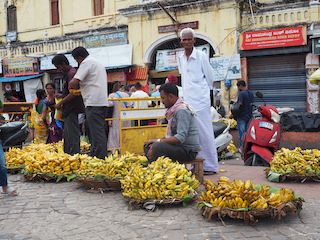
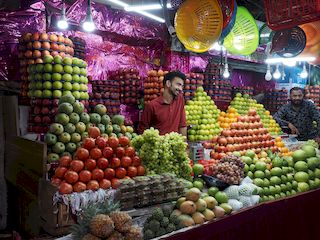
The sequences devoted to fruits and vegetables reveal the scale and diversity of agricultural products arriving from the surrounding countryside. Piles of bananas, citrus fruits, chilies, onions, and other produce are arranged in tightly organized displays that reflect both commercial efficiency and long-established trading practices. The market’s internal structure allows different categories of goods to occupy distinct areas while remaining connected through narrow circulation paths crowded with workers, buyers, and transport activity.
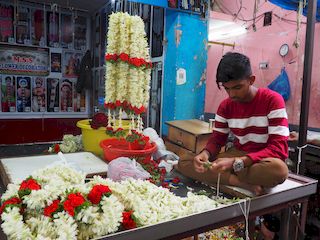
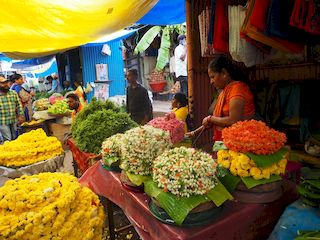
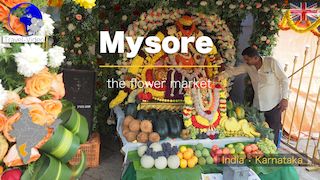
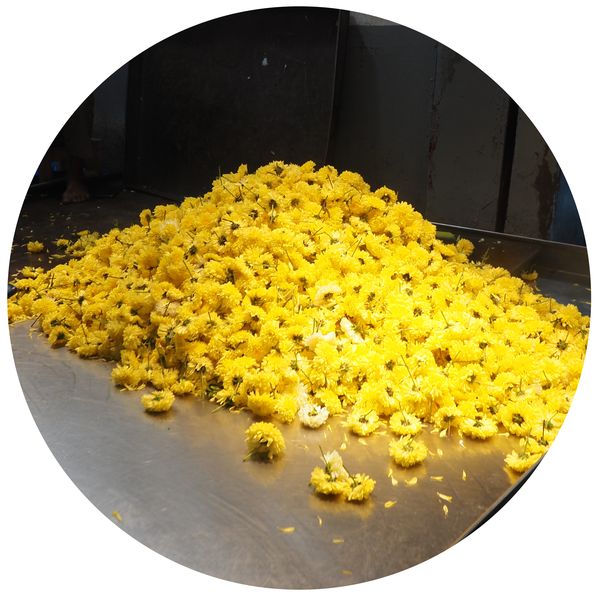
The flower section forms another major element of the video. Garlands of jasmine, marigolds, roses, and other flowers are prepared and sold for religious offerings, ceremonies, household rituals, and festive occasions. In southern India, flowers play an essential role in daily cultural and religious practices, and their strong presence within the market reflects this continuing tradition.
The activity visible throughout the market also illustrates the importance of small-scale commerce within Indian cities. Manual sorting, packaging, negotiation, and direct sales remain central to the functioning of the space. Rather than operating as a modern retail complex, Devaraja Market preserves forms of exchange closely linked to traditional urban economies.
Urban History and Cultural Context
The development of Devaraja Market is connected with the growth of Mysore during the late princely period under the Wodeyar rulers. As the city expanded during the nineteenth and early twentieth centuries, markets became important components of its commercial and administrative organization. Devaraja Market gradually evolved into one of the city’s principal trading centers while maintaining strong links with local agricultural networks and traditional forms of commerce.
Its architectural organization reflects practical adaptation to climate and intensive daily use. Covered halls, open passages, shaded areas, and naturally ventilated spaces help regulate temperature and facilitate circulation within a crowded environment. The arrangement of stalls and corridors prioritizes accessibility and continuous movement rather than monumental design.
The market also reflects the broader cultural identity of Mysore, a city known for its historical palaces, religious festivals, and artisanal traditions. Even within a rapidly modernizing urban environment, spaces such as Devaraja Market continue to preserve older patterns of social interaction and commercial life that remain important to local communities.
What the Videos on This Site Make Particularly Clear
The animated photographic sequences used in these videos make it possible to observe details that are often difficult to notice in the fast-moving atmosphere of a crowded market. Slow transitions between images help reveal the organization of stalls, the textures of products, and the visual rhythm created by colors, baskets, fabrics, and flower arrangements.
Close framing highlights the geometric compositions formed by rows of produce and garlands, while wider views clarify the relationship between circulation spaces and commercial sections. This approach also allows viewers to better understand the scale of activity and the density of interactions that characterize Devaraja Market.
Because many scenes are built from carefully selected and animated photographs rather than continuous motion footage alone, the viewer can focus more easily on architectural details, working practices, and the overall structure of the market environment. The related detailed pages offer additional insight into the traditions and urban functions associated with this historic commercial space in Mysore.
Links to related pages
• Main dynasties that ruled the region •










Audio Commentary Transcript
Like all cities in India, Mysore has several markets. One of the oldest is the Davaraja market, which was established centuries ago. The market has undergone many changes since the Middle Ages, but its current form dates from the beginning of the last century.
In the Devaraja market, there are spices and beautifully arranged fruits and vegetables, sourced from small local farms. The freshness and quality of these products would make many Western markets green with envy.
If the fruit and vegetable market is worth a visit, the real star of the Davaranja market is undoubtedly the flower market. The flower trade in India is not much like it is in Europe. In India, most of the flowers are used to make necklaces and other decorations, used mainly for ceremonies, whether at the temple or elsewhere.
Music:
- - YouTube video library - Outcast
Disclaimer: Despite its appropriateness, copyright issues prevent the use of indian traditional music in "Mysore, Devaraja market, Karnataka • India", hence the use of royalty-free music. Despite our careful selection, some might regret this decision, which is necessary to avoid potential lawsuits. Although difficult, this decision is the only viable solution.