

 Français (France)
  Nederlands (nl-NL)
 00:00 • intro | 00:34 • the library | 00:50 • the station | 01:11 • the most expensive house in the world | 01:36 • shrimp sorters on the beach | 03:05 • the Vipassana pagoda | 04:10 • Dhobi Ghat | 05:45 • Gateway of India | 06:00 • Taj Mahal Hotel | 06:28 • a market
Personal creation from visual material collected during my trip India - Kumbh Mela • Madhya Pradesh • Maharashtra • Goa (2018)
Map of places or practices in Mumbai on this site
• Use the markers to explore the content •
Mumbai: Colonial Landmarks, Urban Life and Coastal Traditions
A Metropolis Shaped by Trade, Industry and Migration
Mumbai occupies a central position in the economic and cultural history of modern India. Formerly known as Bombay, the city developed from a strategic colonial port into one of the largest urban regions in Asia. The video explores this complexity through a wide range of places and activities, combining historic monuments, religious structures, railway infrastructure, markets and scenes connected with everyday work along the coast.
The different sequences reveal a city built through successive layers of commercial expansion, industrialization and migration. Colonial-era institutions stand beside dense residential districts, luxury developments and long-established working environments that continue to structure daily life. Mumbai appears not only as India’s financial capital, but also as a place where older urban practices remain visible within a rapidly transforming metropolitan landscape.
Historic Buildings, Public Spaces and Everyday Activities
Several of the locations presented in the video illustrate the architectural and symbolic importance of colonial Bombay. The monumental railway station, with its richly decorated façade and large-scale urban presence, reflects the role of the city within the railway networks established during British rule. The nearby library buildings and civic institutions belong to the same historical phase, when Bombay emerged as one of the principal administrative and commercial centers of western India.
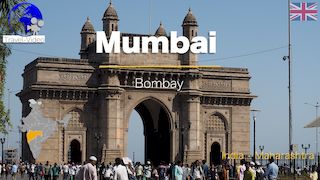
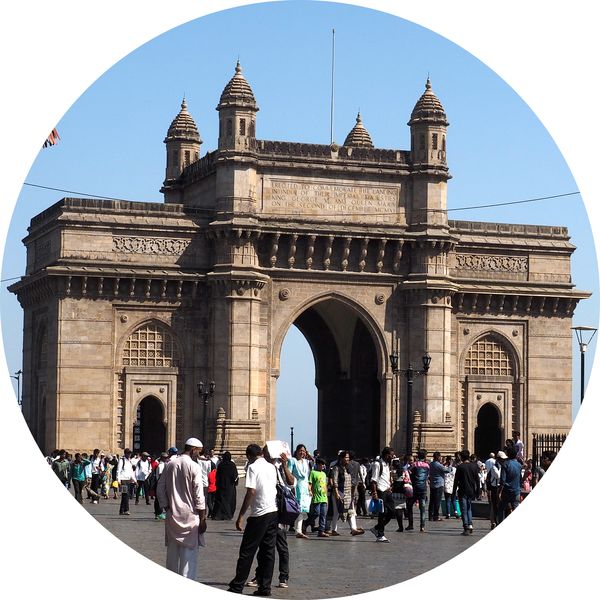
The Gateway of India remains one of the city’s best-known landmarks. Built along the waterfront during the colonial period, the monument was conceived as a ceremonial entrance facing the Arabian Sea. Nearby, the Taj Mahal Hotel represents another important stage in the development of the city, illustrating the rise of luxury hospitality and the ambitions of Indian entrepreneurs during the early twentieth century.
The video also moves beyond monumental architecture to show aspects of Mumbai’s working life. Dhobi Ghat demonstrates the remarkable scale and organization of the city’s traditional open-air laundry system, where generations of workers have continued specialized washing techniques adapted to the needs of the metropolis. Along the shoreline, shrimp sorting activities reveal another dimension of Mumbai’s economy, linked to fishing communities, seafood trade and coastal labor.
The Global Vipassana Pagoda introduces a different architectural and cultural atmosphere. Inspired by Burmese Buddhist forms, the structure reflects the contemporary presence of meditation centers and spiritual movements within the wider Mumbai region.
Urban Growth and Cultural Contrasts
Mumbai’s development has long been tied to maritime trade and international exchange. The city expanded rapidly under British administration, particularly during the nineteenth century, when docks, railways and commercial districts transformed Bombay into a major colonial port. Many of the buildings visible in the video still preserve architectural characteristics associated with this period, including Gothic Revival, Indo-Saracenic and European-inspired civic styles adapted to Indian conditions.
At the same time, the video highlights the social and spatial contrasts that define Mumbai today. Traditional labor zones coexist with high-rise commercial districts and some of the most expensive private residences in the world. Markets, transportation hubs and informal working areas remain essential parts of the urban fabric despite large-scale modernization projects.
The diversity of the city is also reflected in the coexistence of multiple religious and cultural traditions. Hindu, Muslim, Christian and Buddhist influences all contribute to the identity of Mumbai, while migration from many regions of India has shaped its languages, cuisine and urban culture.
What the Videos on This Site Make Easier to Observe
The visual approach used on travel-video.info allows viewers to examine Mumbai with particular clarity. The animated photographic sequences emphasize architectural details, urban perspectives and spatial relationships that are often difficult to perceive within the constant movement of such a dense metropolis.
Close views highlight the sculptural decoration of the railway station, the monumental proportions of the Gateway of India and the geometric organization of Dhobi Ghat. The gradual transitions between images also help explain how colonial buildings, religious monuments, workspaces and coastal environments coexist within the same urban territory.
Because many sequences are constructed from carefully selected photographs rather than continuous motion footage, the viewer can spend more time observing textures, façades, circulation spaces and the contrast between monumental architecture and everyday urban activity.
A Multifaceted Portrait of Mumbai
Through its monuments, transportation infrastructure, religious sites and working districts, Mumbai emerges as a city shaped by commerce, migration and constant transformation. The video offers a broad reading of this western Indian metropolis while providing opportunities to explore specific monuments and traditions in greater detail through the related pages connected to the site.
Links to related pages
• Main dynasties that ruled the region •



Audio Commentary Transcript
Mumbai is a sprawling city with notable landmarks, ranging from Victorian buildings like the railway station to the recent Vipanassa stupa. A huge slum, perhaps the largest in the world, near the most expensive house in the world.
A city of contrasts.
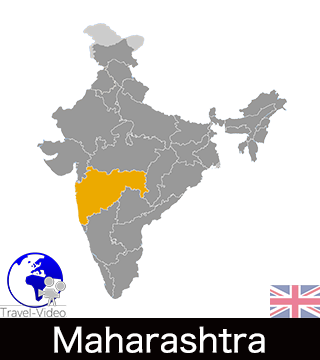
Mumbai, better known as Bombay is the capital of Maharashtra. It is the most populated city in India with its 12.5 million inhabitants, 23 million if we count all the metropolis.
Mumbai is the economic capital of India and is full of monuments left by the British. Among these monuments, the station, the library and many others.
The name Mumbai comes from that of the goddess Mumbadevi, which means "mother" in the Barathi language, the mother tongue of the Coli peoples and the official language of Maharashtra.
The old name of the city of Mombai, Bombay was given by the Portuguese and probably means "good bay".
Mumbai is the economic and financial capital of India. It is also the capital of Indian cinema with Bollywood studios.
Among the things to see in Mumbai, the Dobhi Ghat, a huge open-air washhouse in the heart of the city.
The laundry workers are called dobhis, men only, and they wash laundry for most of the hotels and hospitals in the city. All this immense laundry is done entirely by hand and the washing is done by passing the laundry through different bins and by the strength of the arms of the dhobis.
Notable colonial monuments include the Victorian-style Chhatrapati Shivaji Railway Station and the University Library, one of the largest in the world.
Dobhi Ghat is a huge open-air laundromat in central Mumbai. The dhobi wallah, washing clothes from father to son, wash clothes for almost the entire city.
All linen is washed by hand.
In particular, hotels and hospitals call on their services.
Music:
- - YouTube video library - A Fallen Cowboy
- - YouTube video library - Central Park
- - YouTube video library - Desert Catharsis
Disclaimer: Despite its appropriateness, copyright issues prevent the use of indian traditional music in "Mumbai (Bombay) - megalopolis of western India • Maharashtra, India", hence the use of royalty-free music. Despite our careful selection, some might regret this decision, which is necessary to avoid potential lawsuits. Although difficult, this decision is the only viable solution.


