Français (France)
  Nederlands (nl-NL)
 Shrimp sorting on the beaches of Mumbai is part of the artisanal fishing economy and seafood trade found along India’s western coastline. The activity generally takes place after fishing boats return to shore and involves separating shrimp according to size, quality, or commercial use. It often relies on local labor working near fish markets and coastal fishing communities. The sorting process plays an important role in supplying urban markets, processing industries, and export networks. The activity also reflects the close relationship between maritime livelihoods, manual work, and the daily organization of coastal communities in Mumbai, where fishing remains an important component of the local economy.
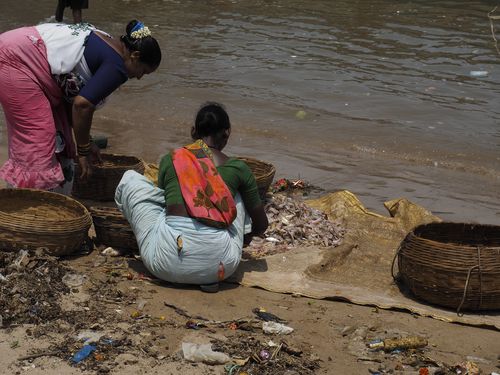
Mumbai • Shrimp Sorting on the beach
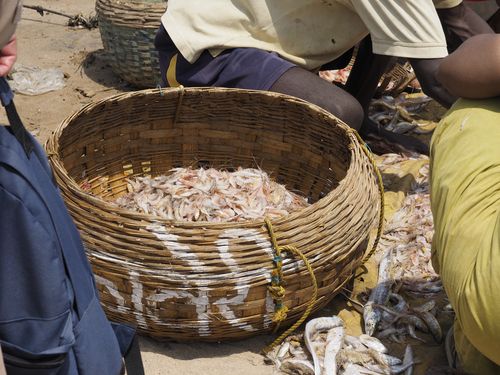
Mumbai • Shrimp Sorting on the beach
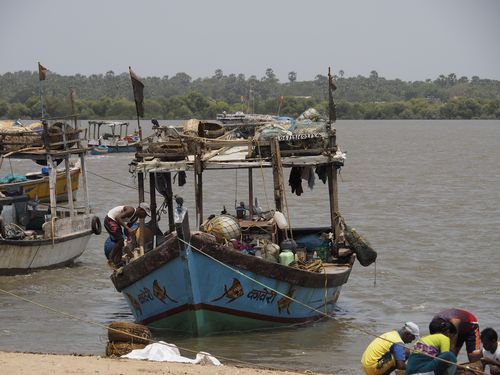
Mumbai • Shrimp Sorting on the beach
Tradition profile
Shrimp Sorting on the beach
Tradition category: Traditional fishing
Tradition family: Crafts and professions
Tradition genre: Trade and Local Creativity
Geographic location: Mumbai • Maharashtra • India
• Links to •
• List of videos about Mumbai on this site •
Mumbai (Bombay) - megalopolis of western India • Maharashtra, India
Shrimp Sorting and Coastal Fishing Economy in Mumbai
Origins of Coastal Fishing Activities
Shrimp sorting on the beaches of Mumbai is part of the long history of fishing communities living along the Konkan coast on the western side of India. Long before the emergence of the modern metropolis, coastal populations depended on fishing, maritime trade, and seafood processing for their livelihoods. Shrimp became an important resource because of their seasonal abundance and relatively high commercial value.
Among the oldest coastal communities of the region are the Koli fishing groups, whose economic and social organization developed around tides, fishing cycles, and coastal trade. Sorting activities formed an essential stage in the local fishing economy, allowing catches to be classified according to size, quality, or commercial destination before distribution to urban markets.
The practice gradually became integrated into the wider commercial system that linked coastal villages with the growing city of Bombay.
Historical Development of the Seafood Trade
During the colonial period, Bombay expanded into one of the largest port cities in South Asia. Population growth increased the demand for fish and seafood, encouraging the development of artisanal fishing activities along the coastline. Fish markets multiplied, and seafood distribution became increasingly organized.
Shrimp sorting evolved into a more specialized activity connected to urban consumption and regional trade. Products intended for local markets had to be separated from shrimp destined for drying, preservation, or transport to other regions. Improvements in transportation also facilitated the circulation of seafood products beyond the immediate coastal zone.
During the twentieth century, mechanized fishing methods and refrigeration systems transformed parts of the fishing economy. Shrimp became an increasingly valuable export commodity, and some coastal sectors near Mumbai were integrated into national and international seafood supply chains. Despite industrialization, beach-based sorting activities remained visible in several fishing communities where smaller-scale operations continued.
Community Organization and Social Importance
Shrimp sorting traditionally involves collective labor within fishing communities. The work is often distributed among family members and local groups connected to the fishing economy. In many coastal areas, women play a major role in sorting, cleaning, and preparing seafood products for sale.
The activity requires practical expertise acquired through experience rather than formal training. Workers must recognize differences in species, freshness, and market quality while handling large quantities of seafood in limited periods of time. These skills are commonly transmitted within families across generations.
The practice also contributes to the social identity of coastal neighborhoods where fishing remains linked to long-established professional traditions. In several parts of Mumbai, fishing communities continue to maintain social structures centered around maritime work, seafood markets, and seasonal fishing cycles.
Changes Linked to Urban Expansion and Modernization
The rapid urban growth of Mumbai has significantly transformed coastal environments and fishing activities. Traditional working areas along the shoreline have been reduced by port infrastructure, industrial zones, transportation networks, and real estate development. Some former beach-based processing activities moved toward more specialized facilities equipped with refrigeration and storage systems.
At the same time, industrial fishing and large-scale seafood processing introduced new forms of competition. Export-oriented production increasingly favored centralized treatment centers over small coastal operations. Environmental pressures, including coastal pollution and declining fish stocks, also affected traditional fishing communities.
Nevertheless, shrimp sorting continues in several areas where artisanal fishing remains economically viable. The persistence of these practices reflects the continued importance of local seafood markets and the resilience of coastal labor systems despite urban transformation.
Contemporary Importance and Preservation Challenges
Today, shrimp sorting remains connected to Mumbai’s seafood trade and coastal economy. Fish markets, restaurants, and processing industries continue to depend on products supplied by fishing communities operating along the western coast of India.
The activity also represents a form of practical maritime knowledge closely associated with traditional fishing livelihoods. However, it faces growing challenges linked to environmental degradation, rising operational costs, modernization of seafood distribution, and pressure on coastal land.
Younger generations increasingly seek employment outside the fishing sector, which may gradually reduce the transmission of traditional expertise associated with seafood handling and sorting. At the same time, artisanal fishing communities continue to adapt to changing economic conditions while maintaining practices that remain deeply connected to the maritime identity of Mumbai’s coastline.
Organization and Techniques of Shrimp Sorting on Mumbai’s Beaches
General Sequence of the Activity
Shrimp sorting on the beaches of Mumbai begins shortly after fishing boats return from coastal waters. The activity is closely linked to the rhythm of tides and fishing schedules, which often determine whether work takes place early in the morning, during the afternoon, or late in the evening. Once boats reach the shore, baskets, plastic crates, and containers filled with shrimp are unloaded directly onto the beach.
The catches are then transferred to sorting areas prepared on sand, concrete surfaces, or temporary platforms near the landing zone. Workers separate shrimp according to size, species, freshness, and commercial quality. Different categories are placed into individual piles or containers intended for local markets, wholesale distribution, freezing facilities, or export processing.
The pace of the work is generally rapid because seafood must be processed before temperatures rise and freshness declines. During periods of heavy catches, several sorting groups may work simultaneously along the shoreline.
Technical Gestures and Practical Knowledge
The sorting process relies on repetitive manual techniques developed through experience. Workers handle shrimp continuously, identifying subtle differences in shape, color, and texture that indicate market value or product category. The gestures are quick and precise in order to maintain efficiency while preventing damage to fragile seafood products.
Shrimp are usually spread across wide surfaces before being gathered into separate containers. Unwanted fish species, shells, seaweed, or damaged specimens are removed manually during the process. In some cases, workers rinse shrimp with seawater to remove sand or debris before packaging.
The activity requires detailed practical knowledge of seafood grading standards. Experienced workers can rapidly distinguish between shrimp destined for immediate sale, industrial processing, drying, or export markets. This expertise is generally acquired within fishing communities through observation and daily participation rather than through formal instruction.
Equipment, Containers, and Work Materials
The tools used for shrimp sorting remain relatively simple and adapted to coastal working conditions. Traditional woven baskets continue to appear in some fishing areas, although plastic crates and waterproof containers are now more common because they are easier to clean and transport.
Large tarpaulins or cloth sheets are frequently spread on the ground to keep seafood separated from wet sand. Buckets, metal bowls, and insulated boxes are used to organize different grades of shrimp during sorting operations. Ice is often added to preserve freshness before transportation to markets or processing centers.
Fishing equipment remains visible around the work areas, including nets, ropes, floats, anchors, and repair tools. The surrounding environment often combines active fishing operations with seafood handling and small-scale commercial exchanges.
Workers generally wear practical clothing suitable for humid coastal conditions. Lightweight garments, sandals, rubber footwear, and washable fabrics are common. In several fishing communities, women involved in sorting activities wear adapted versions of traditional clothing that allow freedom of movement while working close to water and sand.
Spaces and Coastal Organization
Shrimp sorting takes place in temporary but highly organized coastal spaces. Boats are aligned near the shore according to ownership groups or fishing teams, while sorting areas are arranged around the unloading points. The proximity between landing zones and seafood markets allows products to move rapidly from the beach into urban distribution networks.
In some parts of Mumbai, sorting activities occur close to densely populated neighborhoods, ports, or transportation routes. The coexistence of artisanal fishing spaces with large urban infrastructure creates a distinctive working environment where traditional maritime practices remain active within a modern metropolitan setting.
The beaches used for sorting are also multifunctional spaces where other fishing-related activities occur simultaneously. Nets may be repaired nearby, engines maintained, and seafood negotiated directly between fishers and buyers.
Participants and Division of Labor
The activity involves multiple participants connected to the coastal fishing economy. Fishers are responsible for bringing the catches ashore, while sorting tasks are frequently carried out by women, family groups, or specialized seafood workers. The division of labor often follows long-established community patterns.
Wholesale buyers and intermediaries may supervise the classification of products intended for different commercial destinations. Transport workers also participate by loading containers into trucks, motorcycles, or refrigerated vehicles once sorting has been completed.
Communication between participants is constant throughout the process. Instructions, price negotiations, and coordination between workers contribute to a noisy and active environment shaped by continuous movement and rapid decision-making.
Visual and Sensory Environment
The visual atmosphere of shrimp sorting areas is defined by the contrast between seafood products, fishing equipment, wet sand, and coastal urban surroundings. Piles of shrimp, colorful plastic crates, fishing boats, and drying nets create dense working scenes along the shoreline.
The sound environment combines waves, engines, conversations, market negotiations, and the movement of equipment across the beach. The smell of saltwater, fish, diesel fuel, and fresh seafood forms another characteristic element of these coastal workspaces.
Lighting conditions also influence the activity. Early morning operations often take place under soft natural light, while some evening sorting activities depend on portable lamps or market lighting near the shore.
Distinctive Features of Shrimp Sorting in Mumbai
Shrimp sorting on Mumbai’s beaches is notable for the close interaction between traditional fishing labor and one of the largest urban environments in India. Artisanal seafood handling continues alongside industrial ports, dense residential districts, and modern transport systems.
Despite changes in seafood processing and commercialization, certain coastal sectors still preserve open-air sorting practices closely connected to community-based fishing traditions. The activity remains an important example of manual maritime labor integrated into the broader economic life of Mumbai’s coastline.
 Links to the main sections of the site