

 Français (France)
  Nederlands (nl-NL)
 The Global Vipassana Pagoda is a monument located in Mumbai, Maharashtra, India. This structure is dedicated to the practice and dissemination of Vipassana meditation, an ancient technique aimed at cultivating inner peace and mental clarity. The monument is notable for its impressive architecture, inspired by traditional Burmese pagodas, and houses a spacious meditation hall capable of accommodating thousands of practitioners. It serves as a gathering place for those seeking to deepen their understanding of meditation and participate in spiritual retreats. The pagoda stands as a symbol of commitment to peace and universal harmony.
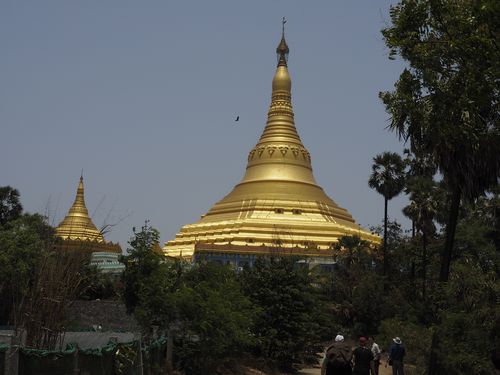
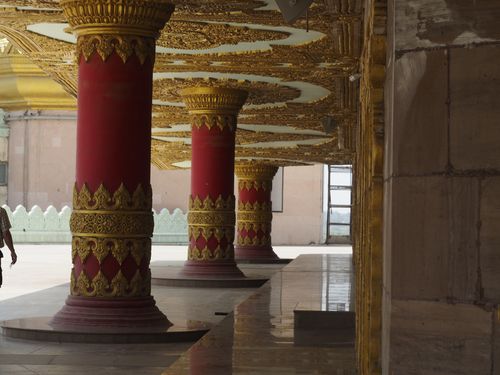
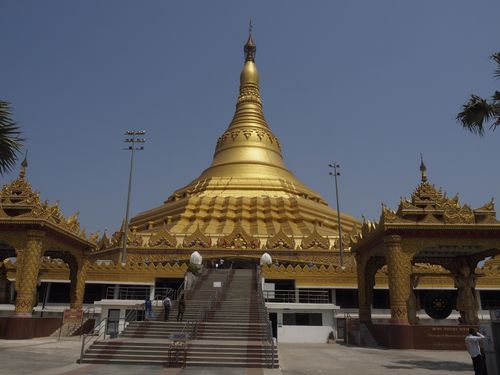
Monument profile
Global Vipassana Pagoda
Monument categories: Pagoda, Stupa
Monument family: Pagoda or stupa
Monument genre: Religious
Cultural heritage: Buddhist
Geographic location: Mumbai • Maharashtra • India
Construction period: 21th century AD
• Links to •
• This monument illustrates the following theme •
Buddhist architecture • Stupas : Diversity of Stupas in Asia
• List of videos about Mumbai on this site •
Mumbai (Bombay) - megalopolis of western India • Maharashtra, India
Political and Social Motivations Behind the Construction
The construction of the Global Vipassana Pagoda was driven by several political and social motivations, aimed at preserving India's Buddhist heritage and promoting spiritual harmony.
Reaffirming India's Buddhist Heritage: India is the birthplace of Buddhism, yet over centuries, the practice of Vipassana had largely disappeared from the country. The pagoda was conceived to re-establish India's link to its Buddhist roots and highlight its cultural and spiritual significance in the modern era.
The monument serves as a tribute to Myanmar, where the Vipassana tradition was preserved and passed on through generations before being reintroduced to India by S.N. Goenka, a key figure in the revival of the practice.
Promoting Peace and Unity: The pagoda was envisioned as a beacon of peace and universal brotherhood, transcending religious and cultural boundaries. It serves as a space where individuals from all walks of life can practice meditation and embrace values of compassion and equanimity.
By fostering inner peace through Vipassana, the project aimed to contribute to societal harmony, offering a non-sectarian approach to personal and collective well-being.
Creating a Center for Spiritual Learning: The pagoda functions as a training and retreat center for those seeking to deepen their understanding of Vipassana meditation. It provides an environment conducive to introspection, learning, and the exploration of the teachings of the Buddha.
Tourism and Cultural Promotion: Mumbai, being a major financial and cultural hub of India, was seen as an ideal location to attract international attention and promote India’s rich spiritual heritage to a global audience.
Historical Context and Influences on Regional Development
The construction of the Global Vipassana Pagoda occurred during a time when India was experiencing rapid economic growth and globalization. In the early 2000s, there was a growing awareness of mental well-being, mindfulness, and stress management techniques worldwide. The establishment of the pagoda aligned with global trends in wellness, as well as India's efforts to reclaim its cultural and spiritual leadership.
Comparison with Other Regions:
In East Asia, countries like China and Japan continued to maintain their Buddhist heritage through the preservation of ancient monasteries and the construction of new meditation centers.
In the West, mindfulness and meditation practices gained mainstream popularity, leading to the emergence of wellness retreats and institutions dedicated to Eastern contemplative traditions.
In Southeast Asia, countries such as Myanmar and Thailand remained strongholds of Theravāda Buddhism, with grand pagodas serving as cultural and spiritual landmarks.
Major Transformations Over the Years
Since its construction, the Global Vipassana Pagoda has undergone several changes and adaptations to accommodate the evolving needs of visitors and practitioners:
Expansion of Facilities:
Additional meditation halls, libraries, and information centers have been developed to cater to the increasing number of visitors.
Infrastructure improvements, including better accessibility and visitor management systems, have been implemented to support tourism growth.
Technological Integration:
The introduction of digital learning tools and virtual meditation programs has allowed the teachings of Vipassana to reach a global audience beyond physical attendance.
Cultural Events and Collaborations:
Over the years, the pagoda has hosted international seminars, exhibitions, and cultural programs aimed at fostering cross-cultural dialogue and spreading awareness about mindfulness practices.
Cultural Importance and Current State of Conservation
The Global Vipassana Pagoda has become a vital part of Mumbai's cultural landscape, attracting millions of visitors annually. It has been recognized as an architectural marvel and a symbol of spiritual rejuvenation.
State of Conservation:
Currently, the pagoda is well maintained with regular conservation efforts in place. The management ensures that the structure remains in optimal condition through:
Routine inspections to check for structural integrity and environmental impacts.
Preventive measures to address issues related to humidity, heat, and natural aging of materials.
Community involvement to ensure collective responsibility for the preservation of the monument.
Challenges to Preservation in the Modern Era
Despite the efforts to maintain the Global Vipassana Pagoda, several challenges threaten its long-term sustainability:
Environmental Threats: Mumbai's coastal climate, characterized by high humidity and heavy monsoon rains, poses risks of erosion and damage to the sandstone used in construction.
Air pollution and urban expansion also present potential threats to the pagoda’s aesthetic and structural integrity.
Tourism Management: The rising number of visitors puts pressure on the infrastructure, necessitating careful crowd management to prevent overuse and degradation of the site.
Striking a balance between spiritual sanctity and tourism revenue is an ongoing challenge.
Financial Sustainability: Although the pagoda operates on donations and voluntary contributions, long-term conservation and operational costs require a sustainable financial model to ensure continued maintenance.
Cultural Sensitivity: Maintaining the authenticity of the site while integrating modern facilities poses a challenge, as commercial interests could potentially dilute the spiritual essence of the pagoda.
Conclusion
The Global Vipassana Pagoda stands as a remarkable testament to India's spiritual heritage and its commitment to promoting mindfulness and inner peace. Through its grand architecture and dedication to Vipassana practice, it has not only reconnected India with its Buddhist past but also established itself as an international landmark of meditation and self-transformation.
Despite facing modern challenges related to environmental conditions, tourism pressure, and financial sustainability, ongoing efforts are being made to ensure that the pagoda remains a beacon of peace and introspection for future generations.
The Architecture of the Global Vipassana Pagoda in Mumbai: Technological Advancements and Cultural Synthesis
The Global Vipassana Pagoda, located in Mumbai, India, is an architectural marvel that embodies both technological innovation and cultural heritage. Completed in 2008 and inaugurated in 2009, it serves as a beacon of peace and mindfulness, promoting the ancient practice of Vipassana meditation. Designed to reflect the grandeur of traditional Buddhist architecture while incorporating modern engineering techniques, the pagoda stands as a testament to the fusion of historical traditions with contemporary advancements.
Technological Advancements and Construction Innovations
The construction of the Global Vipassana Pagoda involved significant engineering achievements that allowed for the realization of a grand structure without compromising its spiritual essence. The most remarkable aspect of the pagoda is its dome, which stands as one of the largest stone dome structures in the world, built without supporting pillars.
Materials Used
The pagoda was constructed using:
- Sandstone from Rajasthan, chosen for its durability and ability to withstand Mumbai’s humid coastal climate.
- Lime mortar, a traditional binding material used to ensure a strong yet flexible structure that can endure environmental stresses.
- Gold leaf plating, applied to the spire and other key elements to symbolize spiritual purity and provide an iconic appearance.
- Burmese teak wood, used for the intricately carved doors and other decorative features, showcasing fine craftsmanship.
Construction Techniques
The engineering team applied innovative construction methods, including:
- Interlocking stone assembly, a technique inspired by ancient architectural practices, where precisely cut stones fit together without requiring reinforcement, enhancing stability.
- Acoustic optimization, allowing the design of the dome to naturally amplify sound, ensuring that meditation instructions can be clearly heard without artificial amplification.
- Advanced ventilation design, ensuring a comfortable environment inside the meditation hall, despite large congregations of practitioners.
- Seismic resistance considerations, incorporating engineering insights to safeguard the structure against potential earthquakes and environmental degradation.
Architectural Characteristics and Cultural Influences
The design of the Global Vipassana Pagoda is a profound synthesis of various cultural influences, combining elements from different Buddhist traditions. The structure’s inspiration is drawn largely from the Shwedagon Pagoda in Myanmar, paying homage to the Burmese contribution in preserving the Vipassana tradition.
Structural Layout
The pagoda consists of three distinct sections:
- Main Dome: Houses the world’s largest meditation hall, capable of accommodating 8,000 practitioners.
Contains a relic of the Buddha, placed within the structure to serve as a spiritual focal point.
- The inner dome is layered with intricate carvings illustrating the teachings of the Buddha.
- Peripheral Structures: Smaller pagodas and auxiliary buildings designed to complement the main dome while offering spaces for study and reflection.
Educational centers that provide visitors with insights into the history and practice of Vipassana.
Ornamental Features: The spire is adorned with gold-plated embellishments, reflecting the grandeur associated with traditional Buddhist monuments.
The exterior walls feature elaborate carvings, depicting stories from Buddhist scriptures and highlighting the richness of Indian artistic heritage.
The fusion of Indian, Burmese, and Thai architectural elements underscores the universal appeal of Buddhism and serves as a symbol of unity and cultural integration.
Notable Statistics and Anecdotes
The pagoda stands at a height of 96 meters, making it one of the tallest Buddhist structures in India.
The construction involved over 2.5 million man-hours, with artisans and engineers working collaboratively to ensure the preservation of authenticity.
The dome’s interior features over 2,000 intricate panels, each narrating a different aspect of the Buddha's teachings.
The pagoda is visited by approximately a million people annually, making it a major spiritual and cultural attraction in Mumbai.
International Recognition and UNESCO World Heritage Status
Although the Global Vipassana Pagoda has not yet been inscribed as a UNESCO World Heritage Site, it has received widespread recognition as a significant cultural and spiritual landmark. Its impact is seen in various aspects:
Tourism and Cultural Promotion: The pagoda has become a focal point for visitors from around the world, bringing greater awareness to India’s Buddhist heritage.
Educational Value: The structure serves as a hub for teaching Vipassana meditation, spreading its principles globally.
Spiritual Impact: It has strengthened the Vipassana movement, attracting practitioners and scholars dedicated to understanding mindfulness and self-discipline.
If inscribed by UNESCO, the pagoda could receive enhanced conservation funding, increased global visibility, and further integration into international heritage circuits.
Current State of Preservation
The Global Vipassana Pagoda is well-maintained through ongoing efforts to ensure its structural integrity and aesthetic appeal. Some of the key preservation efforts include:
Regular maintenance of gold leaf detailing to prevent tarnishing due to weather conditions.
Structural inspections to address any potential wear and tear caused by the humid climate and high visitor footfall.
Community-driven conservation programs, involving volunteers in cleaning and minor restoration works to uphold the sanctity of the space.
Despite these efforts, the monument faces several modern challenges that require attention.
Challenges in Preserving the Monument
Environmental Threats: The coastal climate of Mumbai exposes the pagoda to humidity and salt-laden winds, which can gradually erode the stone and gold plating.
Heavy monsoons increase the risk of water infiltration and long-term damage to structural integrity.
Tourism Management: High footfall requires careful crowd control to minimize wear on delicate architectural features.
Balancing spiritual sanctity with tourism demands poses a constant challenge for administrators.
Urban Expansion: Rapid development around Mumbai poses a risk of encroachment and disruption to the peaceful ambiance of the pagoda’s surroundings.
Financial Sustainability: Although largely supported through donations, long-term conservation will require consistent funding and governmental support.
Conclusion
The Global Vipassana Pagoda in Mumbai stands as a remarkable blend of technological ingenuity and cultural reverence. Its construction showcases a deep respect for traditional Buddhist architectural principles while integrating modern engineering solutions to create a timeless spiritual sanctuary.
The pagoda’s unique architectural features, coupled with its role as a global meditation center, have cemented its position as an enduring symbol of peace and enlightenment. Despite the challenges it faces, ongoing conservation efforts and increasing international recognition ensure that the monument will continue to inspire future generations.