

 Français (France)
  Nederlands (nl-NL)
 00:00 • intro | 00:28 • the exterior of the temple, the courtyard | 01:24 • decorated exterior walls | 02:28 • in the temple
Personal creation from visual material collected during my trip Unknown India • Ladakh, Karnataka, Telangana (2022)
Map of places or practices in Belur on this site
• Use the markers to explore the content •
Belur and the Chennakeshava Temple, Masterpiece of the Hoysala Age
An Early Capital in Karnataka
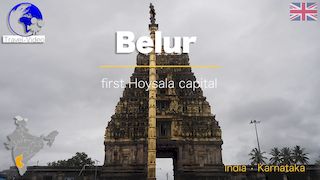
Belur holds a prominent place in the history of southern India. Located in present-day Karnataka, it served as one of the first capitals of the Hoysala dynasty, a regional power that shaped the political and artistic landscape of the Deccan between the eleventh and fourteenth centuries. Today, Belur is chiefly known for the Chennakeshava Temple, one of the most refined monuments of medieval Indian architecture.
The video explores the site through its open court, richly ornamented exterior walls and interior spaces. It reveals a monument where sculpture, geometry and devotion are closely linked. Although the visit took place under poor lighting conditions caused by rain and heavy clouds, the temple retains its visual impact and architectural clarity.
The Main Features Seen in the Video
The first sequences introduce the general layout of the complex. The temple stands within a spacious enclosed courtyard that allows broad views of the building from different angles. This setting helps viewers understand the temple’s proportions and the deliberate relationship between open space and monumental structure.
The exterior walls form one of Belur’s greatest attractions. They are covered with dense sculptural programs including divine figures, dancers, narrative scenes, animals and ornamental bands arranged in horizontal layers. Every section of the façade offers new details, making the building both decorative and highly structured.
Inside the temple, the atmosphere changes noticeably. The interior spaces are calmer and more intimate, with polished stone pillars, controlled light and carefully organised halls. This contrast between exuberant outer surfaces and restrained inner volumes is one of the defining qualities of the monument.
Historical and Architectural Context
Construction of the Chennakeshava Temple began in the twelfth century during the reign of King Vishnuvardhana. The monument is generally associated with the growing prestige of the Hoysala state and with royal patronage of Vaishnavite worship. By commissioning a major temple at Belur, the dynasty affirmed both political authority and religious legitimacy.
Hoysala architecture is renowned for technical precision and sculptural richness. Builders often used chloritic schist, sometimes called soapstone, a material soft enough for intricate carving yet durable once exposed to air. This allowed craftsmen to produce exceptionally fine relief work, elaborate moldings and sharply defined decorative bands.
Belur belongs to a wider group of major Hoysala sites that includes Halebid and Somanathapura. Each has distinct features, but Belur is especially admired for elegance, sculptural finesse and harmonious planning.
What the Video Makes Easier to Understand
Videos assembled from carefully selected animated photographs are particularly effective for a monument like Belur. They allow gradual movement from overall views of the temple to close studies of carvings, helping viewers understand how details relate to the complete structure.
The rainy weather and limited light also create an instructive perspective. Diffused light softens shadows and changes the appearance of the stone surfaces, drawing attention to texture, moisture and subtle tonal variations. Rather than diminishing the site, these conditions give the temple a quieter and more contemplative atmosphere.
The sequence of images also clarifies the transition from open courtyard to sculpted exterior and finally to the dimmer sacred interior, reflecting the architectural progression intended by the builders.
A Landmark of Medieval Karnataka
Belur combines dynastic history, religious devotion and exceptional craftsmanship. The Chennakeshava Temple remains one of the great achievements of Hoysala art and an essential monument of Indian heritage. This video offers a clear introduction to the site, while the related detailed pages allow a deeper exploration of its history, symbolism and architecture.
Links to related pages





Audio Commentary Transcript
Having visited this temple in the monsoon rain, outdoor photos sometimes suffered from water drops on the lens... but does that take away from the charms of this magnificent temple?
The Chennakeshava temple dates from the 12th century and is dedicated to Shiva. It is located in Karnataka in southern India, in the small town of Belur, which was once, in the 11th century, the first capital of the Hoysala Empire. It is one of the finest examples of Hoysala architecture and is also the largest surviving temple complex from that era. It obviously did not escape the damage caused by the many successive wars in the region, but thanks to the restorations it has undergone over the centuries, it has remained in activity almost uninterruptedly until today.

Music:
- - YouTube video library - Anamalie, (© Anamalie by Kevin MacLeod is licensed under a Creative Commons Attribution 4.0 license. https://creativecommons.org/licenses/by/4.0/
- Source: http://incompetech.com/music/royalty-free/index.html?isrc=USUAN1500007
- Artist: http://incompetech.com/)
Disclaimer: Despite its appropriateness, copyright issues prevent the use of indian traditional music in "Belur, first capital of the Hoysala empire, Karnataka • India", hence the use of royalty-free music. Despite our careful selection, some might regret this decision, which is necessary to avoid potential lawsuits. Although difficult, this decision is the only viable solution.


