Français (France)
  Nederlands (nl-NL)
 00:00 • intro | 00:44 • Traditional fishermen | 03:25 • floating gardens | 06:04 • karaweik statue
Personal creation from visual material collected during my trip Myanmar • Burma (2016)
Map of places or practices in Inle Lake on this site
• Use the markers to explore the content •
Inle Lake and the Traditions of Life on the Water
A Lacustrine Landscape in the Shan Highlands
In eastern Myanmar, Inle Lake forms one of the country’s most distinctive cultural landscapes. Surrounded by hills, wetlands and stilt villages, the lake supports a way of life closely connected to the water environment. Unlike many other regions of Myanmar centred on river plains or urban areas, Inle Lake developed around networks of canals, floating cultivation zones and water-based transportation.
This video focuses primarily on the life taking place directly on the lake itself. Through scenes showing traditional fishermen, floating gardens and symbolic cultural elements, it explores the relationship between local communities and the aquatic environment that has shaped daily life in the Shan region for generations.
Traditional Fishermen and Lake Villages
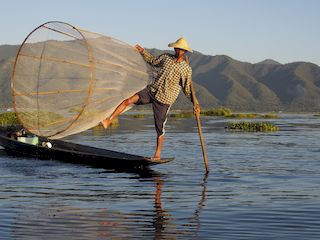
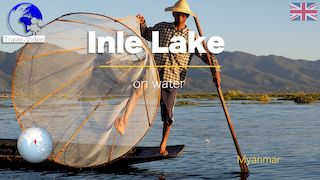
The fishermen of Inle Lake are among the most recognisable images associated with Myanmar. The video presents the techniques developed by the Intha communities living around the lake, particularly the characteristic rowing method performed with one leg while balancing on narrow wooden boats. This technique allows fishermen to navigate while keeping their hands free to manage nets and fishing equipment.
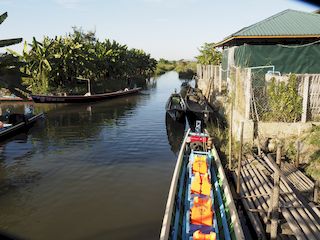
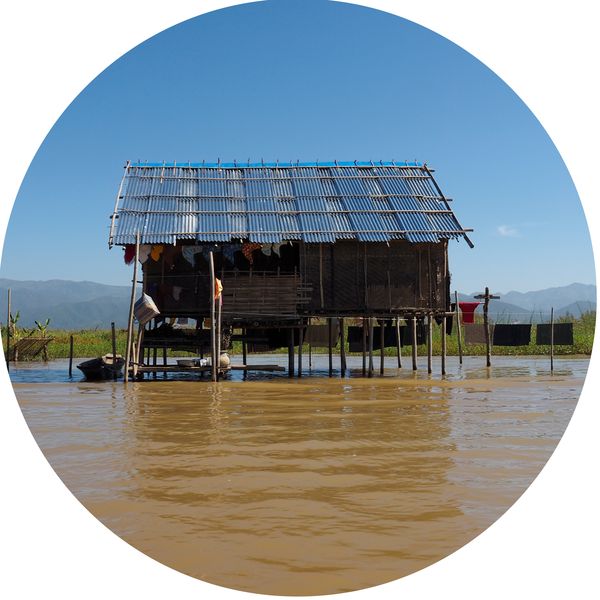
The lake villages visible throughout the region also illustrate a long adaptation to life on the water. Houses built on stilts, wooden walkways and boat-based transport networks demonstrate how settlement patterns evolved directly in response to the lake environment. Seasonal variations in water levels continue to influence fishing, transportation and local economic activities.
Floating Gardens and Symbolic Elements
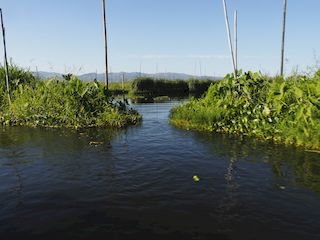
The floating gardens represent another important feature of Inle Lake. Constructed from layers of vegetation, mud and organic material anchored with bamboo poles, these artificial cultivation zones make it possible to grow vegetables and other crops directly on the water. This agricultural system reflects the ability of local communities to adapt to the environmental conditions of the lake while maximising the use of available space.
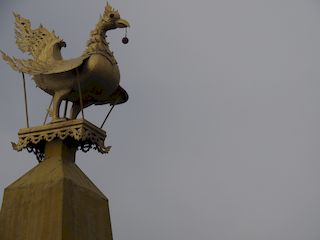
The video also includes the karaweik statue, inspired by a legendary bird found in Burmese mythology and Buddhist symbolism. The karaweik appears frequently in religious decoration, ceremonial art and traditional iconography throughout Myanmar. Its presence around Inle Lake reflects the close relationship between local culture, mythology and Buddhism within the visual landscape of the region.
Water-Based Life and Regional History
Historically, the Inle Lake region developed within territories influenced by Shan principalities and connected to trade networks linking eastern Myanmar with neighbouring regions of Southeast Asia. Waterways played an essential role in communication, transport and commercial exchange. Markets, villages and agricultural activities around the lake continue to reflect this historical organisation based on aquatic circulation.
The natural environment strongly shaped the structure of local society. Wetlands, canals and cultivated floating zones encouraged the development of specialised fishing techniques, unique agricultural methods and forms of architecture adapted to permanent contact with water. These relationships between landscape and human activity remain one of the defining characteristics of Inle Lake.
What the Videos on This Site Make Particularly Clear
The videos on travel-video.info make it easier to observe the details of fishing techniques, boats and floating cultivation systems with unusual clarity. The animated photographic sequences highlight textures, reflections on the water and the structure of the stilt villages while allowing viewers to study the relationship between the settlements and the surrounding lake environment.
The gradual transitions between wide landscapes and closer views also help explain how transportation routes, agricultural zones and villages are organised across the lake. This visual approach creates a clearer understanding of the balance between natural conditions and traditional ways of life.
A Different Perspective on Myanmar
Through the fishermen, floating gardens and villages of Inle Lake, the video presents a side of Myanmar shaped less by monumental architecture and more by everyday interaction with the aquatic environment. The detailed pages dedicated to floating gardens, traditional fishing and lake communities provide additional context for exploring one of the most distinctive cultural landscapes of the Shan State.
Links to related pages



















Audio Commentary Transcript
The fishermen of Inle Lake are famous for their sense of balance on their flat-bottomed boats, using their legs to handle the net and steer the boat.
But, as it is also the case in other places of the world, the perpetuation of this ancestral technique is today more intended to amuse the tourists than to fill the pan with fish. We can quibble about the moral side of this development, but if we replace the word "fisherman" by "artist" or "balancing act", it becomes easier to understand that these people need to find a way to make a living. So, we might as well do it aesthetically ... which allows us to take beautiful shots.
In any case, the massive arrival of tourists in recent years has massively eliminated the fish ...
That said, there are still traditional fishermen, but far from the tourist areas of the lake, since the fish do not adapt well to the noise of the engine of the many boats that ply a large part of this endearing lake.
But it is not only fishing and nautical balancing to ensure the income of the inhabitants of Inle Lake.
Farmers too have been imaginative for a long time. Living on water, they have little cultivable land.
Never mind ... They created agricultural plots floating on the water.
In these floating gardens, they mainly cultivate tomatoes which are sold all over Myanmar. But other vegetables are also cultivated, such as beans, cucumbers or eggplants.
But how to evoke Inle Lake without showing the karaweik, a mythical bird which is to Burma what the garuda is to Indonesia.
Music:
- - YouTube video library - A Fallen Cowboy
- - YouTube video library - Beijaflor
Disclaimer: Despite its appropriateness, copyright issues prevent the use of burmese traditional music in "Inle Lake, on the water • Myanmar ", hence the use of royalty-free music. Despite our careful selection, some might regret this decision, which is necessary to avoid potential lawsuits. Although difficult, this decision is the only viable solution.