Français (France)
  Nederlands (nl-NL)
 The stilted villages of Inle Lake in Myanmar represent a distinctive way of life, shaped by the lake's aquatic environment. Built on wooden and bamboo structures raised above the water, these communities rely on fishing, floating agriculture, and local crafts for their livelihood. Floating gardens, constructed from aquatic vegetation and mud, enable the cultivation of various vegetables and flowers. The lake serves as both a resource and a transportation route, making it integral to daily life. These villages reflect a sustainable lifestyle, rooted in a harmonious relationship between people and their surroundings.

Inle Lake • Stilt villages
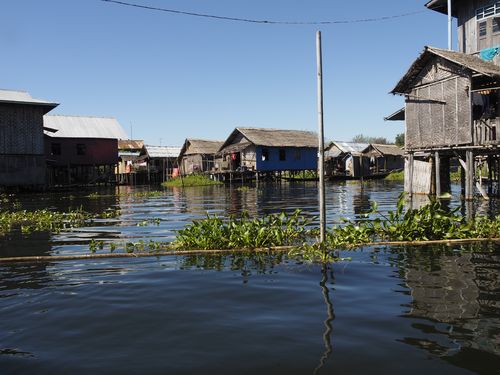
Inle Lake • Stilt villages

Inle Lake • Stilt villages
Tradition profile
Stilt villages
Tradition category: Traditional housing
Tradition family: Traditional practices and lifestyle
Tradition genre: Agricultural and rural traditions
Geographic location: Inle Lake • Myanmar
• Links to •
• List of videos about Inle Lake on this site •
Inle Lake, on the water • Myanmar
Inle Lake, on the banks • Myanmar
The Floating Villages of Inle Lake: A Tradition of Social Innovation and Cultural Resilience
The floating villages of Inle Lake in Myanmar represent a unique adaptation to aquatic life, reflecting centuries of social ingenuity and cultural evolution. This tradition, deeply rooted in the Intha people’s way of life, emerged in response to specific political, social, and environmental challenges. Over time, it has evolved into a symbol of sustainable living and cultural identity for the region, while facing modern threats that test its resilience.
Political and Social Motivations Behind the Tradition
The origins of the floating villages can be traced back to the 14th or 15th century, coinciding with the migration of the Intha people to the Inle Lake region. Historical records suggest that the Intha, possibly fleeing conflict and political instability in southern Myanmar, sought refuge in the remote and resource-rich environment of the lake. Establishing floating villages allowed them to avoid territorial disputes while creating a self-sufficient lifestyle closely tied to the lake’s ecosystem.
This tradition reflects a strong sense of community and cooperation. The Intha developed innovative techniques to cultivate crops on floating gardens, build stilted houses, and fish using methods adapted to the unique conditions of the lake. These practices not only ensured their survival but also fostered social cohesion and economic stability.
Historical Events and Regional Impact
The evolution of floating villages was shaped by several key historical events. During the British colonial era in the 19th and early 20th centuries, the Inle region experienced increased connectivity to broader markets. The Intha diversified their economy by incorporating crafts such as silk weaving and lotus fiber production, which became significant trade commodities.
In the mid-20th century, political upheavals in Myanmar, including military rule and economic isolation, limited external influences on the region but reinforced local traditions. The floating villages became a focal point of regional identity, embodying resilience in the face of national instability.
Global Context and Comparisons
The emergence of floating villages in Inle Lake parallels other practices worldwide that reflect human adaptability to aquatic environments. Similar traditions include the Uros people’s floating islands on Lake Titicaca in South America and the stilted houses of the Mekong Delta in Southeast Asia. However, the Intha’s integration of agriculture, fishing, and craftsmanship into a cohesive lifestyle sets their tradition apart as a model of sustainable living.
Globally, the 14th and 15th centuries marked a period of significant transformation, with the rise of maritime trade routes, the spread of cultural exchanges, and the emergence of innovative techniques in architecture and agriculture. Inle Lake’s floating villages reflect these broader trends of innovation adapted to local contexts.
Transformations Over the Centuries
The floating villages have undergone several transformations over the centuries, shaped by both internal dynamics and external influences. The introduction of new crops and fishing techniques during the colonial era enhanced agricultural productivity. Meanwhile, the rise of tourism in the late 20th century introduced modern amenities such as electricity and motorized boats, altering traditional lifestyles.
However, these changes also brought challenges, including environmental degradation and the commercialization of cultural practices. The growing demand for tourism has led to the commodification of traditional crafts and the creation of staged performances that risk diluting the authenticity of the Intha way of life.
Cultural Significance and Current Status
Today, the floating villages of Inle Lake are recognized as a cultural treasure, drawing international attention for their unique lifestyle and sustainable practices. The region was designated a UNESCO Biosphere Reserve in 2015, highlighting its ecological and cultural importance. This recognition has spurred efforts to preserve the traditions of the Intha people while balancing the pressures of modernization and tourism.
Challenges to Preservation
The preservation of the floating villages faces several modern threats. Climate change, including fluctuating water levels and extreme weather events, poses a significant risk to the stability of the floating gardens and stilted houses. Additionally, pollution from agricultural runoff and increased boat traffic threatens the lake’s delicate ecosystem.
Efforts to address these challenges include promoting sustainable tourism, supporting eco-friendly agricultural practices, and investing in community-led conservation initiatives. Education and awareness campaigns aim to ensure that younger generations understand the cultural and environmental significance of their heritage.
Conclusion
The floating villages of Inle Lake stand as a testament to human ingenuity and cultural resilience. Born from political necessity and environmental adaptation, this tradition has evolved into a symbol of sustainable living and regional identity. While modern challenges threaten its integrity, ongoing efforts to preserve and adapt the tradition ensure its continued relevance as a source of inspiration for both local communities and the global stage.
The Floating Villages of Inle Lake: A Testament to Social and Cultural Innovation
The floating villages of Inle Lake in Myanmar are a striking example of human adaptation, reflecting the ingenuity and cultural richness of the Intha people. Emerging centuries ago, this tradition demonstrates innovative responses to environmental challenges while embodying the values and identity of its society. Through unique rituals, objects, and symbols, the floating villages illustrate a blend of local customs and external influences, offering a window into the harmonious interaction between humans and nature.
Social and Cultural Innovation at Its Emergence
The floating villages of Inle Lake likely originated in the 14th or 15th century, during a period of migration by the Intha people. Seeking refuge from political instability and conflict, they adapted to the aquatic environment by creating stilted houses and floating gardens. These innovations not only addressed practical needs but also fostered a tightly knit, cooperative society.
The floating gardens, known as kyun-hpaw, are among the most notable innovations. Constructed from layers of water hyacinth, mud, and bamboo, these gardens float on the surface of the lake, providing fertile ground for cultivating vegetables such as tomatoes. This agricultural method symbolizes the society’s ingenuity and its symbiotic relationship with the lake.
Rituals, Objects, and Symbols Reflecting Societal Values
The floating villages are steeped in cultural practices and rituals that reflect the grandeur and values of the Intha society. One of the most significant traditions is the Hpaung Daw U Festival, an annual religious event during which five gilded Buddha statues are paraded around the lake on a royal barge. This ritual underscores the community’s devotion to Buddhism and the importance of the lake as a unifying cultural element.
The rowing technique of the Intha people is another defining symbol. Known as leg-rowing, this method involves standing on one leg while using the other to maneuver a paddle, a technique that enhances balance and visibility in the shallow waters of the lake. This practice, both functional and emblematic, highlights the community’s adaptation to its environment and has become an enduring cultural icon.
A Blend of Regional Customs and External Influences
The floating villages of Inle Lake exemplify a unique integration of local traditions and external influences. The Intha’s fishing methods, for instance, blend indigenous practices with techniques introduced through interactions with neighboring regions. Similarly, the intricate lotus fiber weaving practiced by Intha women combines local raw materials with designs inspired by broader Asian textile traditions.
The open markets that shift locations around the lake on specific days further reflect this blend. These markets, which feature goods ranging from local produce to imported wares, serve as hubs for cultural exchange, fostering a connection between the Intha and other communities in Myanmar.
Notable Practices and Anecdotes
The floating gardens cover a substantial portion of the lake, with nearly 25% of its surface used for agriculture. These gardens are not anchored to the lakebed, allowing them to rise and fall with water levels, a design that reflects the adaptability of the Intha people.
An intriguing anecdote relates to the Hpaung Daw U Festival: only four of the five Buddha statues are paraded each year, as one was lost in the lake during a procession. It was later recovered but is now considered too sacred to leave the temple.
International Recognition and UNESCO Impact
The floating villages and the broader ecosystem of Inle Lake were recognized as a UNESCO Biosphere Reserve in 2015. Although not specifically listed as intangible cultural heritage, the practices of the Intha people have drawn international attention, enhancing the global appreciation of their unique way of life. This recognition has contributed to conservation efforts, including initiatives to balance tourism with environmental preservation.
Challenges and Preservation Efforts
The tradition of floating villages faces numerous modern challenges. Environmental degradation, driven by climate change, pollution, and over-tourism, threatens the delicate balance of the lake’s ecosystem. Additionally, modernization has introduced lifestyle changes that risk diluting traditional practices.
Efforts to preserve this heritage include promoting sustainable tourism, educating younger generations about their cultural legacy, and supporting eco-friendly agricultural methods. Community-led initiatives, supported by international organizations, aim to ensure that the floating villages remain a vibrant part of Myanmar’s cultural fabric.
Conclusion
The floating villages of Inle Lake stand as a testament to the social and cultural innovation of the Intha people. Through their rituals, objects, and sustainable practices, these communities have created a harmonious way of life that reflects their values and resilience. As the world recognizes the importance of this tradition, efforts to protect and preserve it will be crucial in ensuring its survival for future generations.
 Links to the main sections of the site