Français (France)
  Nederlands (nl-NL)
 The floating gardens of Inle Lake in Myanmar are a distinctive form of agriculture developed by the Intha people who inhabit the lake. These gardens consist of floating strips of aquatic vegetation and soil, anchored by bamboo poles, allowing crops such as vegetables and flowers to be cultivated year-round despite variations in water levels. The system depends on a fragile balance between human skill and natural processes: plant roots draw nutrients directly from the water, forming a self-sustaining ecological cycle. The floating gardens play a vital role in the local economy and stand as a remarkable example of human adaptation to a lacustrine environment. Their visual harmony and sustainable design also highlight a traditional agricultural method that coexists respectfully with its surroundings.

Inle Lake • Floating gardens
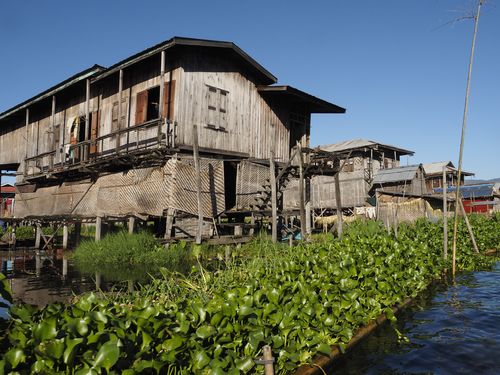
Inle Lake • Floating gardens
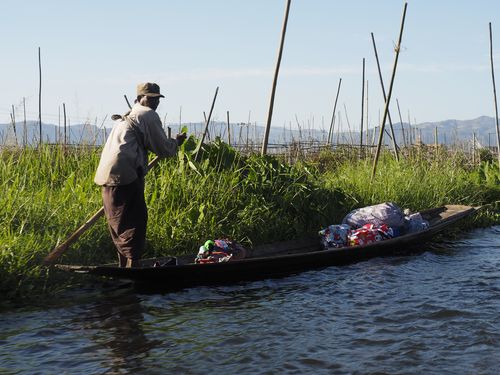
Inle Lake • Floating gardens
Tradition profile
Floating gardens
Tradition category: Traditional agriculture
Tradition family: Traditional practices and lifestyle
Tradition genre: Agricultural and rural traditions
Geographic location: Inle Lake • Myanmar
• Links to •
• List of videos about Inle Lake on this site •
Inle Lake, on the water • Myanmar
Inle Lake, on the banks • Myanmar
The Historical Evolution of the Floating Gardens Tradition of Inle Lake
Political and Social Context of Emergence
The floating gardens of Inle Lake, in the Shan State of Myanmar, emerged as a response to the unique environmental and socio-political circumstances of the Intha people, a Tibeto-Burman ethnic group who migrated to the lake region several centuries ago. Most historians trace the origins of this agricultural innovation to between the 15th and 17th centuries, a period marked by political instability, shifting power structures, and population displacement in Upper Burma. As lowland regions experienced frequent warfare between rival kingdoms, including the Ava, Hanthawaddy, and Taungoo dynasties, groups seeking refuge moved into the highlands, where they had to adapt to less fertile and more water-dominated environments.
In this context, the floating gardens were not only an economic necessity but also a cultural and social innovation. The Intha, meaning “sons of the lake,” transformed their aquatic surroundings into a productive ecosystem by developing a system of hydroponic cultivation based on floating vegetation and organic matter. The practice flourished in an environment relatively autonomous from central political control. The Shan States, though nominally under Burmese suzerainty, enjoyed a degree of independence that allowed local communities to establish self-regulated agricultural and trade systems.
The Theravāda Buddhist worldview prevalent among the Intha also influenced the emergence of this practice. In Buddhism, balance and interdependence are central principles; cultivating crops on water symbolized harmony between human labor and the natural world. Monasteries played a crucial role in teaching ethical behavior, cooperation, and environmental respect, values that became deeply embedded in the floating garden tradition.
Major Historical Events Influencing the Tradition
The colonization of Burma by the British Empire in 1886 marked a significant turning point in the evolution of the floating gardens. British administrators, intrigued by the Intha’s techniques, promoted tomato cultivation for export to urban markets. This marked the first step in the commercialization of what had been primarily a subsistence practice. The introduction of Western crops, irrigation tools, and trade networks integrated the lake economy into broader colonial structures.
Following independence in 1948, Myanmar underwent prolonged political turbulence. Centralized control under the military regimes of Ne Win (1962–1988) and the later junta period affected the traditional organization of the Intha community. Agricultural collectivization programs attempted to standardize production, disrupting the cooperative model that had sustained the gardens for centuries. Yet, due to Inle Lake’s geographic isolation, many local practices survived, and the floating gardens continued to supply vegetables to regional markets, notably Taunggyi and Mandalay.
In the late 20th century, globalization and tourism transformed the meaning and visibility of this tradition. The opening of Myanmar in the 1990s brought international attention to Inle Lake as an ecological and cultural treasure. The floating gardens became both an economic engine and a symbol of national identity, showcased in tourism campaigns and international documentaries. However, the growing demand for produce led to intensive cultivation, which caused ecological strain, including eutrophication and sedimentation of the lake.
Global Context and Comparisons
When situated in a global context, the Inle floating gardens can be compared to similar practices in other parts of the world. The chinampas of pre-Columbian Mexico, developed by the Aztecs, share conceptual parallels: both systems relied on the interweaving of aquatic vegetation and soil to create buoyant, fertile plots. In South Asia, Bangladesh and Kashmir developed analogous floating agricultural systems, though primarily seasonal and less permanent.
Unlike these examples, the Inle system evolved into a permanent and self-sustaining agricultural landscape, integrated into the spiritual and economic fabric of daily life. It demonstrates a long-standing dialogue between humans and water ecosystems, embodying an early form of sustainable resource management long before the term “ecology” entered modern discourse.
Transformations Across Time
Over the centuries, the floating gardens of Inle Lake have experienced cycles of expansion, innovation, and degradation. Traditional materials — aquatic weeds, mud, bamboo — once ensured full biodegradability and renewal. In recent decades, however, modernization has introduced synthetic materials, pesticides, and plastic netting. While these improve yields, they disrupt water quality and threaten the biodiversity that underpins the lake’s ecological balance.
Social transformations have also altered the internal structure of the practice. Historically, the floating gardens were maintained collectively, with tasks divided by gender and age. Men were responsible for assembling the bamboo foundations and maintaining the anchoring system, while women managed planting, harvesting, and trade in floating markets that operated as vibrant centers of economic and social exchange. Today, the tradition has become more individualized and monetized. Land (or rather, “floating” territory) ownership is increasingly concentrated, and many younger Intha seek livelihoods outside agriculture, especially in tourism.
Nonetheless, traditional symbolic gestures persist. Each planting season begins with a short Buddhist ritual — often led by a local monk — to bless the water and ensure fertility. Offerings of flowers, food, and candles are made to the spirits believed to guard the lake. These rituals reaffirm the link between human activity and the sacred landscape, reinforcing communal identity even as economic priorities shift.
The Role of the Tradition Today and Its Cultural Significance
Inle Lake’s floating gardens remain an essential part of Myanmar’s national image and its regional economy. They provide over 80% of local vegetable production, particularly tomatoes, which are exported across the country. For the Intha, this agricultural system is more than a livelihood; it defines their cultural identity as a people who live “on” rather than “beside” the water.
The gardens are also woven into the ritual calendar of the region. During the Phaung Daw Oo Pagoda Festival, one of Myanmar’s most celebrated Buddhist events, monks and laypeople travel across the lake on elaborately decorated boats, visiting each village and blessing the gardens. This annual ceremony underscores the connection between agricultural abundance and spiritual devotion, illustrating how deeply the tradition is rooted in local cosmology.
Internationally, the floating gardens have become an icon of sustainable living. Environmental organizations and universities study them as models of low-impact agriculture, capable of balancing productivity with ecological preservation. However, the same visibility has brought challenges: tourism-related pollution, unsustainable farming practices, and the spread of invasive species are placing the ecosystem under increasing stress.
Preservation, Threats, and Modern Challenges
The current state of preservation of the floating gardens is paradoxical: while the tradition continues to thrive economically, its ecological foundation is under severe threat. The lake’s surface area has decreased over recent decades due to sediment accumulation, deforestation of surrounding hills, and agricultural runoff. The use of fertilizers and pesticides, combined with deforestation-driven erosion, has led to a decline in water transparency and oxygen levels, endangering native fish and bird species.
Local and international initiatives are now addressing these challenges. The establishment of the Inle Lake Biosphere Reserve by UNESCO in 2015 recognized the site’s cultural and environmental importance. Conservation programs encourage organic farming, regulate fishing zones, and promote the revival of traditional composting methods. Community-led projects have also emerged, teaching sustainable agricultural practices in local schools to ensure the transmission of ancestral knowledge.
Despite these efforts, modernization and generational shifts remain major concerns. Many young Intha prefer to work in tourism or urban centers rather than continue labor-intensive farming. The transmission of specialized knowledge — from selecting aquatic vegetation to constructing bamboo anchors — is thus at risk. Without deliberate preservation efforts, the continuity of this centuries-old system could be compromised.
Conclusion
The floating gardens of Inle Lake stand as a remarkable testament to the adaptability and creativity of the Intha people. Born out of necessity in a politically fragmented and ecologically demanding environment, the tradition evolved into a symbol of balance between nature, community, and spirituality. Across centuries of change — from pre-colonial autonomy to colonial exploitation, and from isolation to global recognition — this practice has remained an enduring expression of human resilience.
Today, as Myanmar faces the dual pressures of modernization and environmental degradation, the floating gardens embody both a challenge and a promise: they remind the world that sustainable innovation is not a modern invention but a legacy of ancient wisdom. Preserving them means safeguarding not only a landscape but also a living dialogue between humanity and water — one that continues to define the cultural and ecological identity of Inle Lake.
The Characteristics of the Floating Gardens Tradition at Inle Lake, Myanmar
Origin and Context of Emergence
The floating gardens of Inle Lake in Myanmar represent one of the most distinctive examples of human adaptation to a challenging natural environment. Developed by the Intha people, who have inhabited the lake and its surrounding areas for several centuries, this tradition arose from a combination of ecological necessity, cultural values, and social cooperation. Scholars generally date its emergence between the 15th and 17th centuries, a period when the Intha settled in the Shan Plateau, seeking refuge from political instability in the lowlands of central Burma.
The creation of the floating gardens can be understood as both a survival strategy and a reflection of the Intha worldview. Surrounded by water and lacking arable land, these communities transformed the lake itself into a source of sustenance. The construction of buoyant agricultural platforms allowed continuous cultivation in a landscape that would otherwise be inhospitable to conventional farming.
This innovation was supported by the Theravāda Buddhist philosophy that shaped Intha social organization. In Buddhism, balance and interdependence are core concepts, and these floating gardens embody this harmony between human activity and the environment. Cooperation within the community, respect for natural cycles, and non-destructive use of resources became integral to the system’s maintenance. Thus, the floating gardens are not merely an agricultural technique but an expression of a deeply rooted ecological and spiritual ethic.
Structural and Practical Elements
The floating gardens, or ye-chan, are built from layers of aquatic vegetation, mud, and bamboo, bound together to form stable, floating strips of fertile land. Each garden measures several meters in width and can extend for hundreds of meters. Bamboo poles anchor the platforms to the lakebed, preventing them from drifting with the wind. These gardens are highly productive, benefiting from constant moisture and nutrient-rich sediments.
The Intha primarily cultivate tomatoes, cucumbers, beans, and flowers, which thrive in the humid conditions. The act of tending to these gardens is performed from narrow canoes, and one of the most iconic gestures of this tradition is the Intha rowing technique, where a man stands on one leg while wrapping the other around the oar to propel the boat. This posture provides better visibility and control, particularly in navigating between the narrow garden channels.
Tasks are divided according to gender and age. Men typically manage garden construction, repair, and anchorage, while women handle planting, harvesting, and marketing the produce in the floating markets. These markets serve as hubs of exchange where local goods, crafts, and stories circulate, reinforcing the communal nature of the tradition.
The transmission of knowledge occurs informally within families, through observation and participation. Children learn from an early age how to weave bamboo frames, select appropriate aquatic plants, and predict seasonal changes that affect water levels. This intergenerational transmission ensures both technical precision and cultural continuity.
Symbolism and Meanings
Beyond its functional dimension, the floating garden tradition carries symbolic and moral significance. In Intha culture, water represents purification and regeneration, while the act of cultivation symbolizes resilience and balance. Growing food upon water evokes a metaphoric relationship between impermanence and renewal — central notions in Buddhist cosmology.
Colors and sounds play a subtle role in this symbolism. The bright green of aquatic vegetation and the red of ripe tomatoes evoke fertility and vitality. The rhythmic sound of paddles, echoed across the lake at dawn, creates a meditative atmosphere, reinforcing the spiritual bond between the farmers and their environment. These daily gestures, although routine, take on ritualistic value, embodying the harmony between human rhythm and the natural world.
The collective nature of this practice also reflects the Buddhist concept of karma, where community welfare and individual effort are inseparable. Working together to maintain the gardens becomes an act of merit, believed to contribute to both worldly prosperity and spiritual progress.
Evolution and External Influences
Over the centuries, the floating gardens have evolved in response to political and economic transformations. During the British colonial period (1886–1948), agricultural commercialization intensified. The British encouraged tomato cultivation for export, introducing new seeds and trading systems. This marked the shift from subsistence farming to a market-oriented economy, increasing productivity but also creating dependence on external demand.
Following independence, state-led agricultural reforms and land nationalization policies altered local governance structures. The collectivist systems introduced under socialist rule in the mid-20th century reduced community autonomy, yet the Intha’s traditional practices largely persisted thanks to the lake’s isolation.
Globalization and tourism since the 1990s have profoundly reshaped the tradition. As Inle Lake became a popular destination, the floating gardens transformed into cultural landmarks. Tourists admired them as emblems of harmony between people and nature, yet this recognition came with ecological consequences. The increased use of chemical fertilizers, introduced to meet growing market demand, has contributed to pollution and eutrophication. Despite these challenges, the gardens remain a living example of resilience in a rapidly changing socio-economic landscape.
Similar forms of floating agriculture exist elsewhere, notably the chinampas of the Aztecs in Mexico and the floating vegetable beds in Bangladesh. However, the Intha gardens differ in their permanence and integration into a holistic cultural system. They are not temporary solutions to flooding but a continuous and self-sustaining environment combining economic, ecological, and spiritual functions.
Social Organization and Community Impact
The floating garden system is not merely a form of agriculture; it structures the social fabric of Intha society. Ownership of the gardens is customary rather than formal — land (or water plots) is inherited and shared among families through unwritten agreements, maintaining social cohesion. The cooperative nature of the work strengthens intergenerational bonds and community solidarity.
The religious calendar also shapes agricultural activity. During the Phaung Daw Oo Pagoda Festival, held annually on the lake, farmers cease their work to participate in processions honoring revered Buddha images. The gardens are decorated with flowers, and prayers are offered for good harvests and protection against natural disasters. These rituals reaffirm the sacred link between human labor and the cosmic order.
Economically, the floating gardens sustain a population of around 100,000 people in and around the lake. They supply a significant portion of Myanmar’s vegetables, particularly tomatoes, which are distributed nationwide. In addition to their economic value, the gardens have become a symbol of identity for the Intha, often featured in art, photography, and national representations of Myanmar’s cultural diversity.
Statistics, Anecdotes, and Notable Figures
Today, approximately 2,600 hectares of the lake are covered by floating gardens. Productivity is remarkably high, with yields of up to 30 tons of tomatoes per hectare annually. Local oral traditions attribute the discovery of this method to a monk who observed floating vegetation and suggested planting seeds on it — a legend that merges spirituality with innovation.
Numerous organizations, including Buddhist monasteries and environmental NGOs, now participate in conservation efforts, teaching sustainable techniques and raising awareness among younger generations.
Recognition and Preservation Challenges
In 2015, Inle Lake was recognized as part of the UNESCO Biosphere Reserve Network, a designation that highlights both its cultural and ecological significance. This recognition reflects international acknowledgment of the floating gardens as a model of sustainable agriculture and community-based environmental management.
However, the tradition faces growing threats: pollution, climate change, sedimentation, and the migration of youth to urban areas. The increasing use of synthetic materials in garden construction and fertilizers further endangers the lake’s delicate ecosystem. Modernization has improved income in the short term but eroded the environmental foundations that make this practice viable.
Efforts to preserve the tradition combine local and international initiatives. Programs encourage organic farming, reforestation around the lake’s watershed, and community-led environmental education. Monasteries, once central to the moral framework of the Intha, are again becoming active agents in promoting sustainable values aligned with Buddhist ethics.
Conclusion
The floating gardens of Inle Lake represent a living synthesis of ecological intelligence, spiritual depth, and cultural resilience. Rooted in centuries-old knowledge, they exemplify how traditional societies can maintain harmony with their environment through cooperation, adaptability, and respect for natural balance.
While modernization and environmental pressures pose real challenges, the continuity of this tradition demonstrates its enduring relevance. More than a relic of the past, the floating gardens remain a dynamic cultural practice — one that bridges the material and the spiritual, the local and the universal, and serves as a timeless reminder of humanity’s capacity to coexist creatively with nature.
 Links to the main sections of the site