Français (France)
  Nederlands (nl-NL)
 00:00 • intro | 00:34 • Tutankhamun | 05:11 • Some great pharaons | 05:19 • Khufu | 05:48 • Khafre | 06:53 • Menkaure | 07:54 • Djoser | 08:26 • Amenemhat III | 09:01 • Hor (Awibre) | 09:37 • Hatshepsut | 11:01 • Nefertiti | 12:07 • Akhenaten | 12:36 • Amenhotep III / Amenophis III | 13:18 • Mentuhotep II | 16:55 • Some Important Figures | 19:09 • Mummies and Sarcophagi
Personal creation from visual material collected during my trip Egypt (2024)
Map of places or practices in Cairo on this site
• Use the markers to explore the content •
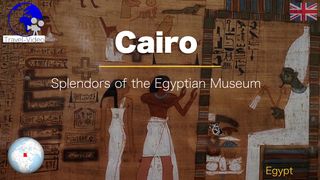
Cairo: Splendors of the Egyptian Museum
An Emblem of Ancient Civilization
Nestled in the heart of Cairo, the Egyptian Museum stands as a beacon of ancient history, housing an extensive collection of artifacts from Egypt's storied past. As the repository of the most comprehensive array of Egyptian antiquities in the world, the museum offers visitors a unique glimpse into the lives and accomplishments of the ancient Egyptians.
The Treasures of Tutankhamun
One of the museum's most renowned exhibits features the treasures of Tutankhamun. Unearthed in 1922 by Howard Carter in the Valley of the Kings, these artifacts have captivated the imagination of the world. The collection includes the iconic gold funeral mask, a stunning representation of the young king's visage, and offers insight into the artistry and craftsmanship of the time. The artifacts from Tutankhamun’s tomb not only highlight the opulence of royal life but also provide a deeper understanding of the religious and cultural practices of the era.
Papyrus Scrolls: Chronicles of Ancient Wisdom
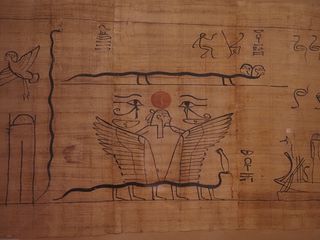
The museum's papyrus collection is a gateway to the ancient Egyptians’ thoughts and philosophies. These ancient scrolls, made from the papyrus reed once abundant along the Nile, were used for everything from religious texts and administrative records to literary works. They illuminate the intellectual and spiritual pursuits of a civilization deeply rooted in writing and communication, reflecting a society that valued knowledge and learning.
Mummies and Sarcophagi: Gateways to Eternity
Another key feature of the museum is its extensive collection of mummies and sarcophagi. These items, integral to the ancient Egyptian burial traditions, emphasize the Egyptians' beliefs in the afterlife and the immortality of the soul. The preservation techniques, artistic sarcophagi, and the rituals surrounding death and burial offer profound insights into their worldview, which saw death as a transition to a new existence rather than an end.
Statues of Pharaohs: Immortalizing Royalty
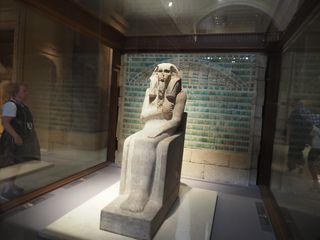
Statues of pharaohs, gods, and high officials fill the halls of the museum, each piece a testament to the Egyptians' mastery of sculpture. These statues were not merely decorative; they served as eternal homes for the ka, the spirit of the person they represented. Crafted from stone, wood, and metals, these figures underscore the ancient Egyptians’ beliefs in the divine right of kings and the close relationship between the leaders and the gods.
Geographical Significance: At the Heart of Cairo
Situated on Tahrir Square, the Egyptian Museum is not only a treasure trove of artifacts but also a cornerstone of Cairo’s historical and cultural landscape. Its location underscores the city's rich historical tapestry, bridging the ancient and modern worlds. Cairo, a city marked by centuries of trade, conquest, and scholarship, provides a fitting backdrop for a museum that encapsulates one of humanity’s most fascinating ancient civilizations.
A Portal to Ancient Egypt
The Egyptian Museum serves as a portal to the past, offering a comprehensive overview of Egyptian history from predynastic times through the Greco-Roman period. Each artifact tells a story of societal evolution, religious beliefs, and the daily life of the ancients, preserved through centuries. The museum not only educates but also inspires by connecting visitors with the distant past in a city that has been a witness to many of history’s pivotal moments.
Conclusion: A Legacy Preserved
As a cornerstone of cultural heritage, the Egyptian Museum in Cairo does more than house relics; it preserves the legacy of a civilization that continues to influence the world. The collection allows for a deeper appreciation of Egypt's historical impact, making the museum a fundamental stop for anyone seeking to understand the depth and breadth of human history. As visitors walk through its halls, they walk through time, gaining insight and inspiration from the enduring legacy of ancient Egypt.
about the place, Cairo
Cairo, the capital of Egypt, is located on the banks of the Nile and is one of the largest cities in the Arab world. Founded in 969 AD by the Fatimids, it is a major historical and cultural crossroads. Cairo boasts architectural treasures such as the Citadel of Saladin, the mosques of Islamic Cairo, and the ancient churches of Coptic Cairo. The city is also home to the Egyptian Museum, which houses pharaonic artifacts, including the treasure of Tutankhamun. A blend of ancient and modern, Cairo is a vibrant center of art, history, and traditions, as well as the political and economic heart of Egypt.
Spoken comments in the film:
This video showcases items on display at the Egyptian Museum in Cairo, with particular attention given to photographic challenges in a museum environment, such as reflections and the presence of visitors, while trying to present the objects as clearly as possible.
Tutankhamun
Tutankhamun, though a relatively minor pharaoh in Egyptian history who died young, is undoubtedly the most famous today. His treasure is displayed in the museum in a room where photography is strictly prohibited, but fortunately, some of his items are freely accessible elsewhere in the museum.
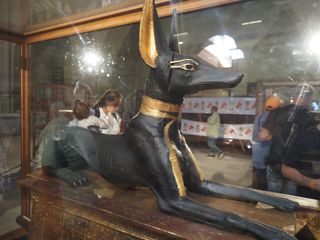
The chests watched over by Anubis are traditionally used to house the canopic jars, protected by the heads of Horus's sons. However, Tutankhamun's tomb reveals a unique practice: while canopic jars were found, they were accompanied by a large alabaster vessel, not contained in a similar chest due to its exceptional dimensions. Interestingly, the usual heads of Horus's sons on the canopic jars are replaced by those of the pharaoh, marking a significant deviation from Egyptian ritual conventions.
Tutankhamun, the son of Akhenaten, inherited a reign marked by the religious upheavals initiated by his father. Although the young pharaoh restored the worship of Amun and other deities sidelined during the Amarna period, certain elements of Tutankhamun's tomb, such as the large alabaster canopic vessel, suggest that his father's influence might subtly persist. This vessel, while stylistically different from the characteristic art of Akhenaten’s Amarna period, could represent a personal adaptation or interpretation of his father’s religious ideas, integrating traditional practices while marking a continuity with the past.
In the canopic chest shown here, only three canopic jars are visible. The absence of one jar can be explained by its loan to international institutions for temporary exhibitions, similar to one displayed in Paris in 2019. Such loans allow Egyptian history to be shared with a broader audience worldwide.
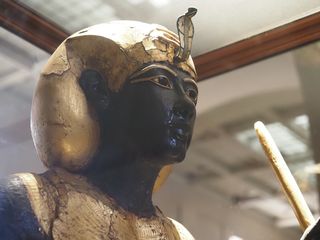
This statue represents Tutankhamun, the young pharaoh of ancient Egypt, holding the traditional symbols of power, the scepter and flail. Found in his tomb (KV62) by Howard Carter in 1922, this work was not a unique example. Several similar statues, intended to protect the pharaoh in the afterlife and to symbolize his eternal authority, were discovered in the same tomb. Each presents stylistic or material variations, reflecting the artistic and cultural richness of the era.
This statuette depicts Khufu, known for constructing the Great Pyramid of Giza, one of the ancient world’s wonders. Remarkably, it is likely the only surviving representation of Khufu. Just a few centimeters tall, this piece, displayed at the Egyptian Museum in Cairo, starkly contrasts the grandeur of his architectural achievement with the scarcity of his image in ancient Egyptian artifacts.
Links to related pages
• Monuments •
Cairo • Egyptian Museum of Cairo - Cradle of Egyptian Wonders
• List of videos about Cairo on this site •
Cairo, Splendors of the Egyptian Museum • Egypt
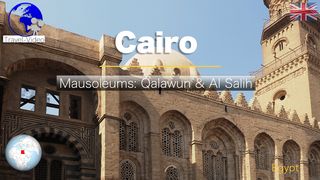
Cairo, Two Mausoleums: Qalawun and Al Salih
Videos
• Egypt •
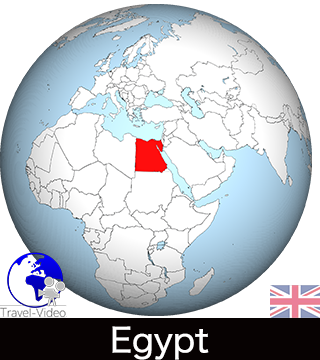
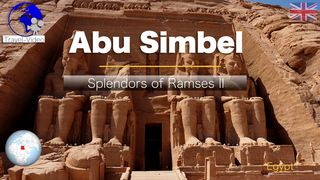
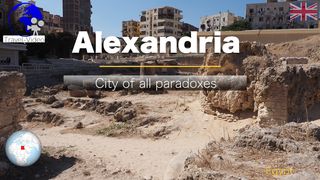
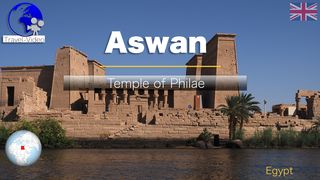
Pharoahs
Khafre, the son of Khufu and builder of the second pyramid at Giza, is represented by statues significantly larger than those of his father. This particular statue, notable for its imposing size, symbolizes the power and continuation of the royal cult under his dynasty. It stands in stark contrast to the modest statuette of Khufu, reflecting an era when artistic and monumental expression was increasingly emphasized.
The triad statues of King Menkaure, discovered in his valley temple at Giza, illustrate the sacred union between the pharaoh and the protective deities of Egypt. Each statue depicts Menkaure flanked by the goddess Hathor, recognizable by her solar disk framed by two cow horns, and a god or goddess symbolizing a specific nome of Egypt. To the left of Menkaure, the figures vary, bearing the symbols of the Theban nome, the jackal nome, and the bat nome, thus highlighting the importance of the different provinces in supporting the reign and the afterlife of the king. These works, m.ade of grauwacke, dating from the 4th dynasty around 2490 to 2472 BC, reflect the complexity of the religious beliefs and political system of ancient Egypt.
In the hall dedicated to Akhenaton, an enigmatic colossus bears the inscription "Akhenaton or Nefertiti". This statue, potentially depicting Nefertiti with pharaonic attributes, highlights her influential status and role in the religious and artistic reforms of the period. Beside it, the statue of Akhenaton captivates with its revolutionary style: elongated features and an androgynous silhouette, embodying the radical ideas of the pharaoh that marked a turning point in Egyptian art.
Amenhotep III, also known as Amenophis III, was a significant pharaoh of the 18th dynasty, during which Egypt reached a peak of prosperity and artistic power.
Important figures
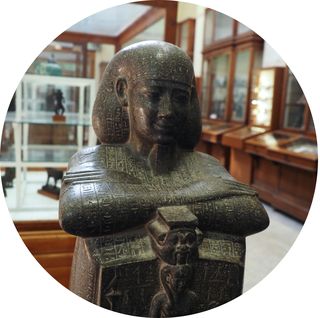
This statue of Djed-Hor illustrates the vital role of priests in religious and cultural practices. Seated with crossed arms holding ritual objects and surrounded by hieroglyphs, Djed-Hor symbolizes wisdom and piety. The basin at his feet, used for offerings, attests to the importance of offering rituals in Egyptian religion.
Scribes were crucial in ancient Egypt, responsible for writing texts and official documents with their mastery of hieroglyphic and hieratic scripts. They played a key role in administration, education, and cultural preservation, maintaining state and temple records. Their advanced education and high social status distinguished them as an intellectual elite.
The wooden statue of Niankhpepikem, dating from the 6th Dynasty, depicts an ancient Egyptian porter. Featuring attributes such as a backpack and a basket, this piece highlights the roles and social status of servants in their daily lives. Preserved at the Egyptian Museum in Cairo, it provides valuable insight into the labor practices and social structure of the time.
The statue of Kaaper, known as the 'Chief of the King's Readers', is an iconic work of the Old Kingdom Egyptian art, dating from the 5th Dynasty. Made of wood, this life-size statue depicts Kaaper in a striding posture, realistically capturing the features and expression of this high-ranking priest.
Dwarfs were highly valued in ancient Egypt for their unique roles in religion and the royal court, often enjoying elevated social status. An illustrative example is Seneb, a dwarf who held prestigious positions including that of director of royal fabrics. His statue in the museum, depicting him with his family, attests to his respected integration into Egyptian society and acknowledgment of his significant contributions, despite physical challenges.
Funeral masks
In ancient Egypt, funeral masks were much more than mere adornments. Serving as a bridge between the world of the living and the dead, these masks were designed to secure the protection and regeneration of the deceased's soul. Carefully carved and often gilded, they aimed to immortalize the features of the deceased while invoking the presence of a deity to guide and protect the soul in the hereafter.
Mummies and Sarcophagi
Mummification, essential in ancient Egypt for ensuring the soul's eternal life, was a complex ritual aimed at preserving the body. Yuya and his wife Thuya, prominent figures of the 18th Dynasty under the reign of Amenhotep III, exemplify this practice. Dying around 1370 BC, their mummies, found in the Valley of the Kings, demonstrate the sophistication of the mummification art at the time and embody the deep religious beliefs in life after death. Their burials reflect the high status they held in Egyptian society.
The mummies from the Greek Ptolemaic dynasty, often found in poorer condition than those from earlier periods, suggest an evolution in mummification practices. This period may reflect less rigor in preservation methods or variations in rituals and materials used, reflecting cultural and economic changes within Hellenistic Egypt.
Sarcophagi, from the Greek 'sarkophagos' meaning 'flesh-eater', were containers designed to protect mummified bodies in ancient Egypt. Beyond their physical protective role, they held significant symbolic value, serving as the earthly final resting place that facilitated the soul's transition to the afterlife. Richly decorated, they reflected the deceased's social status and religious beliefs, with every detail contributing to secure their journey to immortality.
Papyrus
The museum's papyrus collection showcases ancient Egyptian literature, providing a valuable glimpse into the daily, religious, and administrative aspects of life in ancient Egypt. These documents, written in hieroglyphic, hieratic, and sometimes demotic script, include a variety of texts such as magical spells, religious hymns, medical texts, as well as personal correspondence and legal contracts. Their exceptional preservation allows researchers and visitors to delve into the intellectual and cultural past of this ancient civilization.
Music:
- - YouTube video library - Dreamy Flashback, (© Dreamy Flashback by Kevin MacLeod is licensed under a Creative Commons Attribution 4.0 license. https://creativecommons.org/licenses/by/4.0/
- Source: http://incompetech.com/music/royalty-free/index.html?isrc=USUAN1100532
- Artist: http://incompetech.com/)
- - YouTube video library - House on the Hill - Everet Almond
- - YouTube video library - I knew a Guy - Kevin McLeod, (© I Knew a Guy by Kevin MacLeod is licensed under a Creative Commons Attribution 4.0 license. https://creativecommons.org/licenses/by/4.0/
- Source: http://incompetech.com/music/royalty-free/index.html?isrc=USUAN1100199
- Artist: http://incompetech.com/
- )
- - YouTube video library - Nail biter - Riot
- - YouTube video library - The Sax of Ancient Terror - Jimena Contreras
Disclaimer: Despite its appropriateness, copyright issues prevent the use of egyptian traditional music in "Cairo, Splendors of the Egyptian Museum • Egypt", hence the use of royalty-free music. Despite our careful selection, some might regret this decision, which is necessary to avoid potential lawsuits. Although difficult, this decision is the only viable solution.