Français (France)
  Nederlands (nl-NL)
 00:00 • intro | 00:26 • exterior view of the fort | 00:47 • in the fort | 02:32 • view of the landscapes around the fort
Personal creation from visual material collected during my trip Jordan (2017)
Map of places or practices in Fort Ajloun on this site
• Use the markers to explore the content •
Ajloun Castle, Guardian of the Jordanian Highlands
A fortress between heritage and landscape
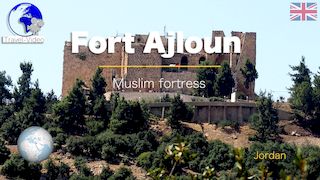
Ajloun Castle, also known as Qal’at ar-Rabad, is one of Jordan’s most important medieval monuments. Built on a hilltop overlooking the northern highlands, it commands wide views across valleys, old routes and cultivated land. Its elevated position made it both a defensive stronghold and an exceptional observation point over the surrounding region.
The video offers a clear introduction to a site where architecture and geography are closely connected. Exterior views reveal the strength of the walls and towers, while interior sequences show vaulted rooms, stairways, passages and protected courtyards. Panoramic scenes across the nearby landscapes explain why this location was chosen in the first place.
Ajloun is therefore more than a historical ruin. It is a highly readable example of medieval military architecture designed in direct response to terrain and strategy.
Main spaces visible in the video
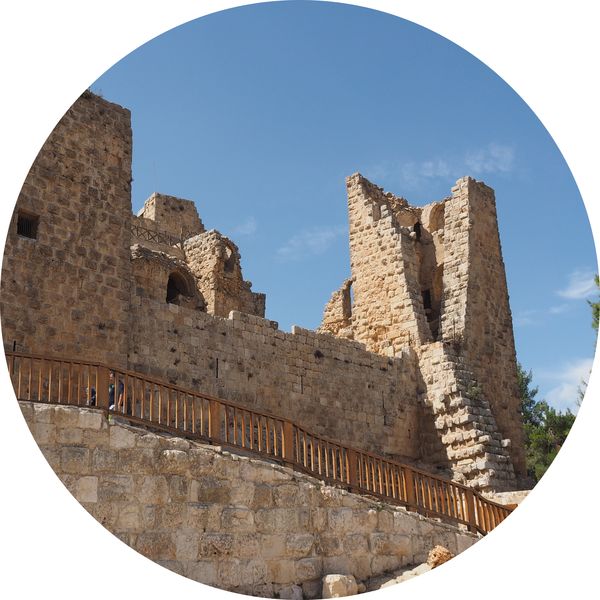
The exterior scenes first emphasize the compact and powerful silhouette of the fortress. Thick walls, projecting towers and solid masonry volumes reflect a clear defensive purpose. The natural hilltop setting increases the effectiveness of these man-made protections.
Inside the castle, the video highlights the practical organization of the monument. Vaulted chambers, multiple levels and controlled circulation routes show how a fortress of this kind had to combine defense, storage and daily military use. Rooms were arranged for efficiency as much as for durability.
The landscapes seen from the upper levels are an essential part of understanding the site. From the ramparts, views extend across the wooded hills of northern Jordan. This visibility explains the strategic role of the castle: watching movements, securing regional routes and protecting nearby agricultural zones.
Historical and architectural context
Ajloun Castle was founded in the late twelfth century during the Ayyubid period, in the wider context of conflict between Muslim powers and the Crusader states of the Levant. It is generally associated with the circle of Saladin. Its purpose was to strengthen regional defenses and secure communication routes between key territories.
The fortress was later maintained, enlarged and repaired during subsequent periods, especially under the Mamluks. Like many medieval strongholds, it evolved according to changing military needs and political circumstances.
Its architecture follows practical and effective principles: thick walls, watchtowers, compartmentalized interiors and intelligent use of topography. The hill itself functions as part of the defensive system, as important as the masonry walls. The result is an architecture based on control, endurance and visibility.
Today Ajloun remains one of the best preserved examples of Islamic military architecture in Jordan.
What the videos on this site make especially clear
The videos of travel-video.info, often created from carefully selected photographs animated with smooth transitions, are particularly well suited to a monument such as Ajloun. A hilltop fortress is understood through its volumes, viewpoints and relationship with the surrounding land. Gradual transitions help the viewer move from a general view of the castle to details of towers, walls or interior passages.
This approach also clarifies the internal layout. During a quick visit, changing levels and sequences of rooms can seem complex. Here, the pace of the images helps reveal the overall structure.
The panoramic views are equally valuable. They show in concrete terms why this summit was chosen and how the fortress dominated its environment.
A fortress where landscape explains history
Discovering Ajloun Castle through this video means approaching a monument where strategy, architecture and landscape remain inseparable. Few places demonstrate so clearly how a medieval fortress could control an entire territory. The detailed page devoted to the castle offers an excellent way to continue exploring its history and defensive design.
Links to related pages







Audio Commentary Transcript
Ajloun Fort in Jordan was built in the 12th century by Muslims. It is on a hill and the castle watched over three wadis descending to the Jordan Valley. It was the Ayyoubids who built it in the 12th century and enlarged it a century later by the Mamalouks.
Music:
- - YouTube video library - Desert Catharsis
Disclaimer: Despite its appropriateness, copyright issues prevent the use of jordanian traditional music in "Fort Ajloun, Muslim fortress • Jordan", hence the use of royalty-free music. Despite our careful selection, some might regret this decision, which is necessary to avoid potential lawsuits. Although difficult, this decision is the only viable solution.