

 Français (France)
  Nederlands (nl-NL)
 Map of places or practices featured in a video published on this site
• Use the markers to explore the content •
Jordan at the Crossroads of Civilizations: The Historical Evolution of a Levantine Kingdom
A Strategic Territory Between Continents and Empires
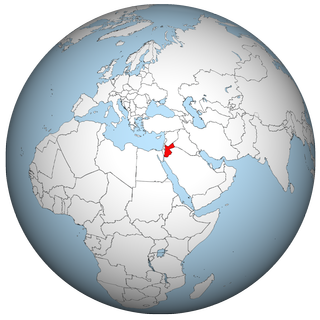
The territory of present-day Jordan occupies one of the most strategic locations in the Middle East. Situated between the Mediterranean world, Mesopotamia, Arabia and Egypt, it has served for millennia as a bridge between continents, civilizations and trade networks. Its deserts, highlands, river valleys and caravan routes connected some of the greatest political and cultural centres of the ancient world.
Because of this position, Jordan's history has rarely been isolated. Instead, it has been shaped by migrations, imperial conquests, religious transformations and commercial exchanges that linked the region to neighbouring lands while also allowing local cultures to develop distinctive identities.
The Earliest Human Settlements and Prehistoric Cultures
Human presence in Jordan dates back hundreds of thousands of years. Archaeological discoveries in the Jordan Valley and eastern desert have revealed stone tools from the Lower Paleolithic period, indicating that early human populations migrated through the region during their movements between Africa and Eurasia.
During the Upper Paleolithic and Epipaleolithic periods, hunter-gatherer communities increasingly settled near reliable water sources and fertile areas. The territory formed part of the wider Levantine cultural sphere that witnessed some of humanity's earliest experiments with sedentary life.
The Neolithic Revolution
Jordan played an important role in the Neolithic revolution that transformed societies throughout the Fertile Crescent. By around 9000 BCE, agriculture and animal domestication had become established in several settlements.
One of the most remarkable archaeological sites from this period is Ain Ghazal near modern Amman. Occupied from approximately 7200 BCE, it became one of the largest Neolithic communities in the Near East. The site is particularly famous for its plaster statues, among the oldest monumental human representations ever discovered.
The development of agriculture, animal husbandry and permanent settlements laid the foundations for increasingly complex social structures and regional trade networks.
Bronze Age Communities and Early Urban Development
During the Bronze Age, roughly between 3300 and 1200 BCE, numerous fortified settlements and urban centres emerged across the region. Jordan became integrated into the economic systems of Egypt, Syria and Mesopotamia.
Trade routes crossing the Transjordanian plateau carried copper, agricultural products, ceramics and luxury goods. The region's location along north-south caravan routes enhanced its commercial importance.
Although often influenced by larger neighbouring powers, local communities maintained considerable autonomy and developed distinctive cultural traditions. Egyptian inscriptions and diplomatic archives mention settlements in the region, demonstrating its integration into the political landscape of the ancient Near East.
The Iron Age Kingdoms of Transjordan
Following the collapse of Bronze Age political systems around the twelfth century BCE, several independent kingdoms emerged in what is now Jordan.
The Kingdom of Ammon
The Kingdom of Ammon occupied the northern highlands around Rabbath-Ammon, present-day Amman. The Ammonites spoke a Northwest Semitic language closely related to Hebrew and Phoenician.
Ammon benefited from its strategic location near important trade routes linking Syria, Mesopotamia and Arabia. Its rulers maintained diplomatic and military relations with neighbouring kingdoms and larger empires.
The Kingdom of Moab
South of Ammon lay the Kingdom of Moab, centred around Dibon. Moab controlled fertile agricultural land and important caravan routes east of the Dead Sea.
The most famous source concerning this kingdom is the Mesha Stele, erected during the ninth century BCE by King Mesha. This inscription provides invaluable information about Moabite language, religion and politics and remains one of the most important historical documents from the region.
The Kingdom of Edom
Further south, the Kingdom of Edom occupied mountainous regions extending toward the Gulf of Aqaba. Edom controlled trade routes connecting Arabia with the Mediterranean and benefited from copper mining activities in the Arabah Valley.
The Edomites developed a distinct political and cultural identity while remaining closely linked to neighbouring Semitic populations.
Under the Great Empires of the Ancient Near East
Beginning in the eighth century BCE, the independent kingdoms of Transjordan increasingly came under the influence of expanding imperial powers.
The Neo-Assyrian Empire imposed tributary obligations upon Ammon, Moab and Edom. Although local rulers remained in place, political autonomy was significantly reduced.
Following the collapse of Assyria, the region passed under Babylonian control and subsequently became part of the Achaemenid Persian Empire in the sixth century BCE.
Persian administration brought relative stability and encouraged long-distance trade throughout the empire. Aramaic became the principal administrative language across much of the Near East, influencing local linguistic traditions for centuries.
Hellenistic Influence After Alexander the Great
The conquests of Alexander the Great in the late fourth century BCE transformed the political landscape of the Middle East. After his death, Jordan became part of the territories contested by the Ptolemaic rulers of Egypt and the Seleucid Empire based in Syria.
Greek cultural influences spread through urban centres, introducing new architectural styles, administrative institutions and artistic traditions. However, Hellenization remained uneven, with rural and tribal populations maintaining many of their indigenous customs and languages.
This coexistence of Greek and local traditions became a defining feature of the region's cultural identity during the Hellenistic period.
The Rise of the Nabataean Kingdom
Origins of the Nabataeans
One of the most significant chapters in Jordanian history began with the emergence of the Nabataeans. This Arab people, probably originating from northern Arabia, gradually established themselves in southern Jordan from the fourth century BCE onward.
The Nabataeans built their prosperity on trade rather than military conquest. They controlled caravan routes transporting frankincense, myrrh, spices and luxury goods from southern Arabia toward Mediterranean markets.
Petra and the Golden Age of Nabataean Civilization
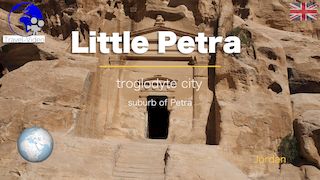
The Nabataean capital of Petra became one of the great commercial centres of the ancient world. Located in a naturally protected valley surrounded by sandstone mountains, the city occupied a strategic position on major caravan routes.
The Nabataeans developed sophisticated hydraulic engineering systems that enabled them to collect, store and distribute water efficiently in an arid environment. Reservoirs, channels and dams transformed Petra into a thriving urban centre despite its desert surroundings.
Nabataean architecture reflected the cosmopolitan character of the kingdom. Greek, Egyptian, Mesopotamian and Arabian influences merged in monuments carved directly into the sandstone cliffs.
Language, Religion and Cultural Exchange
The Nabataeans spoke Arabic dialects but used Aramaic for official inscriptions and administration. Their script contributed to the later development of the Arabic alphabet.
Religiously, the Nabataeans worshipped a pantheon of Arabian deities, including Dushara and al-Uzza, while incorporating influences from Hellenistic and Near Eastern traditions.
Their kingdom became a major centre of cultural interaction between Arabia and the Mediterranean world.
Roman Rule and Urban Prosperity
In 106 CE, Emperor Trajan annexed the Nabataean Kingdom and established the Roman province of Arabia Petraea.
Roman rule brought political stability, improved infrastructure and economic growth. The construction of the Via Nova Traiana connected Aqaba with Damascus and facilitated military movement and commercial activity.
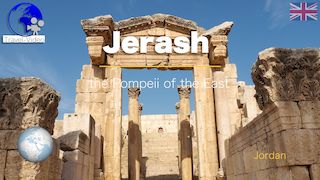
Several cities flourished during this period, particularly Gerasa, modern Jerash, which became one of the principal cities of the Decapolis. Its temples, theatres, forums and colonnaded streets remain among the best-preserved Roman urban landscapes in the Middle East.
Philadelphia, the Roman name for Amman, also expanded significantly during this era.
The Spread of Christianity and Byzantine Jordan
The fourth century marked a major religious transformation with the spread of Christianity throughout the Roman Empire.
Jordan became an important centre of Christian life and pilgrimage. Churches, monasteries and pilgrimage sites appeared throughout the region.
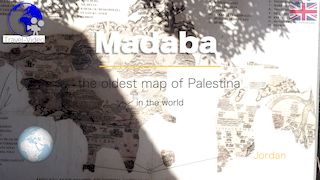
The city of Madaba gained particular importance due to its mosaic tradition, including the famous sixth-century mosaic map of the Holy Land, one of the oldest surviving cartographic representations of the region.
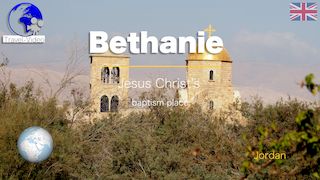
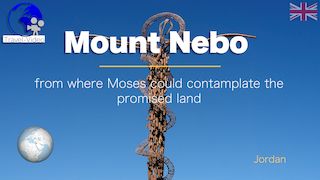
Mount Nebo became associated with the biblical account of Moses viewing the Promised Land before his death, while the Jordan River was linked to the baptism of Jesus.
Christianity profoundly influenced the cultural and architectural landscape of Byzantine Jordan.
The Islamic Conquest and Arabization
The Battle of Yarmouk
The Muslim conquest of the Levant transformed Jordan's political and cultural identity. In 636 CE, Muslim armies achieved a decisive victory over Byzantine forces at the Battle of Yarmouk near the modern Jordanian-Syrian border.
The region was incorporated into the Rashidun Caliphate and later into the Umayyad Caliphate based in Damascus.
Religious and Linguistic Transformation
The spread of Islam was gradual rather than immediate. Christian communities remained significant for centuries, and coexistence between religious groups characterised much of the early Islamic period.
Arabic gradually replaced Greek and Aramaic as the dominant language of administration and culture. This linguistic transformation became one of the most enduring legacies of the Islamic conquest.
The Umayyad Desert Castles
During the Umayyad period, several palatial complexes and administrative centres were constructed in eastern Jordan.
Structures such as Qasr Amra, Qasr Kharana and Qasr al-Mushatta demonstrate the fusion of Byzantine, Persian and Arab artistic traditions. These desert castles likely served administrative, residential and ceremonial purposes.
Abbasid Decline and Regional Competition
The transfer of the caliphal capital from Damascus to Baghdad in 750 reduced Jordan's political importance within the Islamic world.
Under the Abbasids, followed by the Fatimids and Seljuks, the region became increasingly peripheral. Trade routes shifted, and many urban centres experienced periods of decline.
Nevertheless, Jordan retained strategic importance due to its location on pilgrimage routes connecting Syria with the holy cities of Arabia.
The Crusades and the Return of Strategic Importance
The Crusades restored Jordan's military significance during the twelfth century.
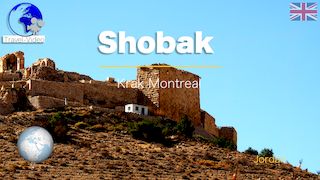
The Crusader Kingdom of Jerusalem established major fortresses at Karak and Shobak to control trade routes and communications between Egypt and Syria.
These castles became focal points of conflict between Crusader and Muslim forces.
Saladin and the Ayyubid Reconquest
The campaigns of Saladin during the late twelfth century ended Crusader domination in much of the region.
Jordan subsequently became part of the Ayyubid state and later the Mamluk Sultanate centred in Cairo.
The Mamluks strengthened pilgrimage infrastructure and caravan routes, reinforcing Jordan's role as a transit territory within the Islamic world.
Four Centuries Under Ottoman Rule
The Ottoman Empire conquered the region in 1516 following its victory over the Mamluks.
For approximately four hundred years, Jordan remained a relatively sparsely populated frontier province of the empire. Local tribes retained considerable autonomy, and Ottoman authority was often indirect.
Economic life revolved around agriculture, pastoralism and services linked to pilgrimage routes toward Mecca and Medina.
Nineteenth-Century Reforms
Ottoman reforms during the nineteenth century sought to strengthen central administration and increase settlement in the region.
Circassian and Chechen refugees displaced by Russian expansion into the Caucasus were encouraged to settle in parts of Jordan, particularly around Amman and Zarqa. Their descendants remain an important component of Jordanian society today.
The Arab Revolt and the End of Ottoman Rule
The First World War transformed the political future of the Middle East.
In 1916, Sharif Hussein of Mecca launched the Arab Revolt against Ottoman rule with British support. The Hashemite family played a central role in the uprising, assisted by figures such as T. E. Lawrence.
Although Arab leaders hoped for a large independent Arab kingdom, postwar agreements between European powers produced a different political settlement.
The Creation of Transjordan
In 1921, the Emirate of Transjordan was established under British supervision and entrusted to Emir Abdullah, a son of Sharif Hussein.
The new political entity gradually developed modern administrative institutions, infrastructure and security forces.
Many of Jordan's present-day borders emerged during this period, largely reflecting British strategic interests rather than historical boundaries.
Independence and the Hashemite Kingdom
On 25 May 1946, Transjordan achieved independence as the Hashemite Kingdom of Jordan.
King Abdullah I sought to strengthen state institutions and expand Jordan's regional influence.
The Arab-Israeli war of 1948 transformed the kingdom demographically and politically. Jordan assumed control of the West Bank and East Jerusalem while receiving large numbers of Palestinian refugees.
These developments fundamentally reshaped Jordanian society and continue to influence national identity and politics.
Jordan in the Contemporary Era
King Hussein, who ruled from 1952 until 1999, guided the country through numerous regional crises while maintaining political continuity and relative stability.
The loss of the West Bank during the 1967 Six-Day War represented a major turning point in Jordanian history and led to additional waves of Palestinian displacement.
The conflict between the Jordanian government and Palestinian armed organisations culminated in the events known as Black September in 1970, after which the state reasserted its authority.
Under King Abdullah II, who succeeded his father in 1999, Jordan has pursued economic modernisation while maintaining its role as a regional mediator.
Historical Legacies and Modern Jordanian Identity
Modern Jordanian identity reflects centuries of cultural interaction and historical continuity. Nabataean, Roman, Byzantine, Islamic and Ottoman influences coexist within the country's historical landscape and collective memory.
The Hashemite monarchy remains a central institution linking the contemporary state with the legacy of the Arab Revolt and the broader history of the Islamic world.
Jordan's diverse population, including communities of Palestinian, tribal, Circassian, Chechen and other origins, reflects the country's long history as a crossroads of migration and exchange.
From prehistoric settlements to the modern kingdom, Jordan's history has been shaped less by isolation than by its enduring role as a meeting place of peoples, religions and civilizations. That position continues to define the country's political and cultural significance in the contemporary Middle East.


Modern Jordan: A Levantine Kingdom Balancing Stability, Heritage and Development
A Strategic Location in the Heart of the Middle East
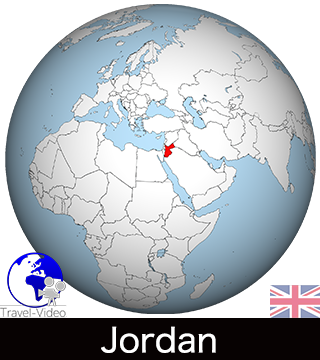
Jordan occupies a central position in the Middle East, acting as a geographical bridge between the Mediterranean basin, the Arabian Peninsula and Mesopotamia. The country shares borders with Syria to the north, Iraq to the northeast, Saudi Arabia to the east and south, and Israel and the Palestinian territories to the west. Its only access to the sea is through the Gulf of Aqaba, where a short coastline connects Jordan to the Red Sea and international maritime trade routes.
This location has given Jordan considerable geopolitical importance. Surrounded by regions that have experienced prolonged instability, the kingdom has often served as a mediator in regional affairs and as an important diplomatic partner for both Arab states and Western countries.
Covering approximately 89,000 square kilometres, Jordan is dominated by arid and semi-arid landscapes, with population and economic activity concentrated in the more hospitable western regions.
Landscapes, Relief and Natural Environment
Jordan's geography is remarkably diverse despite the country's relatively modest size.
The western edge of the country is occupied by the Jordan Rift Valley, part of the larger Great Rift system extending from East Africa to the Levant. This depression contains the Jordan River and the Dead Sea, whose shoreline lies approximately 430 metres below sea level, making it the lowest exposed point on Earth's surface.
East of the valley rise the Jordanian Highlands, where most major cities and agricultural areas are located. These plateaus gradually give way to the vast eastern desert, which forms part of the Syrian and Arabian deserts.
Southern Jordan contains some of the country's most spectacular natural landscapes, including the sandstone mountains and rock formations of Wadi Rum. The region surrounding Petra is similarly characterised by rugged valleys and mountainous terrain.
Protected areas such as the Dana Biosphere Reserve and the Azraq Wetland Reserve preserve important ecosystems and provide habitats for migratory birds and desert wildlife.
Climate and Environmental Challenges
Jordan experiences considerable climatic variation according to altitude and geography.
The northwestern highlands enjoy a Mediterranean climate with relatively cool, wet winters and warm, dry summers. Rainfall decreases rapidly toward the east and south, where desert conditions dominate and annual precipitation becomes extremely limited.
The Jordan Valley and the area surrounding the Dead Sea experience particularly hot summers and mild winters, while snow occasionally falls in Amman and higher elevations during colder months.
Water scarcity represents one of Jordan's greatest environmental challenges. The country is among the most water-poor nations in the world, with growing demand driven by population growth, urbanisation and climate change. Sustainable water management, desalination projects and wastewater recycling have therefore become national priorities.
Population and Demographic Diversity
Jordan's population is estimated at approximately 11.8 million inhabitants in the mid-2020s. The country has a relatively young demographic profile, although fertility rates have gradually declined over recent decades.
Jordanian society reflects centuries of migration and regional upheaval. Alongside families with deep tribal roots in the East Bank regions, a significant proportion of the population is of Palestinian origin, largely as a result of the Arab-Israeli conflicts of 1948 and 1967.
The kingdom has also received successive waves of refugees from Iraq and Syria, making humanitarian assistance and social integration important aspects of national policy.
Smaller communities of Circassians, Chechens, Armenians and Druze contribute to the country's cultural diversity and preserve many of their historical traditions and identities.
Languages and Religious Life
Arabic is the official language of Jordan and is used in administration, education, media and public life. The local Jordanian dialect belongs to the Levantine branch of spoken Arabic and shares many characteristics with the dialects of neighbouring Palestine and Syria.
Modern Standard Arabic is employed in formal communication, literature and official institutions, while English occupies an important role in higher education, business, tourism and international relations. English is widely taught from an early age and is commonly spoken in urban areas.
Islam, predominantly in its Sunni form, is the religion of the overwhelming majority of the population. Religion continues to play an important role in social and cultural life, influencing public holidays, family traditions and community relations.
Jordan is also home to historic Christian communities, including Greek Orthodox, Roman Catholic and various Protestant denominations. The kingdom promotes religious coexistence and interfaith dialogue, and Christian institutions remain active in education, healthcare and social services.
Cities and Administrative Organization
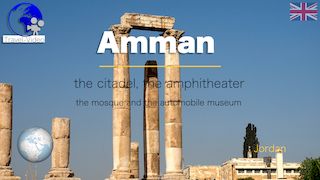
Amman, the capital and largest city, dominates Jordan's political, economic and cultural life. Built across numerous hills, it hosts government institutions, universities, financial centres and major businesses. The city has experienced rapid growth during the past century and today accommodates a large proportion of the national population.
Zarqa, northeast of the capital, is one of the country's principal industrial centres and hosts important manufacturing activities.
Irbid, in northern Jordan, serves as a major educational and agricultural hub and contains several universities and research institutions.
Aqaba, located on the Red Sea, is Jordan's only seaport and plays a vital role in international trade, logistics and tourism.
Administratively, Jordan is divided into twelve governorates grouped into northern, central and southern regions.
Transportation and Infrastructure
Jordan possesses a relatively modern transport infrastructure compared with many countries in the region.
Road transport forms the backbone of domestic mobility and commercial distribution. The Desert Highway, running from Amman to Aqaba, serves as the country's principal north-south corridor and connects major urban centres and industrial areas.
Rail transport remains limited, although projects aimed at modernising freight and passenger services continue to be discussed, particularly in relation to regional trade corridors.
Queen Alia International Airport near Amman functions as the country's main international gateway and an important regional aviation hub.
The Port of Aqaba provides Jordan with access to global maritime routes and handles the majority of the kingdom's imports and exports.
An Economy Based on Services and Human Capital
Unlike several neighbouring countries, Jordan possesses limited oil and natural gas resources. As a result, its economy relies heavily on services, trade and human capital rather than hydrocarbon exports.
Services account for the majority of national economic output, including public administration, banking, telecommunications, education and healthcare.
Jordan has developed a strong pharmaceutical sector that exports products throughout the Middle East and beyond. Information technology and digital services have also become increasingly important components of the national economy.
Mining remains significant, particularly through the extraction of phosphates and potash, which represent some of Jordan's most important export commodities.
Industrial activity includes chemicals, fertilizers, textiles, food processing and construction materials.
Agriculture and Food Production
Agriculture contributes a relatively small share of national economic production due to limited water resources and arable land.
The Jordan Valley remains the country's principal agricultural region, producing vegetables, citrus fruits, olives, dates and other crops through extensive irrigation systems.
Olive cultivation occupies an important place both economically and culturally, while sheep and goat herding continue to support rural communities in many regions.
Improving agricultural efficiency and reducing water consumption remain key objectives for the sector.
Tourism and Cultural Heritage
Tourism is one of Jordan's most important economic sectors and sources of foreign revenue.
Petra, the former Nabataean capital and a UNESCO World Heritage Site, is internationally recognised as one of the world's great archaeological destinations. Other major attractions include the Roman city of Jerash, the desert landscapes of Wadi Rum and the unique environment of the Dead Sea.
Religious tourism also plays an important role, with sites associated with the life of Moses and the baptism of Jesus attracting Christian pilgrims from around the world.
Jordan has additionally developed medical and wellness tourism, benefiting from its healthcare facilities and the therapeutic reputation of the Dead Sea region.
Education, Culture and Contemporary Society
Education has long been a central pillar of Jordanian development policy. Literacy rates are high by regional standards, and higher education institutions attract students from across the Middle East.
The University of Jordan in Amman and the Jordan University of Science and Technology in Irbid rank among the country's leading academic institutions.
Jordanian culture reflects a combination of Bedouin traditions, Levantine influences and modern urban lifestyles. Hospitality occupies an important place in social relations, while traditional music, poetry and handicrafts remain part of everyday cultural life.
Cuisine also reflects the country's diverse heritage, with dishes such as mansaf maintaining a strong symbolic role in national identity and social celebrations.
Contemporary Challenges and Regional Role
Jordan faces several significant challenges, including unemployment among young people, dependence on imported energy, water scarcity and the economic consequences of regional conflicts.
The kingdom continues to host large refugee populations, placing considerable pressure on public services, infrastructure and housing.
At the same time, Jordan has maintained a reputation for political stability and moderation in a turbulent region. The Hashemite monarchy has pursued gradual economic reforms while preserving institutional continuity and social cohesion.
Through its diplomatic engagement, strategic partnerships and commitment to regional dialogue, Jordan continues to play a role that exceeds its demographic and economic weight. Its combination of historical heritage, geopolitical importance and relative stability makes the kingdom one of the most influential states in the contemporary Levant.