Français (France)
  Nederlands (nl-NL)
 00:00 • intro | 00:43 • the desert and the herds of the Bedouins | 02:13 • petroglyphs representing camels | 02:44 • views of a spectacular desert | 04:18 • other petroglyphs | 05:02 • dromedaries | 05:43 • more petroglyphs
Personal creation from visual material collected during my trip Jordan (2017)
Map of places or practices in Wadi Rum on this site
• Use the markers to explore the content •
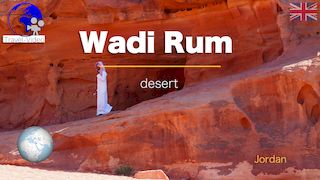
Wadi Rum, a spectacular desert: landscapes and ancient traces
A desert shaped by nature and human presence
In southern Jordan, Wadi Rum stands out for the scale of its desert landscapes and the depth of its human history. This vast environment, composed of open الرمال expanses and monumental sandstone formations, is one of the most striking natural settings in the Middle East. Wind erosion, temperature contrasts and geological processes have sculpted cliffs, arches and valleys that define the visual identity of the region.
The video offers a gradual immersion into this landscape, linking natural forms with traces of human activity. It reveals how this apparently austere environment has long been inhabited, traversed and interpreted by different communities, leaving visible marks that still structure its meaning today.
Desert life and Bedouin traditions
The sequences devoted to the desert itself highlight the relationship between people and their environment. Herds of camels moving across the الرمال, guided by Bedouin communities, illustrate a way of life adapted to arid conditions. These pastoral practices are not merely economic activities but part of a broader cultural system based on mobility, knowledge of the terrain and seasonal rhythms.
The wide views emphasize the diversity of the landscape. Massive rock formations rise from the desert floor, creating a succession of open spaces and enclosed valleys. This alternation of scales contributes to the perception of Wadi Rum as both vast and structured, where orientation depends on the recognition of landmarks and relief.
Petroglyphs and traces of ancient societies
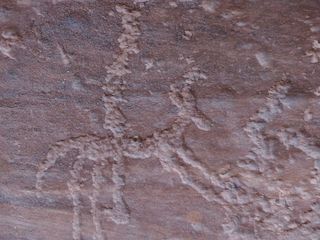
Embedded within this natural setting are numerous petroglyphs carved into the rock. Among them, representations of camels appear frequently, reflecting the importance of these animals in trade, transport and daily life. These engravings are part of a broader corpus of rock art that provides direct evidence of human presence in the region over long periods.
The petroglyphs are not isolated elements. They are distributed along routes and near key locations, suggesting patterns of movement and areas of activity. Their repetition and stylistic variations indicate different phases of use and possibly different groups who interacted with the landscape in distinct ways.
These engravings contribute to a deeper understanding of Wadi Rum, transforming it from a purely natural environment into a cultural landscape shaped by human expression.
Geological formations and historical uses
The distinctive appearance of Wadi Rum is the result of long-term geological processes affecting sandstone formations. Erosion has produced vertical cliffs, smooth slopes and natural arches, while variations in mineral composition create a range of colours from deep red to lighter tones. Light conditions further enhance these contrasts, changing the perception of the landscape throughout the day.
Historically, this environment has served as a corridor for movement and exchange. Nomadic populations developed systems of navigation and survival adapted to the constraints of the desert, relying on water sources, seasonal routes and an intimate knowledge of the terrain. This interaction between geology and human use has produced a landscape that is both physical and cultural.
Today, Wadi Rum is recognized for its environmental and cultural value, contributing to its protection and continued relevance.
A visual approach that reveals structure and detail
The videos on this site are built from carefully selected photographs, combined through smooth transitions and controlled framing. This method allows for a progressive reading of complex environments such as Wadi Rum.
In this case, the approach highlights the contrast between vast open spaces and precise details. The textures of الرمال, the layers of rock and the carved lines of the petroglyphs become clearly visible. The sequence moves from panoramic views to closer observations, helping to understand how different elements relate to one another.
This structured visual progression makes it possible to perceive the desert not as a uniform expanse, but as a varied and organized environment.
A landscape where nature and history converge
Wadi Rum illustrates the convergence of natural processes and human activity. Its monumental formations, its ancient engravings and its ongoing cultural practices together define a landscape that is both visually striking and historically rich.
The video provides an accessible introduction to this environment, linking its main features into a coherent whole. For those wishing to explore further, the dedicated pages on the Wadi Rum desert and its petroglyphs offer a more detailed understanding of the natural and cultural dimensions of this remarkable site.
Links to related pages

Audio Commentary Transcript
One of the most spectacular and popular places in Jordan is undoubtedly Wadi Rum, a desert valley offering impressive landscapes and prehistoric remains in the form of petroglyphs.
The place receives many tourists and tourism-related businesses offer local Bedouin populations new sources of financial income.
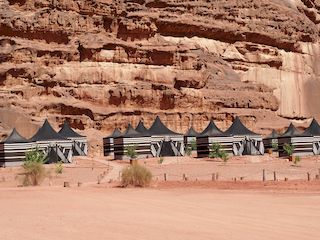
The tourist facilities include very comfortable tents for visitors who want to stay several days.

Music:
- - YouTube video library - Anamalie, (© Anamalie by Kevin MacLeod is licensed under a Creative Commons Attribution 4.0 license. https://creativecommons.org/licenses/by/4.0/
- Source: http://incompetech.com/music/royalty-free/index.html?isrc=USUAN1500007
- Artist: http://incompetech.com/)
- - YouTube video library - Desert Caravan
- - YouTube video library - Desert Catharsis
Disclaimer: Despite its appropriateness, copyright issues prevent the use of jordanian traditional music in "Wadi Rum, spectacular desert • Jordan", hence the use of royalty-free music. Despite our careful selection, some might regret this decision, which is necessary to avoid potential lawsuits. Although difficult, this decision is the only viable solution.