Français (France)
  Nederlands (nl-NL)
 00:00 • intro | 00:18 • Saint Paul's Cathedral | 01:23 • Belur Math | 03:01 • Kumartuli Park | 08:26 • The Banks of the Hooghly River | 09:59 • Madan Mohan Temple | 11:35 • Nakhoda Masjid
Personal creation from visual material collected during my trip India • Amazing East India: Assam, Odisha, West Bengal (2023)
• Use the markers to explore the content •
Religious Heritage and Cultural Traditions of Kolkata
A historic metropolis shaped by multiple faiths
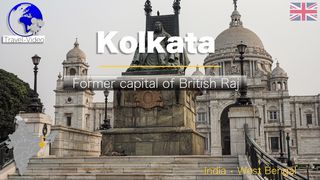
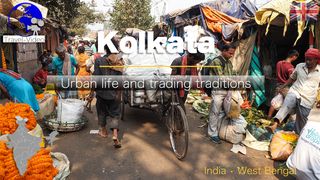
Kolkata, located on the eastern bank of the Hooghly River in eastern India, is one of the most historically significant cities of the Bengal region and the capital of the state of West Bengal. Founded as a major trading center during the British colonial period, the city developed into an important administrative, intellectual, and cultural hub. Over the centuries, Kolkata has been shaped by the presence of diverse religious communities whose traditions continue to influence the urban landscape and social life of the city.
Hindu, Muslim, Christian, and other religious groups have contributed to a rich cultural environment in which places of worship, artisan traditions, and riverfront activities form part of the daily rhythm of urban life. Several emblematic sites illustrate this interaction between faith, culture, and history, including Belur Math, Kumartuli Park, the banks of the Hooghly River, and the Nakoda Masjid.
Belur Math and the spiritual movements of modern Bengal
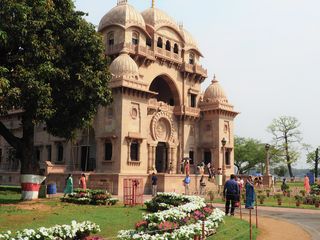
Belur Math is located on the western bank of the Hooghly River, opposite the city of Kolkata. Established at the end of the nineteenth century, it serves as the headquarters of the Ramakrishna Mission, an influential spiritual and philanthropic organization founded in memory of the mystic Ramakrishna and developed by his disciple Swami Vivekananda.
The foundation of Belur Math took place during a period of intellectual and religious transformation in Bengal. In the late nineteenth century, the region experienced a series of social and cultural reforms often referred to as the Bengal Renaissance. Within this context, several religious movements sought to reinterpret traditional spiritual teachings while engaging with modern philosophical ideas.
Belur Math became a central institution within this movement, combining religious practice, education, and social service. The site continues to function as an important spiritual center associated with the teachings of Ramakrishna and Vivekananda and plays a significant role in the religious life of contemporary Bengal.
Kumartuli Park and the tradition of sacred craftsmanship
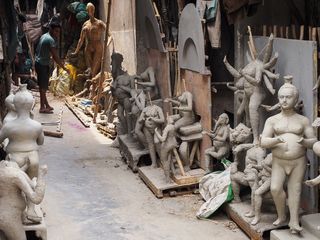
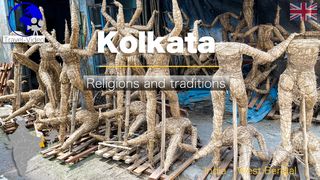
In northern Kolkata lies the historic neighborhood of Kumartuli, widely known for its community of sculptors specializing in the creation of religious images. This district developed during the eighteenth century when artisans were encouraged to settle in the area to produce statues used in the religious festivals of Bengal.
The workshops of Kumartuli are particularly associated with the production of images representing the goddess Durga, which are central to one of the most important annual festivals of the region. The area has therefore become closely linked to the artistic and devotional traditions that characterize the religious culture of Kolkata.
Kumartuli Park represents an extension of this cultural landscape, where the activity of artisans and the preparation of religious celebrations illustrate how traditional craftsmanship remains embedded in the social and cultural fabric of the city.
The Hooghly riverbanks and everyday religious practices
The Hooghly River is a defining geographical element of Kolkata and has played a crucial role in the historical development of the region. As a major distributary of the Ganges, it has long served as an important commercial and transportation route linking Bengal to other parts of the Indian subcontinent and to international maritime trade networks.
Beyond its economic significance, the river holds strong symbolic value within the religious traditions of the region. The riverbanks serve as gathering places where residents participate in various forms of devotional activity and public ceremonies. These spaces reflect the enduring connection between urban life and the sacred geography associated with the Ganges.
The Hooghly waterfront therefore represents an essential component of Kolkata’s cultural landscape, where religious practices coexist with the daily activities of a large metropolitan population.
Nakoda Masjid and the Muslim heritage of the city
Kolkata’s religious diversity is also expressed through the presence of significant Islamic institutions. Among these, the Nakoda Masjid stands out as one of the most prominent mosques in the city. Located in the commercial district of Burrabazar, the mosque was constructed in the early twentieth century by members of a merchant community originating from Rajasthan.
Its establishment reflects the role played by Muslim trading communities in the economic expansion of Kolkata during the late colonial period. The city’s position as a major commercial center attracted merchants from various regions of the Indian subcontinent, contributing to the development of a cosmopolitan urban society.
Nakoda Masjid remains an important religious center for the Muslim population of Kolkata and represents an integral part of the city’s multicultural heritage.
A cultural landscape reflecting plural traditions
The sites and traditions associated with Belur Math, Kumartuli, the Hooghly River, and Nakoda Masjid illustrate the diversity that characterizes Kolkata’s religious and cultural life. Together they reflect the historical processes that shaped the city, from colonial expansion and commercial growth to the coexistence of multiple faith communities.
Within the broader context of West Bengal, Kolkata continues to function as a major center where historical traditions, spiritual movements, and urban culture intersect. These elements form an essential background for understanding the city and its enduring role in the cultural and religious landscape of eastern India.
Original music – personal creation
Disclaimer: Despite its appropriateness, copyright issues prevent the use of indian traditional music in "Kolkata • Religious Diversity and Urban Traditions", hence the use of royalty-free music. Despite our careful selection, some might regret this decision, which is necessary to avoid potential lawsuits. Although difficult, this decision is the only viable solution.


Audio Commentary Transcript
Saint Paul's Cathedral
In Kolkata, religious traditions do not appear as a uniform whole. They belong to a city shaped by trade, colonial administration, migration and popular devotions.
Saint Paul’s Cathedral first recalls this particular history. Consecrated in 1847, it was one of the major Anglican landmarks of Calcutta, then an important capital of British India. Its neo-Gothic architecture transposes into the Bengali climate a language that came from Europe: slender arches, verticality, an ordered façade and restrained monumentality.
But this Christian presence does not define the city as a whole. Around it, Kolkata preserves other forms of faith: Hindu temples, Muslim communities, modern spiritual movements, rituals linked to divine images and urban festivals. The religious city is thus revealed through successive layers, between colonial heritage, everyday practices and traditions that remain alive.
Belur Math
Belur Math is the headquarters of the monastic order founded by Swami Vivekananda, a disciple of Ramakrishna, one of the great Bengali spiritual figures of the nineteenth century. The movement that grew around Ramakrishna is not based on exclusive devotion to one particular deity. It rather defends a central idea: the great religious traditions can be understood as different paths toward the same spiritual reality.
This vision gave rise to the Ramakrishna Mission, which combines meditation, education, social action and service to the poorest. Belur Math is therefore not only a Hindu monastery. It is also the symbol of a reformed, modern Hinduism, open to dialogue with other religions.
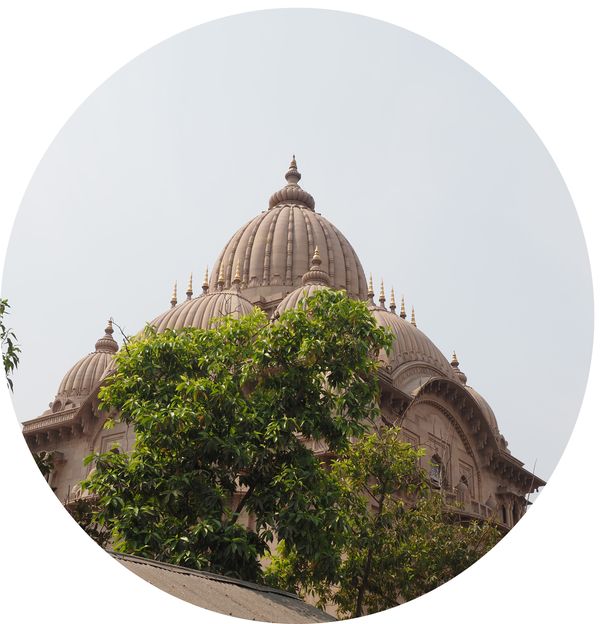
This philosophy is reflected in the architecture of the main shrine. The domes, pavilions and ornaments recall Hindu temples, while the great central arch evokes Indo-Islamic architecture. Inside, the broad prayer hall leading toward the sanctuary also suggests a continuous sacred space, closer in spirit to a church. The building thus becomes an architectural expression of the spiritual unity promoted by the movement.
Kumarthuli Park
In Kolkata, Kumartuli Park does not at first appear as a sacred place. At the entrance, a figure of Spider-Man seems almost out of place above the workshops, like a popular wink in a neighbourhood where imagination takes shape in the open air.
But very quickly, the atmosphere changes. Behind modest façades, narrow lanes shelter one of the city’s great artisan centres. Here, sculptors have been shaping for generations the images made for religious festivals, especially those of Durga Puja, Bengal’s greatest celebration.
The work begins with simple materials: wood, straw, bamboo and clay. Little by little, bodies appear, then gestures, faces, and finally gazes. The divinities are born in the dust of the workshops, among tools, tarpaulins, pending commissions, and gestures repeated with almost ritual precision.
And yet these works are ephemeral. Created to be worshipped for a few days, they will then be carried in procession and immersed in the river. The clay statues return to the water from which they seem to have emerged. This is what gives Kumartuli its particular strength: everything here is built to disappear, yet nothing seems provisional. The neighbourhood transforms fragile matter into presence, and the daily work of its artisans into a silent theatre of Bengali faith.
On the banks of the Hooghly river
Not far from the workshops of Kumartuli, the banks of the Hooghly extend the world of sacred images. This river, a branch of the Ganges in the vast Bengal delta, flows through Kolkata as a presence that is both everyday and ritual.
Even without witnessing the great fervour of Durga Puja, a few statues and a few gestures are enough to evoke this deep connection between creation, devotion and sacred water. On the ghats, the ablutions remind us that the Hooghly is not just a landscape: it remains a place of purification, passage and memory.
Madan Mohan Temple
In Baghbazar, behind a façade marked by time, the Madan Mohan Temple appears almost abandoned. Its imposing columns, silent galleries, and faded walls create a mysterious atmosphere. Founded in 1761 by the wealthy merchant Gokul Chandra Mitra, this shrine dedicated to Krishna remains an active place of worship. Amid the streets of Kolkata, it preserves traces of a vanished world, combining an aristocratic residence, a religious sanctuary, and urban memory.
Nakhoda Masjid
At the heart of Burrabazar, one of Kolkata’s busiest commercial districts, stands the Nakhoda Masjid. Two small mosques already occupied this site in the nineteenth century, before being incorporated into a larger building. From 1926 onwards, it was extensively transformed and enlarged with funding from the Kutchi Memon merchant community. Inspired by Mughal architecture, the present mosque is the largest in Kolkata and can accommodate several thousand worshippers. Shops occupy the ground floor of the architectural complex, reflecting its close integration into the economic activity and daily life of the neighbourhood.
Present in Bengal since the Middle Ages, Islam has profoundly shaped the region’s history and culture. Under the Bengal Sultanate and later the Mughal Empire, it influenced architecture, the arts, the Bengali language, music and culinary traditions. In Kolkata, Islam continued to develop during the British period, supported by merchants, artisans, workers and intellectuals from across the Indian subcontinent. Even today, the city’s places of worship, neighbourhoods, festivals and Muslim traditions bear witness to this living heritage and its essential role in Kolkata’s cultural identity.