

 Français (France)
  Nederlands (nl-NL)
 00:00 • intro | 00:46 • Darjeeling Himalayan Railways | 03:35 • Ghoom: Monastery Yiga Choeling | 06:39 • ... other religions around Darjeeling | 07:02 • Darjeeling: the tea fields | 07:47 • Darjeeling: Back to town
Personal creation from visual material collected during my trip Buddhist India • Sikkim • Bihar • West Bengal (2017)
Map of places or practices in Darjeeling on this site
• Use the markers to explore the content •
Darjeeling: Railways, Tea Landscapes and Himalayan Cultures
A Mountain Town Shaped by Landscape and History
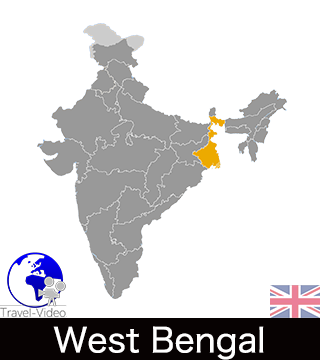
Darjeeling occupies a distinctive position in the Indian state of West Bengal, high on the slopes of the eastern Himalayas near Nepal, Sikkim and Bhutan. Its setting has given the town a character unlike that of the great plains cities of northern India. Steep hillsides, winding roads, cool air, shifting mist and distant mountain horizons all contribute to a landscape that has long attracted travellers, administrators and traders. Developed during the colonial period as a hill station, Darjeeling also became an important centre for tea cultivation and regional exchange.
This video reveals several complementary aspects of the town and its surroundings. It presents an exceptional transport heritage through the famous mountain railway, a religious dimension expressed through Buddhist institutions and other places of worship, and the agricultural landscapes of tea estates that made Darjeeling known worldwide. The return to the urban centre reminds viewers that this is not only a scenic mountain retreat, but also a living town shaped by many communities and historical layers.
Rail Heritage, Sacred Spaces and Tea Estates
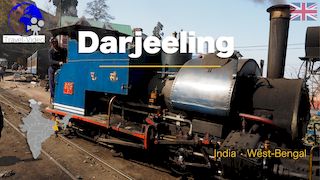
One of Darjeeling’s most famous landmarks is the Darjeeling Himalayan Railway, often called the Toy Train. Built in the late nineteenth century, this narrow-gauge line was a remarkable engineering response to difficult terrain. It connects the lowlands with the mountain town through loops, curves, gradients and tightly built passages where railway and daily life coexist at close range. Beyond its technical value, the railway played a decisive role in opening the region to trade, administration and tourism. Its UNESCO recognition reflects both its historical importance and the ingenuity of its design.
The journey toward Ghoom introduces another key element of the region: the Yiga Choeling Monastery. Located near one of the highest stations on the railway, this Buddhist monastery illustrates the cultural links between Darjeeling and the wider Himalayan world. Its prayer halls, religious imagery, traditional colours and spiritual atmosphere reflect Tibetan Buddhist influences that remain central to local identity. The monastery is both a place of worship and a witness to centuries of cultural circulation across mountain frontiers.
The video also refers to other religions around Darjeeling. This diversity is an essential part of the town’s character. Hindu temples, Buddhist monasteries, churches and smaller local shrines testify to a society formed through migration, trade and coexistence. Darjeeling has long been a meeting place where Nepali, Tibetan, Bengali and other communities contributed to a plural cultural environment.
The tea fields represent another defining image of the region. Spread across steep slopes in carefully managed estates, they form a cultivated landscape that is both economic and visual heritage. Darjeeling tea achieved global prestige, yet behind that reputation lies a demanding mountain agriculture shaped by altitude, rainfall, mist and skilled labour.
Historical and Cultural Background
Before British expansion in the nineteenth century, the Darjeeling area belonged to a wider Himalayan zone influenced by neighbouring powers such as Sikkim and Nepal. Its later development as a hill station responded to colonial ideas about climate, health and administration. British planners saw the cooler mountain air as more suitable for seasonal residence than the heat of the plains, and Darjeeling gradually acquired roads, public buildings and residential districts adapted to the terrain.
Tea cultivation transformed the region economically and socially. Large plantations required a substantial workforce, and many labourers came from Nepal. Their descendants remain a major part of the local population, and Nepali language and traditions are deeply woven into the identity of Darjeeling today. The town therefore reflects both colonial planning and long-term Himalayan migration.
The railway supported these changes by transporting tea, goods and passengers more efficiently between the hills and the plains. Its route, sometimes passing directly beside houses or through urban streets, demonstrates how infrastructure became integrated into the fabric of daily life.
Architecturally, Darjeeling is marked by variety rather than uniformity. Colonial-era buildings, hillside houses adapted to narrow plots, religious structures influenced by Himalayan traditions and more recent urban constructions all coexist within a compact mountain setting. The result is a town built in successive layers rather than according to a single plan.
Nature remains ever-present. Clouds move quickly across the ridges, weather changes rapidly, and clear moments can open spectacular views toward higher Himalayan peaks. In Darjeeling, urban life is inseparable from topography.
What the Videos on This Site Make Especially Clear
A presentation built largely from carefully selected and animated photographs is particularly effective for a place such as Darjeeling. Slow movements across still images help viewers follow the railway line, understand the tight curves required by the slopes and observe how tracks, streets and buildings share limited space.
This approach is equally valuable for sacred architecture. Rather than rushing past details, the viewer can study monastery façades, interior arrangements, painted surfaces or sculptural elements with greater clarity. Controlled motion within the frame guides attention naturally.
For the tea estates, animated photographic sequences reveal the geometry of terraces, the rhythm of planted rows and the relationship between human cultivation and steep mountain landforms. They also make scale easier to understand: workers, roads, buildings and plantations can be read within the same visual composition.
The progression from railway heritage to religious life, then to agricultural landscapes and back to the town centre creates a coherent narrative. It allows Darjeeling to appear not as a single attraction, but as a complete cultural landscape shaped by transport, belief, labour and geography.
A Distinctive Himalayan Cultural Landscape
Darjeeling brings together elements rarely combined so vividly in one place: historic engineering, religious diversity, world-renowned tea landscapes and a dramatic mountain environment. This video offers a clear introduction to those many dimensions. For visitors wishing to go further, the detailed pages devoted to the railway, the monastery at Ghoom and the tea-growing landscapes provide valuable additional insight into one of India’s most distinctive hill regions.
Links to related pages

Audio Commentary Transcript
A little nostalgic ride in a steam train before admiring the tea fields on the mountainside, nothing better to prepare for a visit to one of the city's monasteries, Yiga Choeling, in Darjeeling. Darjeeling is a city in West Bengal in India, at the foot of the Himalayas.
The city was appreciated by the English colonizer for its freshness and has therefore become a seaside town. They are the ones who introduced the tea culture that made the reputation of the region.

Music:
- - YouTube video library - Constancy Part 1 - The Descent, (© Constancy Part 1 - The Descent by Kevin MacLeod is licensed under a Creative Commons Attribution 4.0 license. https://creativecommons.org/licenses/by/4.0/
- Source: http://incompetech.com/music/royalty-free/index.html?isrc=USUAN1100775
- Artist: http://incompetech.com/)
- - YouTube video library - Constancy Part 2 - The Descent, (© Constancy Part 2 - The Descent by Kevin MacLeod is licensed under a Creative Commons Attribution 4.0 license. https://creativecommons.org/licenses/by/4.0/
- Source: http://incompetech.com/music/royalty-free/index.html?isrc=USUAN1100774
- Artist: http://incompetech.com/)
- - YouTube video library - Constancy Part 3 - The Descent, (© Constancy Part 3 - The Descent by Kevin MacLeod is licensed under a Creative Commons Attribution 4.0 license. https://creativecommons.org/licenses/by/4.0/
- Source: http://incompetech.com/music/royalty-free/index.html?isrc=USUAN1100774
- Artist: http://incompetech.com/)
- - YouTube video library - Crisis - Scoring Action, (© Crisis - Scoring Action by Kevin MacLeod is licensed under a Creative Commons Attribution 4.0 license. https://creativecommons.org/licenses/by/4.0/
- Source: http://incompetech.com/music/royalty-free/index.html?isrc=USUAN1100277
- Artist: http://incompetech.com/)
- - YouTube video library - Crusade - Video Classica, (© Crusade - Video Classica by Kevin MacLeod is licensed under a Creative Commons Attribution 4.0 license. https://creativecommons.org/licenses/by/4.0/
- Source: http://incompetech.com/music/royalty-free/index.html?isrc=USUAN1100884
- Artist: http://incompetech.com/)
- - YouTube video library - Done Running
- - YouTube video library - Double Drift, (© Double Drift by Kevin MacLeod is licensed under a Creative Commons Attribution 4.0 license. https://creativecommons.org/licenses/by/4.0/
- Source: http://incompetech.com/music/royalty-free/index.html?isrc=USUAN1100254
- Artist: http://incompetech.com/)
Disclaimer: Despite its appropriateness, copyright issues prevent the use of indian traditional music in "Darjeeling • West Bengal, India", hence the use of royalty-free music. Despite our careful selection, some might regret this decision, which is necessary to avoid potential lawsuits. Although difficult, this decision is the only viable solution.


