Français (France)
  Nederlands (nl-NL)
 00:00 • intro | 00:56 • on the way to the center of the city | 02:07 • near the gurdwara Takhat Sri Kesgarh Sahib | 03:42 • Dance with chatkar sun wheels | 05:02 • on the road to the stadium | 06:13 • Hola and / or Holi | 06:57 • the parade | 11:59 • Charan Ganga Stadium
Personal creation from visual material collected during my trip India • Hola Mohalla • Punjab • Himachal Pradesh (2018)
Map of places or practices in Anandpur Sahib on this site
• Use the markers to explore the content •
Anandpur Sahib and Hola Mohalla: Sikh Traditions in Punjab
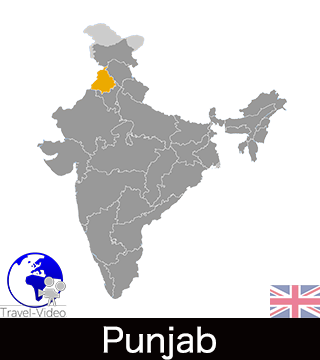
Located in the Indian state of Punjab, Anandpur Sahib is one of the most important historic and spiritual centres of Sikhism. Founded in the seventeenth century by Guru Tegh Bahadur, the city is closely linked to the creation of the Khalsa by Guru Gobind Singh in 1699. Every year, Anandpur Sahib becomes the focal point of Hola Mohalla, a major Sikh gathering combining religious ceremonies, martial demonstrations, processions and large public celebrations.
The video follows this atmosphere through the streets leading toward the historic centre of the city, around important gurdwaras and across the open spaces used for demonstrations and public gatherings. Pilgrims, religious groups, horse riders and practitioners of traditional martial arts transform Anandpur Sahib into a vast ceremonial landscape. The scenes filmed near the Takhat Sri Kesgarh Sahib and around the Charan Ganga stadium reveal how religion, historical memory and collective identity remain deeply connected within Sikh culture.
As the film moves through the crowded streets and gathering areas, it also highlights the temporary transformation of the city during the festival. Roads, squares and religious spaces become part of a continuous flow of ceremonies, processions and communal activities, illustrating the continuing importance of pilgrimage and collective celebration in contemporary Punjab.
The Takhat Sri Kesgarh Sahib and Festival Spaces
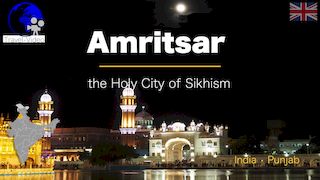
Among the most important landmarks visible in the video is the Takhat Sri Kesgarh Sahib, one of the five highest seats of religious authority in Sikhism. This gurdwara occupies a central place in Sikh history because it is traditionally associated with the founding of the Khalsa. Its white marble architecture, domes and large courtyards become gathering places for thousands of pilgrims during Hola Mohalla.
The streets surrounding the shrine are filled with continuous movement throughout the festival. Religious processions, groups carrying Sikh flags and visitors dressed in traditional clothing contribute to the distinctive atmosphere of the event. The video also captures several demonstrations involving chatkar sun wheels, rotating metal devices manipulated during performances requiring precision, coordination and physical control.
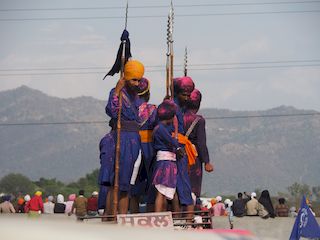
The parade shown in the film illustrates another important dimension of Hola Mohalla. Religious groups, gatka practitioners and horse riders move through the city carrying the colours and symbols of the Khalsa. These processions reflect the historical importance of martial traditions within Sikh culture and recall periods during which Sikh communities organised themselves militarily in northern India.
The sequences filmed near the Charan Ganga stadium reveal the scale of the gathering. Public demonstrations, equestrian exercises and martial performances attract large crowds and transform the stadium and surrounding spaces into extensions of the religious celebrations taking place throughout Anandpur Sahib.
Together, these scenes show that Hola Mohalla is not only a religious festival but also a strong expression of Sikh cultural identity and historical continuity.
Hola Mohalla, Holi and the History of the Khalsa
Hola Mohalla was established in the early eighteenth century by Guru Gobind Singh within the context of the Hindu festival of Holi. While Holi is mainly associated with colours and spring festivities, Hola Mohalla developed a more martial and community-oriented character. The celebration was intended to strengthen the discipline, cohesion and military preparedness of the Khalsa.
This historical background remains highly visible today. Demonstrations of gatka, horse riding exercises and martial parades continue to play a major role during the festival. These traditions reflect the military dimension of Sikh history during the Mughal period and the later political struggles that shaped Punjab.
At the same time, Hola Mohalla remains deeply religious. Gurdwaras host prayers, readings from Sikh scriptures and langars, the communal kitchens serving free meals to all visitors regardless of social background or religion. This practice of collective service and equality remains one of the central principles of Sikhism.
The large crowds visible throughout Anandpur Sahib also demonstrate the continuing importance of pilgrimage within Sikh religious life. For many participants, Hola Mohalla represents both a spiritual gathering and a public affirmation of Sikh identity in modern India.
A Detailed Visual Reading of the Festival
The videos presented on travel-video.info are often constructed from carefully selected and animated photographs, allowing a more progressive observation of places, ceremonies and architectural details. In this film, that approach is complemented by several live filmed sequences recorded directly within the crowds and public demonstrations.
The combination of animated photography and filmed footage creates a clearer understanding of the organisation and atmosphere of Hola Mohalla. The movement through the streets of Anandpur Sahib makes it easier to follow the processions, the circulation of pilgrims and the relationship between religious buildings, gathering spaces and ceremonial routes.
The slower visual rhythm also helps viewers observe architectural details of the gurdwaras, traditional clothing and the objects used during martial demonstrations. The sequences devoted to gatka and chatkar sun wheels make the gestures, movements and ceremonial techniques easier to understand than in conventional fast-moving reportage.
This visual construction gradually reveals the scale and complexity of the festival while preserving the atmosphere of the event and the relationship between the sacred spaces and the urban environment of Anandpur Sahib.
A Major Celebration of Sikh Punjab
Hola Mohalla remains one of the most important festivals in the Sikh religious calendar. Combining spirituality, martial traditions and large public gatherings, the celebration reflects essential aspects of Sikh history and identity in Punjab. Through the streets, shrines and ceremonial spaces of Anandpur Sahib, the video offers a detailed view of a living tradition where religion, collective memory and public celebration continue to shape the city each year.



Audio Commentary Transcript
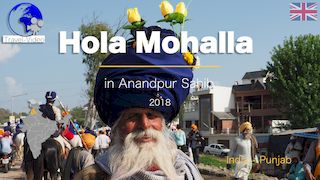
In 2018, the Hola Mohalla took place in the week of March 3. Here are some images of this impressive event.
The Sikhs have always distinguished themselves by their bravery and skill in arms. Every year in March, a big party brings together the Sikhs in Anandpur Sahib, Punjab.
The participants then put on their traditional blue and orange clothes and their (sometimes very impressive) turban and parade on foot or on horseback. This gives rise to impressive demonstrations of equestrian art, all in a good-natured and ultimately very peaceful atmosphere, despite all the weapons carried by the participants.

Music:
- - YouTube video library - A Fallen Cowboy
- - YouTube video library - Adventure Theme
- - YouTube video library - Clouds
- - YouTube video library - Evil March, (© Evil March by Kevin MacLeod is licensed under a Creative Commons Attribution 4.0 license. https://creativecommons.org/licenses/by/4.0/
- Source: http://incompetech.com/music/royalty-free/index.html?isrc=USUAN1100727
- Artist: http://incompetech.com/)
- (Inde) - Hola Mohalla at Guru Nanak Dwara - Kar Kirpa Tere Gun Gavan Golden Temple - Shahab Kirtan Popular Punjabi Devotional Songs
- - YouTube video library - People Watching
Disclaimer: Despite its appropriateness, copyright issues prevent the use of indian traditional music in "Hola Mohalla in Anandpur Sahib in 2018 • Punjab, India", hence the use of royalty-free music. Despite our careful selection, some might regret this decision, which is necessary to avoid potential lawsuits. Although difficult, this decision is the only viable solution.