

 Français (France)
  Nederlands (nl-NL)
 00:00 • intro | 00:36 • in town | 01:35 • Qila Mubarak Palace | 03:36 • Moti Bagh Palace | 04:54 • Ahri Dukniwaran Sahib Gurdwara
Personal creation from visual material collected during my trip India • Hola Mohalla • Punjab • Himachal Pradesh (2018)
Map of places or practices in Patiala on this site
• Use the markers to explore the content •
Patiala and the Legacy of the Sikh Princely States
A Historic Royal City in Punjab
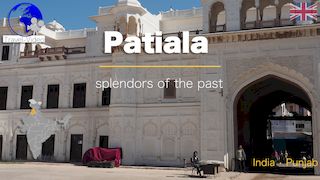
Patiala occupies a distinctive place in the history of northern India. Once the capital of one of the most influential Sikh princely states, the city preserves an important architectural and cultural heritage linked to the rulers of the Phulkian dynasty and to the broader history of Punjab. The video explores several dimensions of this former royal center through its streets, palaces and religious monuments, revealing a city where princely traditions and Sikh heritage remain strongly visible.
The first scenes introduce the urban atmosphere of Patiala, where modern activity coexists with monumental gateways, historic buildings and traces of former royal power. The city developed around courtly institutions and religious foundations that shaped both its political importance and its architectural identity. Even today, many parts of Patiala still reflect the influence of the princely era.
As the video progresses, attention shifts toward the major monuments associated with the former rulers of the city. These buildings illustrate how architecture was used to express authority, prestige and cultural patronage during the eighteenth and nineteenth centuries.
Palaces, Fortifications and Sikh Religious Heritage
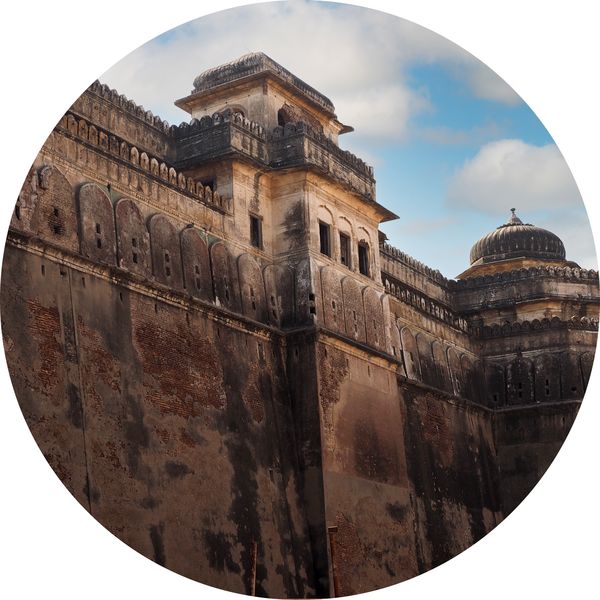
The Qila Mubarak complex forms one of the most important historical landmarks in Patiala. Originally conceived as a fortified palace, it combines defensive structures with ceremonial and residential spaces. Its courtyards, façades and decorative details reveal a mixture of Mughal, Rajput and Sikh architectural influences that became characteristic of many princely courts in northern India.
The Moti Bagh Palace presents a different architectural atmosphere. Designed as a more open and refined royal residence, it reflects the evolution of princely architecture during the colonial period, when rulers increasingly emphasized representation, gardens and ceremonial spaces. Large halls, arcades and landscaped surroundings illustrate the prestige associated with the court of Patiala.
The video also explores the Gurdwara Ahri Dukniwaran Sahib, an important Sikh religious site connected to local devotional traditions. The white domes, prayer halls and sacred spaces highlight architectural features commonly associated with Sikh religious buildings in Punjab. The monument reflects the central role of gurdwaras not only as places of worship but also as community institutions deeply integrated into everyday life.
Historical Context and Architectural Influences
Patiala emerged during a period of political transformation that followed the decline of Mughal authority in northern India. Founded in the eighteenth century by Baba Ala Singh, the city became one of the principal Sikh princely states of the region. During British rule, Patiala retained considerable autonomy, which encouraged the construction of palaces, administrative buildings and religious monuments.
The architecture visible throughout the video reflects this layered history. Mughal influences appear in arches, symmetry and ornamental decoration, while Sikh architectural traditions can be recognized in domes, sanctuaries and the organization of religious spaces. European elements introduced during the colonial period also became integrated into princely architecture, especially in later palace constructions.
Patiala’s monuments therefore illustrate more than a single architectural tradition. They represent the interaction between political power, religion, courtly culture and changing artistic influences over several centuries.
What These Videos Make Easier to Observe
The videos on travel-video.info are largely created from carefully animated photographs, allowing architectural details and spatial relationships to remain visible longer than in rapidly moving footage. This approach helps viewers observe façades, carved decorations, courtyards and interior perspectives with greater clarity.
Slow transitions between wide views and close details also make it easier to understand the organization of palace complexes and religious sites. The relationship between monuments, streets and surrounding spaces gradually becomes more readable, offering a more progressive understanding of the city and its heritage.
A City Marked by Royal and Religious Traditions
Patiala remains one of the most significant historic princely cities of Punjab. Through its palaces, fortifications and Sikh religious monuments, the city preserves visible traces of the political and cultural history of northern India. The detailed pages dedicated to the related monuments provide an opportunity to continue exploring the architectural and historical heritage associated with this former royal capital.
Links to related pages




Audio Commentary Transcript
Patiala is an important city of Punjab founded in 1763 by the Maharajah Ala Singh to whom it owes its name (Patiala: the strip of land of Ala). Patiala is built around Ala Singh's palace, the Qila Mubarak) which is being restored (much needed by the way).
The city seems nostalgic for its past grandeur. The streets of Patiala are lively and bustling with activity like all Indian cities. The Dukh Niwaran Sahib gurdwara was built at the place where Guru Teg Bahadur, the ninth and penultimate guru of Sikkism, meditated under a pagoda ficus to ward off a strange disease that was plaguing the inhabitants of the region. The gurdwara of Patiala is magnificent and contrasts with the general atmosphere of the res of the city.
Music:
- - YouTube video library - Air to the throne
- - YouTube video library - Alive Evil
- - YouTube video library - Ceremonial Prelude
- - YouTube video library - Her Owl Ring
Disclaimer: Despite its appropriateness, copyright issues prevent the use of indian traditional music in "Patiala, the splendours of the past • Punjab, India", hence the use of royalty-free music. Despite our careful selection, some might regret this decision, which is necessary to avoid potential lawsuits. Although difficult, this decision is the only viable solution.


