Français (France)
  Nederlands (nl-NL)
 The tea fields of Darjeeling are located in the hills of the eastern Himalayas in the Indian state of West Bengal. These plantations extend across mountainous slopes and form an extensive agricultural landscape dedicated to tea cultivation. The region is widely associated with a distinctive tea production known for its recognized geographic identity. Tea cultivation plays an important role in the regional economy and supports numerous communities involved in the harvesting and processing of tea leaves. Today, the tea fields represent one of the most recognizable landscapes of the Darjeeling area and contribute to the international reputation of its tea industry.
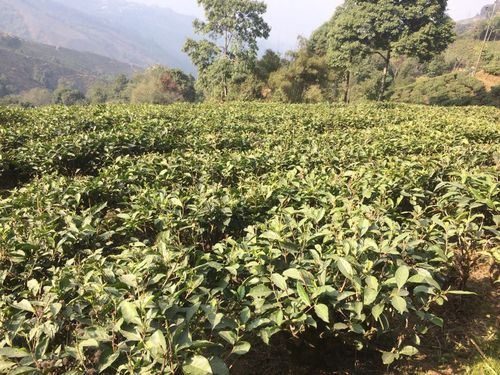
Darjeeling • Tea fields

Darjeeling • Tea fields
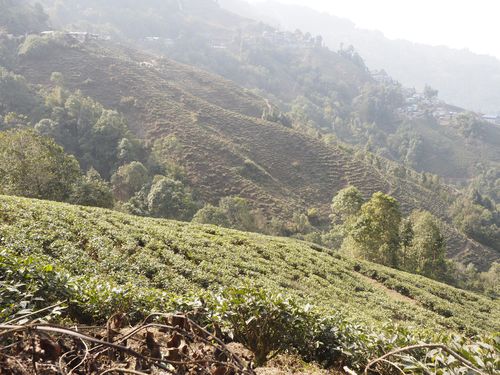
Darjeeling • Tea fields
Natural site profile
Tea fields
Natural site category: Tea plantation
Natural site family: Crops and plantations
Natural site genre: Terrestrial
Geographic location: Darjeeling • West Bengal •
• Links to •
• List of videos about Darjeeling on this site •
Darjeeling • West Bengal, India
The Tea Fields of Darjeeling: Historical Development, Global Recognition, and Contemporary Preservation Challenges
The tea fields of Darjeeling, located in the Himalayan foothills of the Indian state of West Bengal, represent one of the most distinctive agricultural landscapes in South Asia. Spread across steep hillsides between approximately 600 and 2,000 meters above sea level, these plantations have evolved over more than a century into a globally recognized center of tea production. Their preservation and international reputation are the result of a complex interplay of political decisions, economic strategies, cultural traditions, and environmental conditions. The transformation of Darjeeling’s landscape illustrates how a remote mountain region became integrated into global trade networks and developed a distinctive identity associated with high-quality tea.
Colonial policy and the birth of a tea landscape
The origins of tea cultivation in Darjeeling date back to the mid-nineteenth century, during the expansion of British colonial administration in India. At that time, the British Empire sought to establish its own tea industry in Asia in order to reduce dependence on Chinese tea imports, which dominated the global market.
Colonial officials recognized that the climate and altitude of the Darjeeling hills resembled the environmental conditions in parts of China where tea was traditionally grown. Experimental plantations were established in the 1840s and 1850s, using plants introduced from other tea-producing regions. The success of these experiments encouraged further investment and expansion of tea cultivation across the hills.
This development was part of a broader global shift in agricultural production during the nineteenth century, when colonial powers reorganized landscapes to support large-scale plantation economies. Similar transformations occurred in Sri Lanka, Assam, and parts of Southeast Asia, where crops such as tea, coffee, and rubber were cultivated for export.
Economic expansion and regional transformation
By the late nineteenth century, Darjeeling had become a significant center for tea production. Plantations expanded across the hills, transforming the landscape into a mosaic of cultivated slopes and factory complexes dedicated to processing tea leaves.
This expansion had profound social and demographic consequences. Large numbers of workers were recruited from neighboring regions, particularly from Nepal and other parts of the Himalayan foothills, to meet the labor demands of the plantations. Over time, these migrations created a diverse and culturally distinct population in the Darjeeling hills.
The economic success of tea production also encouraged the development of infrastructure. Roads and railways were constructed to transport tea from the plantations to markets in Kolkata and beyond. One of the most notable infrastructure projects was the Darjeeling Himalayan Railway, completed in the late nineteenth century, which connected the mountain region to the plains.
Through these developments, Darjeeling became integrated into the global trade system, exporting tea to Europe and other international markets.
Emergence of an international reputation
The tea produced in Darjeeling gradually acquired a distinctive reputation due to the environmental conditions of the region. High altitude, cool temperatures, and frequent mist create a slow growth cycle for tea leaves. This process contributes to the development of complex aromatic compounds that differentiate Darjeeling tea from other varieties.
By the early twentieth century, Darjeeling tea had become widely recognized in international markets as a premium product. In global trade, it came to be associated with quality and exclusivity, sometimes compared with prestigious appellations in other agricultural sectors such as wine production.
This reputation played an important role in the long-term preservation of the tea landscape. Because the value of Darjeeling tea depends on its geographic origin, maintaining the integrity of the region’s plantations became a priority for producers and regulators.
Post-independence transformations
After India gained independence in 1947, the tea industry in Darjeeling entered a new phase. Although many plantations continued to operate under similar production systems, ownership structures gradually changed, and Indian companies assumed greater control over the industry.
The plantations remained a central element of the regional economy, providing employment and shaping the social organization of the hill communities. However, the global tea market also became more competitive, with increased production in other parts of Asia and Africa.
To protect the unique identity of Darjeeling tea, Indian authorities introduced legal mechanisms such as geographical indication status. This designation ensures that only tea produced within the officially recognized region can be marketed as Darjeeling tea. Such protection mechanisms resemble similar systems used in other parts of the world to preserve the identity of regional agricultural products.
Cultural identity and landscape symbolism
Over time, the tea fields of Darjeeling became more than just an agricultural resource. They developed into a cultural symbol of the region and a visual representation of its economic heritage. The terraced slopes covered with tea bushes are now widely associated with the identity of Darjeeling.
Tourism has also played an increasing role in the valorization of the landscape. Visitors are drawn to the region not only for its tea but also for the scenery created by the plantations against the backdrop of the Himalayan mountains. This dual role as both an agricultural and cultural landscape has strengthened efforts to preserve the plantations.
Ecological considerations and environmental impact
The establishment of tea plantations significantly altered the original ecosystems of the Darjeeling hills. Large areas of forest were cleared during the nineteenth century to make way for cultivation. However, the plantations themselves can also play a role in soil stabilization on steep slopes.
Tea bushes form a dense cover that helps reduce erosion in mountainous terrain. In addition, shade trees and surrounding forest patches can provide habitats for wildlife and contribute to biodiversity within the plantation environment.
Nevertheless, tea cultivation remains an intensive agricultural activity, and maintaining ecological balance requires careful management of soil, water, and vegetation.
Contemporary preservation challenges
Today, the tea fields of Darjeeling face a range of environmental and economic challenges. Climate change is one of the most significant concerns. Rising temperatures and shifting rainfall patterns may affect the growth cycles of tea plants and alter the flavor characteristics that distinguish Darjeeling tea.
Economic pressures also affect the sustainability of the industry. Competition from other tea-producing regions can reduce profit margins, making it difficult for some plantations to maintain traditional cultivation practices.
Another challenge involves land management and urban expansion in parts of the region. As tourism and population growth increase, balancing development with the preservation of agricultural landscapes becomes more complex.
A landscape shaped by global history
The tea fields of Darjeeling illustrate how natural landscapes can be transformed by global economic forces and political decisions. What began as a colonial agricultural experiment eventually became one of the most recognizable tea-producing regions in the world.
Today, the preservation of this landscape depends on maintaining the delicate balance between economic viability, environmental sustainability, and cultural heritage. The continued reputation of Darjeeling tea ensures that these hills remain not only an agricultural resource but also an enduring symbol of the historical relationship between nature, commerce, and culture in the Himalayan region.
The Tea Fields of Darjeeling: Natural Conditions and Ecological Characteristics of a Himalayan Agricultural Landscape
The tea fields of Darjeeling, located in the Himalayan foothills of the Indian state of West Bengal, represent one of the most distinctive agricultural landscapes in South Asia. Spread across steep mountain slopes between roughly 600 and 2,000 meters above sea level, these plantations illustrate how geological structure, climatic conditions, and ecological processes can combine to create a unique environment for agricultural cultivation. Although tea cultivation is a human activity, the success and international recognition of Darjeeling tea are closely linked to the natural characteristics of the region, which shape the growth patterns of tea plants and the ecological dynamics of the surrounding landscape.
Himalayan geology and the formation of the terrain
The physical environment of Darjeeling is closely tied to the geological evolution of the Himalayas. The region lies on the southern slopes of the Himalayan mountain system, which formed through the collision of the Indian tectonic plate with the Eurasian plate millions of years ago. This collision created one of the most dramatic mountain ranges on Earth and produced a complex terrain composed of folded and uplifted rock formations.
Over long geological timescales, weathering and erosion transformed these mountains into a landscape of steep ridges and deeply incised valleys. Rivers descending from the higher Himalayan ranges gradually carved the terrain, depositing sediments in lower areas and shaping the hills where tea cultivation later developed.
The soils in the Darjeeling region originate from the weathering of metamorphic and sedimentary rocks associated with the Himalayan uplift. These soils tend to be acidic and well-drained, conditions that are particularly favorable for the growth of tea plants. The mineral composition of the soil also contributes to the chemical characteristics of the tea leaves, influencing flavor and aroma.
Topography and altitude as ecological factors
One of the defining natural features of the Darjeeling tea fields is their location on steep mountain slopes. Tea plantations are arranged along terraces that follow the contours of the hills, creating a pattern of cultivated rows that extend across the landscape.
The altitude of the region plays a critical role in the growth of tea plants. Cooler temperatures at higher elevations slow the rate of leaf development, allowing complex aromatic compounds to accumulate within the leaves. This slower growth cycle is one of the reasons why Darjeeling tea is often distinguished by delicate and nuanced flavor profiles.
In addition, the steep slopes provide natural drainage. Excess water flows downhill rather than accumulating around the roots of the plants. This reduces the risk of root diseases and helps maintain healthy plant growth.
The interaction between altitude, slope, and soil composition creates a set of environmental conditions that are particularly well suited to tea cultivation.
Climatic influences and the Himalayan monsoon
The climate of the Darjeeling hills is shaped by the interaction between Himalayan atmospheric systems and the South Asian monsoon. The region receives substantial rainfall during the monsoon season, which typically occurs between June and September.
Annual rainfall often exceeds 2,000 millimeters, providing abundant moisture for plant growth. At the same time, frequent mist and cloud cover reduce direct sunlight, helping maintain moderate temperatures in the plantations.
Seasonal changes in temperature and rainfall create distinct growing periods for tea plants. In the tea industry these harvest cycles are often referred to as “flushes.” The first flush in early spring is particularly valued because the young leaves develop under cool conditions that enhance their aromatic qualities.
These climatic patterns demonstrate how regional atmospheric processes influence agricultural productivity in mountain ecosystems.
Biodiversity and ecological interactions
Although tea plantations represent a managed agricultural environment, they exist within a broader ecological context characterized by considerable biodiversity. The Darjeeling hills lie within a transitional zone between subtropical and temperate Himalayan ecosystems.
Remnants of natural forest remain in certain parts of the region, supporting a variety of plant and animal species typical of the eastern Himalayan biodiversity hotspot. Within the plantations themselves, ecological interactions occur between cultivated plants and surrounding vegetation.
Shade trees, hedgerows, and patches of forest can provide habitats for birds, insects, and small mammals. In some traditional plantation systems, maintaining a degree of ecological diversity helps regulate pest populations and contributes to soil stability.
These interactions illustrate how agricultural landscapes can coexist with natural ecosystems when managed carefully.
Local environmental conditions and global influences
The natural characteristics of Darjeeling also reflect the influence of broader environmental systems. The Himalayan mountain range plays a major role in shaping regional weather patterns across South Asia. By acting as a barrier to atmospheric circulation, the mountains influence rainfall distribution and temperature variations throughout the region.
At the same time, global environmental changes increasingly affect the delicate balance of the Darjeeling ecosystem. Rising temperatures and shifting rainfall patterns associated with climate change may alter the conditions under which tea plants grow. Even small changes in temperature or precipitation can influence the flavor and quality of tea leaves.
These connections highlight how a local agricultural landscape can be influenced by global climatic processes.
Landscape recognition and international reputation
The distinctive environmental conditions of the Darjeeling hills have contributed significantly to the international reputation of the region’s tea. Since the late nineteenth century, Darjeeling tea has been recognized in global markets for its unique aromatic characteristics.
Today the name “Darjeeling” is protected as a geographical indication, ensuring that only tea produced in this specific region can be marketed under that label. This recognition reflects the importance of the natural environment in shaping the identity of the product.
Although the tea plantations themselves are not listed as a UNESCO World Heritage Site, they are often cited as a classic example of a cultural landscape where agricultural activity and natural conditions are closely intertwined.
A landscape shaped by nature and cultivation
The tea fields of Darjeeling illustrate how geological formation, climatic processes, and ecological dynamics can create a distinctive environment for agricultural production. The combination of Himalayan geology, mountain climate, and well-drained soils has produced conditions that allow tea plants to develop unique qualities.
Over time, human cultivation adapted to these natural conditions rather than completely transforming them. Terraced plantations follow the contours of the hills, integrating agricultural activity into the existing landscape.
As environmental pressures increase in the modern world, preserving the ecological balance of the Darjeeling hills remains essential. The continued reputation of Darjeeling tea depends not only on cultivation practices but also on the protection of the natural environment that makes this landscape unique within the Himalayan region.
 Links to the main sections of the site