

 Français (France)
  Nederlands (nl-NL)
 Kumartuli Park is located in Kolkata in the Indian state of West Bengal. The site is connected with the nearby district of Kumartuli, widely known for its artisan workshops that produce sculptures and ritual objects used in regional religious and cultural celebrations. Within this urban environment, Kumartuli Park functions as a public space where community events and festive activities regularly take place, particularly during major Bengali festivals. The area illustrates the social and cultural vitality of Kolkata and highlights the importance of public gathering spaces in the daily life of the city. It forms part of a densely populated urban setting shaped by strong artistic and cultural traditions.

Kolkata • Kumarthuli Park

Kolkata • Kumarthuli Park
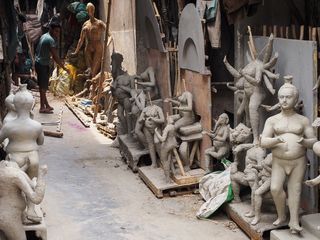
Kolkata • Kumarthuli Park
Monument profile
Kumarthuli Park
Monument category: Historic urban landscape
Monument family: Historic or traditional habitat
Monument genre: Residential
Cultural heritage: Hindu
Geographic location: Kolkata • West Bengal •
Construction period: 18th century AD
• Links to •
• List of videos about Kolkata on this site •
Kolkata • Urban Life and Trading Traditions
Kolkata • Colonial Heritage and Legacy of the Raj
Kolkata • Religious Diversity and Urban Traditions
History of Kumartuli Park in Kolkata
Political and Social Context of the Site’s Development
Kumartuli Park is located in the historic district of Kumartuli in northern Kolkata, in the Indian state of West Bengal. The area is internationally known as the principal centre for the production of clay idols used in major Hindu festivals across Bengal, particularly the annual Durga Puja. The creation of Kumartuli Park must therefore be understood not as the construction of an isolated monument but as the development of a public space within a long-established artisan district whose social and cultural life has been shaped by religious practice, craft traditions, and urban transformation.
The origins of the surrounding neighbourhood date to the early eighteenth century, when Kolkata—then emerging as a major trading centre under the authority of the British East India Company—expanded rapidly along the banks of the Hooghly River. In order to organise the growing city, colonial administrators gradually grouped occupational communities into specific quarters. Artisans working with clay, including potters and sculptors responsible for producing ritual objects and religious statues, were settled in this northern district. The name Kumartuli derives from the Bengali words kumar or kumor, meaning potter, and tuli or toli, meaning neighbourhood.
Over time the district evolved into the most important centre for the production of religious idols in eastern India. The increasing scale of religious festivals in Kolkata, especially during the nineteenth century, created a need for communal spaces capable of accommodating gatherings, public ceremonies, and temporary installations associated with these events. Kumartuli Park emerged in this context as a modest urban square serving the local community, closely connected to the activities of the artisans who lived and worked in the surrounding streets.
The establishment of such public spaces also reflected broader urban developments in colonial Kolkata. As the city grew into the administrative capital of British India during the eighteenth and nineteenth centuries, municipal authorities and local associations began to recognise the importance of neighbourhood-level spaces for social interaction, civic organisation, and cultural expression. Kumartuli Park can therefore be interpreted as part of this urban transformation, reflecting both local traditions and the evolving structure of a rapidly expanding colonial metropolis.
Historical Events and Urban Development
Although Kumartuli Park itself was not the site of major military conflicts or political confrontations, the history of the area is closely linked to significant events that shaped Kolkata and the wider Bengal region. During the eighteenth century, the consolidation of British authority following the Battle of Plassey in 1757 transformed Kolkata into the principal administrative centre of the British Raj in eastern India. This shift had a profound impact on the urban structure of the city.
The population of Kolkata increased rapidly as merchants, labourers, artisans, and administrators migrated to the growing colonial capital. Kumartuli expanded alongside this demographic growth, and the workshops of the idol makers became increasingly important for the cultural life of the city. The district supplied sculptures not only for private religious ceremonies but also for large public festivals organised by wealthy families and community associations.
During the nineteenth century, the character of Durga Puja evolved from a largely private aristocratic celebration into a major public festival. Community-based celebrations known as barowari pujas emerged, organised collectively by neighbourhood associations rather than by individual patrons. This transformation increased the demand for large sculptural idols and reinforced the importance of Kumartuli as the centre of production.
In this evolving context, Kumartuli Park functioned as a local gathering place where community events, cultural activities, and preparations for festivals could take place. The space served both practical and symbolic purposes within the neighbourhood, providing a focal point for social interaction in a densely built urban environment.
The twentieth century brought additional changes to Kolkata that affected Kumartuli and its surrounding areas. The transfer of the capital of British India from Calcutta to New Delhi in 1911 altered the political status of the city, although it remained a major commercial and cultural centre. Later, the partition of Bengal in 1947 and the creation of East Pakistan (now Bangladesh) triggered large-scale migration into Kolkata. The arrival of refugees dramatically increased the population density of many neighbourhoods, including those in northern Kolkata.
Despite these pressures, Kumartuli retained its distinctive identity as an artisan district. The continued production of religious idols ensured the survival of the neighbourhood’s traditional craft economy, while spaces such as Kumartuli Park continued to serve as community gathering areas within the increasingly crowded urban landscape.
Global Context and Urban Transformation
The development of Kumartuli and its associated public spaces must also be understood within the broader context of global urbanisation during the eighteenth and nineteenth centuries. Across Asia, colonial powers established port cities that served as administrative and commercial hubs within expanding international trade networks.
Cities such as Bombay, Singapore, and Hong Kong experienced similar patterns of growth, where occupational districts emerged within expanding urban environments. These cities often developed specialised neighbourhoods in which particular crafts or trades were concentrated. Public spaces within these districts played an important role in supporting social and cultural activities among local communities.
Kolkata was one of the most prominent examples of this phenomenon. As a major colonial port and administrative centre, it attracted diverse populations and developed a complex urban structure combining European administrative quarters, commercial districts, and densely populated residential neighbourhoods. Kumartuli Park reflects this historical process by illustrating how traditional cultural practices adapted to the changing urban conditions of a colonial metropolis.
Transformations and Changing Uses
Over the course of the twentieth century, Kumartuli Park and the surrounding district underwent several transformations reflecting the evolving character of the city. Urban infrastructure expanded, transportation networks developed, and the surrounding streets became increasingly crowded with residential and commercial activity.
Despite these changes, the fundamental cultural role of Kumartuli remained largely intact. The neighbourhood continued to function as the primary centre for the production of clay idols used in Durga Puja and other Hindu festivals. During the weeks preceding the festival, artisans work intensively in their workshops to complete the sculptures that will later be installed in temporary pavilions throughout Kolkata and in many cities around the world where Bengali communities celebrate the festival.
Kumartuli Park periodically serves as a site for community gatherings, cultural events, and local celebrations. Its role as an open space within a densely populated neighbourhood makes it particularly valuable during festival periods when large numbers of people visit the district to observe the idol-making process.
Urban development has gradually altered the surroundings of the park, with new buildings, infrastructure improvements, and changing patterns of commerce reshaping the area. Nevertheless, the site remains integrated within the historic structure of Kumartuli and continues to function as a public space for residents and visitors.
Contemporary Role and Cultural Significance
Today Kumartuli Park occupies a modest but meaningful place within the cultural landscape of Kolkata. The park is closely associated with the artistic and religious traditions of the neighbourhood, and it contributes to the broader cultural identity of the city.
The district of Kumartuli attracts visitors from across India and from abroad, particularly during the months leading up to Durga Puja. Observing the creation of the idols has become an important cultural experience for many visitors interested in the artistic traditions of Bengal. The presence of Kumartuli Park within this environment provides a gathering place where residents, artisans, and visitors interact.
The site therefore represents more than a simple recreational space. It forms part of a larger cultural ecosystem centred on traditional craftsmanship, religious celebration, and neighbourhood identity. The continued vitality of these traditions contributes to the enduring significance of the area within the cultural life of Kolkata.
Preservation and Contemporary Challenges
Like many historic neighbourhoods in Kolkata, Kumartuli faces a number of challenges related to urban growth and environmental pressures. The dense population, limited infrastructure, and increasing demand for urban land place considerable strain on traditional artisan districts.
Climate conditions also present challenges. High humidity, seasonal monsoon rains, and pollution can affect both the built environment and the workshops where idols are produced. Maintaining functional public spaces such as Kumartuli Park requires ongoing municipal management and local community engagement.
Although the neighbourhood is not included on the UNESCO World Heritage List, it is widely recognised as an important centre of traditional craftsmanship in India. Various cultural initiatives and municipal programmes have sought to support the preservation of the idol-making tradition and to improve infrastructure in the area.
In this context, Kumartuli Park remains an important element within the urban and cultural landscape of Kolkata. Its significance lies less in monumental architecture than in its integration within a living artisan district whose traditions continue to shape the cultural identity of the city.
Architecture of Kumartuli Park in Kolkata
Urban Design and Architectural Context
Kumartuli Park is situated in the historic district of Kumartuli in northern Kolkata, within the densely built urban environment of West Bengal’s capital. Unlike monumental parks created as part of large-scale colonial planning schemes, Kumartuli Park represents a neighbourhood-level public space embedded within an artisanal quarter known for the production of clay idols used in major religious festivals. The architectural character of the park therefore derives less from a single monumental structure than from the spatial organisation of an open civic area integrated into a complex network of streets, workshops, and residential buildings.
The architectural design of Kumartuli Park reflects the urban logic typical of traditional neighbourhood squares in Kolkata. The park functions as a flexible public platform that accommodates communal gatherings, temporary festival structures, and everyday social interaction. Its open plan contrasts with the surrounding dense urban fabric, where narrow lanes, closely spaced buildings, and workshop courtyards define the spatial structure of the district.
The park’s design responds to both practical and cultural needs. It provides a rare open area within a tightly packed neighbourhood while remaining closely connected to the artisan workshops that define Kumartuli’s identity. The resulting architectural ensemble combines permanent urban infrastructure with seasonal installations that transform the appearance of the space throughout the year.
Technological and Architectural Adaptations
The architectural development of Kumartuli Park reflects broader practices in the design of urban open spaces in Kolkata during the late nineteenth and twentieth centuries. These practices emphasised durability, adaptability, and climatic responsiveness rather than monumental architectural expression.
One of the principal considerations in the design of the park is its ability to accommodate large temporary installations associated with Durga Puja and other religious festivals. The open ground layout allows artisans and community organisations to erect temporary ceremonial pavilions known as pandals. These structures can reach significant dimensions and require stable ground conditions capable of supporting bamboo frameworks and decorative elements.
The design of the park also incorporates practical solutions for managing heavy seasonal rainfall. Kolkata experiences intense monsoon precipitation, which requires careful drainage planning in public spaces. Slightly graded surfaces and peripheral drainage channels help direct rainwater toward the city’s drainage network. These features reduce the risk of water accumulation during periods of heavy rainfall and ensure the continued usability of the space during festival preparations.
Ventilation and airflow constitute another important architectural consideration. The open configuration of Kumartuli Park allows for improved air circulation in an otherwise densely built neighbourhood. In a tropical climate characterised by high humidity and elevated temperatures, such open areas contribute significantly to urban comfort and environmental balance.
Materials and Construction Techniques
The materials used in Kumartuli Park correspond to those commonly employed in Kolkata’s urban public spaces. The ground surface typically consists of compacted earth, concrete paving, or stone-based materials designed to withstand continuous pedestrian use. These materials are selected for their durability, low maintenance requirements, and resistance to the region’s climate.
Concrete has become a dominant material in many of the park’s structural elements, particularly in pathways, platforms, and retaining features. The use of reinforced concrete allows for relatively simple construction while providing long-term structural stability. Its ability to resist moisture and mechanical wear makes it particularly suitable for urban spaces subjected to intense daily use.
Brick masonry remains another important construction material in the architectural environment surrounding the park. Brick has historically been the primary building material in the Bengal region due to the abundance of alluvial clay in the Ganges delta and the relative scarcity of natural stone. Brick structures covered with lime or cement plaster provide both structural strength and protection against humidity.
Temporary festival structures constructed within the park rely on different materials that reflect traditional building practices. Bamboo, wood, rope, and fabric are commonly used to assemble the frameworks of pandals. These materials allow rapid construction and dismantling while offering sufficient flexibility to support elaborate decorative schemes. Although temporary, these installations often display remarkable structural ingenuity and artistic sophistication.
Architectural Influences and Artistic Environment
The architectural setting of Kumartuli Park is shaped by the diverse stylistic influences that characterise Kolkata’s historic neighbourhoods. Buildings surrounding the park exhibit a mixture of Bengali domestic architecture and colonial-era design elements introduced during the nineteenth century.
Traditional Bengali urban houses often feature internal courtyards, verandas, and projecting balconies that help regulate airflow and sunlight. These features contribute to passive climatic adaptation by reducing interior heat and allowing natural ventilation. In Kumartuli, such houses coexist with later constructions incorporating decorative elements influenced by European architectural traditions.
Colonial-era buildings in the vicinity frequently include features such as cast-iron balconies, classical cornices, and symmetrical façade compositions. These stylistic elements reflect architectural exchanges that occurred during the period when Kolkata served as the administrative capital of British India.
The visual character of the district is further shaped by the workshops where artisans produce clay idols. These workshops are typically designed with large open entrances and high ceilings to accommodate the construction of large sculptures. Their spatial configuration influences the architectural rhythm of the surrounding streets and contributes to the distinctive urban atmosphere of Kumartuli.
Spatial Organisation and Structural Layout
Kumartuli Park is organised around a central open space that functions as the primary gathering area for the neighbourhood. The absence of large permanent structures allows the park to remain adaptable to various forms of public use. The open ground serves as the focal point for cultural activities, community events, and temporary installations.
Peripheral elements within the park may include seating areas, low boundary walls, and small platforms used for performances or ceremonial activities. These features are designed to facilitate informal social interaction rather than to impose a rigid spatial hierarchy.
The spatial relationship between the park and the surrounding streets is particularly significant. Access points connect the open area to the narrow lanes of Kumartuli, allowing residents and visitors to move easily between the park and the artisan workshops. This permeability reinforces the integration of the park into the everyday life of the neighbourhood.
During major festivals, the spatial configuration of the park undergoes a temporary transformation. Pandals constructed within the open area can create complex architectural compositions involving arches, domes, decorative façades, and sculptural elements. Although these installations are temporary, they demonstrate a high level of craftsmanship and contribute to the architectural identity of the site.
Dimensions and Notable Characteristics
Kumartuli Park occupies a relatively modest surface area compared with the large ceremonial grounds found in other parts of Kolkata. Its scale reflects the dense urban structure of the surrounding district, where available land for public spaces is limited. Nevertheless, the park provides a crucial open area within a neighbourhood otherwise dominated by narrow streets and closely spaced buildings.
One of the most notable aspects of the park’s architectural environment is its proximity to the artisan workshops of Kumartuli. This proximity creates a unique spatial relationship between production spaces and public space. Visitors can observe the stages of idol creation in nearby workshops before the sculptures are transported to festival locations across the city.
The park’s flexible layout enables it to accommodate a wide range of temporary architectural installations. Some pandals constructed during Durga Puja display elaborate designs inspired by historical monuments, temples, or contemporary artistic themes. These installations demonstrate the creative ingenuity of local artisans and illustrate the dynamic nature of the neighbourhood’s architectural culture.
Integration within the Urban Fabric of Kolkata
Kumartuli Park’s architectural significance lies primarily in its integration within the urban fabric of northern Kolkata. Unlike monumental parks created during the colonial era—such as the large open spaces surrounding administrative districts—Kumartuli Park developed organically within a historic artisan neighbourhood.
The surrounding streets form a dense network connecting residential buildings, artisan workshops, small temples, and commercial establishments. This intricate urban pattern reflects centuries of gradual development rather than formal urban planning.
The park therefore functions as a spatial relief within this dense environment. It provides an open visual perspective that contrasts with the enclosed character of the surrounding lanes. Such neighbourhood squares play an important role in the social life of Kolkata’s older districts by offering spaces for gathering, celebration, and everyday interaction.
Conservation and Contemporary Challenges
Preserving Kumartuli Park presents challenges typical of historic urban neighbourhoods in rapidly expanding cities. Population growth, increased traffic, and pressure on urban land can affect the maintenance and accessibility of local public spaces.
Environmental factors also influence the condition of the park. Kolkata’s tropical climate, characterised by heavy rainfall and high humidity, can accelerate the deterioration of construction materials. Regular maintenance is required to preserve paved surfaces, drainage systems, and structural elements.
At the same time, the cultural importance of Kumartuli as a centre of traditional craftsmanship has drawn increasing attention from cultural organisations and municipal authorities. Efforts have been made to improve infrastructure in the district while preserving its distinctive artisanal character.
Although Kumartuli Park is not recognised as a monumental architectural landmark on an international scale, its significance lies in the way it supports the living traditions of one of Kolkata’s most historically important artisan districts. The architectural identity of the park emerges from the interaction between permanent urban structures and the vibrant temporary architecture created during festival seasons.
Through this combination of urban design, traditional craftsmanship, and seasonal architectural transformation, Kumartuli Park illustrates the dynamic relationship between built space and cultural practice in one of India’s most historically rich metropolitan environments.