

 Français (France)
  Nederlands (nl-NL)
 The Indian Museum in Kolkata is one of India’s major cultural institutions and one of the oldest museums in Asia. Located in the city of Kolkata in the state of West Bengal, it plays an important role in preserving and presenting the scientific and cultural heritage of the Indian subcontinent. Its collections cover a wide range of fields including archaeology, art, natural history and anthropology. The museum also serves as a center for research and education, attracting scholars, students and visitors. Through the diversity and scale of its collections, it occupies a significant place in the cultural and intellectual life of the region.
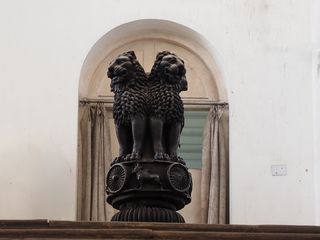
Kolkata • Indian Museum
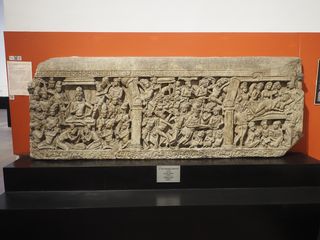
Kolkata • Indian Museum
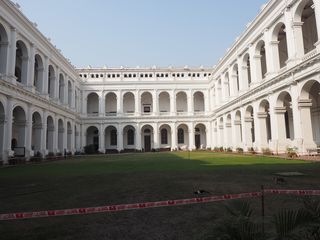
Kolkata • Indian Museum
Monument profile
Indian Museum
Monument category: Museum
Monument family: Museum, remarkable architecture or group of buildings
Monument genre: Cultural or scientific
Geographic location: Kolkata • West Bengal •
Construction period: 19th century AD
• Links to •
• List of videos about Kolkata on this site •
Kolkata • Urban Life and Trading Traditions
Kolkata • Colonial Heritage and Legacy of the Raj
Kolkata • Religious Diversity and Urban Traditions
History of the Indian Museum in Kolkata
Political and Intellectual Context of the Foundation
The Indian Museum in Kolkata is one of the oldest and most influential cultural and scientific institutions in Asia. Its origins lie in the intellectual environment of early nineteenth-century Calcutta, a period during which the city served as the capital of British India and a major center of administration, commerce and scholarship within the British Empire. The establishment of the museum reflected both scientific curiosity and the broader political ambitions of the colonial administration.
The institution was founded in 1814 under the auspices of the Asiatic Society of Bengal, a scholarly organization created in 1784 by the British orientalist and jurist Sir William Jones. The society aimed to promote the systematic study of the history, languages, religions and natural environment of Asia. The creation of a museum was a natural extension of these goals, providing a permanent repository for objects collected during scientific expeditions, archaeological excavations and ethnographic research.
From the outset, the museum served both intellectual and political purposes. For European scholars and administrators, the systematic collection and classification of artifacts offered a way to study the civilizations of the Indian subcontinent. At the same time, the accumulation of knowledge about the region supported the colonial administration’s efforts to understand and govern the societies under British rule.
The early collections consisted primarily of natural history specimens, archaeological artifacts, manuscripts and ethnographic objects. These materials were initially housed in the premises of the Asiatic Society in Calcutta. As the collections expanded rapidly through donations and discoveries, the need for a dedicated building became increasingly evident.
Construction of the Museum Building
By the mid-nineteenth century the growing importance of the museum led to the decision to construct a purpose-built institution capable of accommodating its expanding collections. The new building was planned as a large public museum that would serve both educational and scientific functions.
Construction of the present building began in the 1860s and continued through the following decade. The structure was designed to house extensive galleries dedicated to archaeology, zoology, geology, anthropology and art. Its creation reflected the broader ambitions of the colonial government to establish major cultural institutions in Calcutta, reinforcing the city’s status as the intellectual capital of British India.
The museum building symbolized the growing institutionalization of scientific research within the colonial administration. During the nineteenth century, Calcutta had become a major center for oriental studies, archaeology and natural sciences. The Indian Museum functioned as a central hub for these scholarly activities, attracting researchers from across the British Empire and beyond.
The construction of large museums during this period was part of a global trend. In Europe and North America, institutions such as the British Museum in London and the Louvre in Paris were expanding their collections and transforming into major public museums. The Indian Museum represented the extension of this model into the colonial context, creating a comparable institution in South Asia.
Major Historical Developments
Throughout the nineteenth century the Indian Museum played a central role in the development of several academic disciplines in India. Archaeological discoveries from across the subcontinent were studied and displayed in its galleries. Sculptures from ancient Buddhist sites, inscriptions from early historical periods and artifacts from various civilizations were collected and catalogued.
The museum also contributed significantly to the development of natural sciences in India. Its zoological and geological collections attracted international scholars and helped establish Calcutta as a center for scientific research. Many important specimens collected during British expeditions across Asia were preserved and studied within the institution.
Political developments in the early twentieth century influenced the broader context in which the museum operated. In 1911 the British government transferred the capital of British India from Calcutta to New Delhi. Although this change reduced the city’s administrative importance, the Indian Museum retained its role as a major research and cultural institution.
The transition from colonial rule to independence in 1947 marked another important turning point in the museum’s history. After India gained independence, the institution was placed under the authority of the Government of India and integrated into the national network of museums and cultural organizations. This transition transformed the symbolic meaning of the museum. What had originally been established as a colonial scientific institution became a national center for the preservation of India’s cultural heritage.
Urban Transformation and Institutional Evolution
Over the course of the twentieth century the urban environment surrounding the Indian Museum changed significantly. During the colonial period the building was located within a district characterized by administrative buildings, educational institutions and residences associated with the British elite.
As Kolkata expanded into a dense modern metropolis, the surrounding area became increasingly urbanized. Despite these changes, the museum retained its importance as a landmark within the city’s cultural landscape.
The institution gradually modernized its exhibition techniques and conservation methods. New galleries were developed, collections were reorganized and efforts were made to improve the preservation of artifacts. Scientific research continued to play an important role in the museum’s activities.
Educational programs also became an essential part of the institution’s mission. The museum hosts lectures, academic conferences and educational visits for students and researchers. These initiatives reinforce its role as both a research institution and a public cultural center.
Cultural Importance in Contemporary India
Today the Indian Museum is widely regarded as one of the most significant museums in South Asia. Its collections encompass a wide range of disciplines, including archaeology, art history, anthropology, geology and zoology. Many objects displayed in the museum are of exceptional historical importance, representing civilizations that flourished across the Indian subcontinent over several millennia.
The institution plays a crucial role in preserving and interpreting the cultural heritage of India. Through its collections and exhibitions, it offers visitors a comprehensive view of the region’s historical and cultural diversity.
For the city of Kolkata, the museum remains an important symbol of intellectual and cultural life. The institution attracts scholars, students and tourists from around the world. Its long history reflects the role of the city as a center of learning and scientific inquiry.
Conservation and Modern Challenges
Like many historic institutions located in large urban centers, the Indian Museum faces several conservation challenges. The tropical climate of Bengal, characterized by high humidity and intense monsoon rains, can affect both the building and the artifacts it houses.
Air pollution associated with heavy urban traffic also contributes to the deterioration of architectural materials and certain sensitive objects within the collection. Maintaining appropriate environmental conditions inside the museum therefore requires continuous monitoring and conservation efforts.
In response to these challenges, the Government of India and cultural authorities have implemented restoration and modernization programs aimed at improving preservation standards. These initiatives include structural repairs, conservation of artifacts and the modernization of exhibition spaces.
Although the Indian Museum is not listed as a UNESCO World Heritage Site, it is widely recognized as one of India’s most important cultural institutions. Its historical significance, scientific legacy and extensive collections make it a central component of the country’s museum landscape.
The history of the Indian Museum thus reflects the broader evolution of scientific and cultural institutions in India. From its origins as a colonial scholarly project to its present role as a national cultural institution, the museum continues to play a vital role in preserving and interpreting the heritage of the Indian subcontinent.
Architecture of the Indian Museum in Kolkata
General Architectural Conception
The building of the Indian Museum in Kolkata represents one of the most significant examples of nineteenth-century institutional architecture in South Asia. Constructed during the period when Calcutta served as the capital of British India, the museum was designed not only as a repository for scientific and archaeological collections but also as a monumental public institution reflecting the intellectual ambitions of the colonial administration. The architectural project aimed to create a structure capable of housing extensive collections while providing spacious galleries suitable for study, display and public circulation.
The present building, erected between 1867 and 1875 on Chowringhee Road, was designed by the British architect Walter B. Granville of the Public Works Department. The design follows a monumental neoclassical vocabulary that was widely employed in government buildings and scientific institutions across the British Empire. Its formal symmetry, long façades and arcaded galleries echo the architectural language used in contemporary museums and academic institutions in Europe.
At the same time, the design incorporates practical adaptations required by the climatic conditions of eastern India. The museum was conceived as a large rectangular complex organized around interior courtyards. These open spaces allow light and air to circulate through the structure while creating a sequence of galleries and corridors suited to the display of collections.
Technological and Architectural Innovations
The construction of a large museum building in tropical Bengal required particular attention to structural stability and environmental control. Kolkata is located on alluvial soil deposited by the Ganges–Brahmaputra river system, which presents engineering challenges for heavy masonry structures. To ensure stability, the building rests on reinforced foundations designed to distribute weight across the soft ground.
Thick masonry walls constitute one of the most important structural features of the building. These walls provide both physical stability and thermal insulation. Their mass reduces temperature fluctuations inside the galleries and protects the collections from extreme heat and humidity.
Another significant architectural innovation concerns ventilation. The galleries were designed with high ceilings and large window openings that promote natural airflow throughout the structure. This passive ventilation system allows warm air to rise and escape while cooler air enters through lower openings, maintaining a relatively stable interior climate.
The interior courtyards play a crucial role in this environmental design. They function as light wells that illuminate the surrounding galleries while also facilitating air circulation. This architectural solution was widely used in colonial buildings in India, where controlling heat and humidity was essential.
The roofing system also reflects climatic adaptation. Sloped roofs and integrated drainage channels were designed to withstand the heavy rainfall associated with the monsoon season. These features prevent water accumulation and protect the structural integrity of the building.
Materials and Construction Methods
The principal structural material used in the Indian Museum building is brick masonry. Brick was the most practical construction material in Bengal due to the scarcity of durable building stone in the region. Local brick production allowed builders to construct large structures while maintaining relative flexibility in architectural design.
The exterior surfaces of the building were finished with plaster coatings that create the visual impression of stone architecture. This technique allowed the building to resemble European neoclassical institutions while relying primarily on locally available materials.
Stone and marble were used selectively for important architectural and decorative elements. Staircases, flooring in certain galleries and sculptural features incorporate these more durable materials. Their presence enhances the prestige and durability of the building while emphasizing key architectural spaces.
Construction relied on a combination of European engineering expertise and the skills of local craftsmen. Indian masons and artisans contributed extensively to the masonry work, plaster decoration and interior finishes. This collaboration between colonial engineers and regional builders produced an architectural structure that combines imported design principles with local construction traditions.
Architectural and Artistic Influences
The Indian Museum’s architecture reflects the influence of European neoclassicism, a style associated with order, symmetry and institutional authority. The building’s long horizontal façades, arcaded corridors and balanced proportions evoke the formal language of nineteenth-century public architecture.
The arcades surrounding the interior courtyards are among the most recognizable elements of the building. These colonnaded walkways create shaded transitional spaces between galleries and open areas, providing protection from both intense sunlight and seasonal rain.
Although the building follows a largely European architectural vocabulary, it also incorporates elements adapted to the architectural traditions of the Indian subcontinent. Verandas and open corridors serve both aesthetic and climatic functions, reflecting building practices commonly used in colonial urban architecture throughout South Asia.
Decorative elements remain relatively restrained, emphasizing the building’s scientific and educational purpose. Unlike palaces or ceremonial government structures, the museum relies primarily on proportion, symmetry and spatial clarity rather than elaborate ornamentation.
Spatial Organization and Structural Layout
The spatial organization of the Indian Museum is based on a rational and highly functional layout designed to accommodate large collections and significant visitor circulation. The complex is organized around several rectangular courtyards that structure the entire architectural composition.
These courtyards serve both environmental and organizational functions. They provide natural light to the surrounding galleries and create orientation points for visitors moving through the museum. The surrounding arcaded corridors connect the various sections of the building and ensure continuous circulation.
Exhibition halls are arranged along the outer edges of the building and along the courtyard galleries. This arrangement allows the museum to separate different types of collections while maintaining an integrated visitor route.
The internal corridors are broad and continuous, facilitating movement between galleries and allowing the transport of large objects. The spatial design also accommodates large-scale artifacts, including monumental sculptures, fossils and archaeological remains.
Several grand staircases connect the different levels of the building. These staircases function not only as circulation routes but also as architectural focal points within the interior composition.
Dimensions and Notable Architectural Features
The Indian Museum complex occupies a substantial area within central Kolkata. Its extended façades and arcaded galleries create an imposing architectural presence along Chowringhee Road. The building’s scale reflects the importance of the institution within the intellectual landscape of colonial India.
One of the most distinctive architectural features is the sequence of large courtyards surrounded by two-storey arcades. These spaces provide light, ventilation and visual coherence to the entire complex. They also create a rhythm of open and enclosed spaces that structure the visitor experience.
The exhibition galleries were designed with generous proportions to accommodate large scientific collections. High ceilings and wide halls allow the display of massive archaeological sculptures and geological specimens.
Within the museum, several spaces were specifically designed for particular collections. Some galleries were adapted to house natural history displays, while others were configured for archaeological artifacts or ethnographic objects. This specialized spatial planning reflects the evolving discipline of museum design during the nineteenth century.
International Significance and Conservation Challenges
Architecturally, the Indian Museum represents an important stage in the development of museum buildings outside Europe. It illustrates how the model of the nineteenth-century public museum was adapted for colonial environments while addressing local climatic and material conditions.
Today the building remains one of the most recognizable examples of colonial institutional architecture in Kolkata. Its architectural composition reflects both European design principles and practical responses to the tropical environment of eastern India.
The preservation of the structure presents several challenges. Kolkata’s humid climate and heavy monsoon rains can affect masonry and plaster surfaces. In addition, air pollution associated with dense urban traffic contributes to the gradual deterioration of exterior materials.
Conservation programs undertaken by Indian cultural authorities aim to protect the building while maintaining its historic character. Restoration efforts include façade repair, structural reinforcement and improvements to environmental conditions inside the galleries.
Despite these challenges, the Indian Museum continues to function as a major cultural and scientific institution. Its architecture remains closely linked to its historical role as one of the earliest and most important museum complexes in Asia, embodying the intersection of colonial institutional design and the intellectual history of the Indian subcontinent.