Français (France)
  Nederlands (nl-NL)
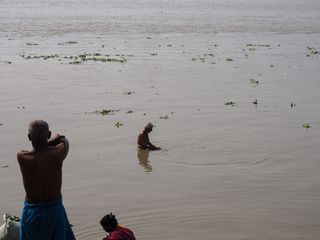
 The banks of the Hooghly River in Kolkata represent an important setting for religious and social life in the Indian state of West Bengal. The river forms a western branch of the Ganges delta and is regarded by many worshippers as a place suitable for ritual practices. Ghats along its banks are used for ablutions, religious ceremonies and certain cremation rites according to Hindu traditions. These areas also host daily gatherings and festival activities. The Hooghly riverfront therefore illustrates the continuing importance of the river in spiritual practices and public life in Kolkata.


Tradition profile
Hooghly River
Tradition category: Hindu celebrations
Tradition family: Religious traditions
Tradition genre: Religious Festivals and Celebrations
Cultural heritage: Hindu
Geographic location: Kolkata • West Bengal •
• Links to •
• List of videos about Kolkata on this site •
Kolkata • Urban Life and Trading Traditions
Kolkata • Colonial Heritage and Legacy of the Raj
Kolkata • Religious Diversity and Urban Traditions
History of Religious Traditions along the Banks of the Hooghly in Kolkata
Political and Social Context of Emergence
The religious traditions practiced along the banks of the Hooghly River in Kolkata are closely linked to the sacred geography of the Ganges and the historical development of the Bengal region. The Hooghly forms one of the principal western distributaries of the Ganges delta. In Hindu belief, the waters of the Ganges are regarded as spiritually purifying and capable of cleansing sins. This perception has long encouraged ritual activities along the river’s banks.
Before the emergence of modern Kolkata in the late seventeenth century, settlements already existed along the river in villages such as Sutanuti, Govindapur, and Kalikata. Local communities used the river for everyday activities while also associating it with religious practices including ritual bathing, offerings, and funerary rites. Access points to the water gradually developed into ghats, stepped embankments designed to facilitate ritual use of the river.
When the British East India Company established a trading settlement in the region, Kolkata rapidly developed into a major colonial port. Despite the expansion of administrative and commercial infrastructure, religious practices along the river continued. Wealthy Bengali merchant families, zamindars, and religious patrons financed the construction of ghats to facilitate ritual access to the river. Such acts of patronage carried religious merit while also reinforcing the social prestige of the donors.
The social structure of Bengal also influenced these traditions. Brahmin priests supervised many rituals, while other communities such as artisans, merchants, and boatmen contributed to the organization and maintenance of ritual activities. Religious authority and economic power therefore interacted in shaping the early development of these practices along the Hooghly.
Major Historical Events Affecting the Tradition
The development of religious traditions along the Hooghly cannot be separated from the broader political history of Bengal. The eighteenth century marked a turning point when British influence expanded after the Battle of Plassey in 1757. Kolkata subsequently became the administrative center of British power in eastern India.
During the colonial period, the city experienced rapid population growth. New ghats were constructed to accommodate the increasing number of residents who relied on the river for ritual practices. Several prominent ghats in Kolkata were funded by wealthy Hindu families and served both religious and social purposes.
Although colonial authorities generally tolerated religious practices, they occasionally introduced regulations to address sanitation concerns or to control large gatherings. Funeral rites and cremation ceremonies in particular were sometimes subject to administrative oversight.
The nineteenth century witnessed the expansion of urban infrastructure, including roads, warehouses, and docks along the Hooghly. Despite these transformations, religious rituals continued to take place at the ghats. The river remained central to ceremonies associated with birth, death, and religious festivals.
The political upheavals of the twentieth century also influenced the tradition. Following India’s independence in 1947 and the partition of Bengal, Kolkata received large numbers of migrants and refugees. These demographic changes increased the importance of shared public spaces such as river ghats, where religious and social activities provided a sense of continuity amid political transformation.
Global Context at the Time of Emergence
The traditions associated with the Hooghly emerged within a broader global context in which rivers frequently served as focal points for religious practice. Throughout history, many cultures have attributed symbolic significance to water and rivers.
In the Hindu world, the Ganges holds a unique position as a sacred river believed to purify the soul and facilitate spiritual liberation. However, comparable traditions exist elsewhere. In Christian contexts, for example, water plays a central role in baptismal rituals symbolizing spiritual renewal. In East and Southeast Asia, rivers have historically been associated with offerings, ancestor veneration, and communal ceremonies.
During the eighteenth and nineteenth centuries, several port cities around the world displayed similar interactions between religious traditions and riverfront spaces. Cities such as Bangkok, Guangzhou, and Istanbul developed waterfronts that served both economic and ritual functions. Kolkata’s riverbanks thus formed part of a wider pattern in which waterways became central to urban cultural life.
Transformations of the Tradition
Over time, the religious traditions associated with the Hooghly have undergone significant transformations. Urban growth, technological change, and evolving social conditions have influenced both the organization and scale of ritual activities.
The construction of modern infrastructure along the river altered some traditional spaces. Industrial development and port facilities reshaped sections of the waterfront, while urban planning projects introduced new roads and transport systems. Nevertheless, the ghats continued to function as religious sites.
Some rituals also evolved in response to environmental concerns. The immersion of religious idols during festivals such as Durga Puja has attracted increasing attention because of the materials used in statue production. In recent decades, initiatives have encouraged the use of biodegradable materials to reduce environmental impact.
At the same time, modernization has altered patterns of participation. While traditional ritual practices remain widespread, urban lifestyles and changing social structures have influenced how people engage with these traditions. In some cases, organized community celebrations have replaced smaller local gatherings.
Contemporary Role and Cultural Importance
Today, the banks of the Hooghly remain an important setting for religious and social life in Kolkata. Ritual bathing, prayer, and funerary ceremonies continue to take place daily at many ghats throughout the city.
The river also plays a central role during major religious festivals. One of the most visible examples is the immersion ceremony at the end of Durga Puja, when statues of the goddess Durga are carried in processions and immersed in the river. This event attracts thousands of participants and spectators each year.
Beyond their religious significance, the ghats function as social spaces where residents gather for daily activities. Early morning visits to the river for prayer or bathing remain common, while the riverfront also serves as a place for community interaction and reflection.
These traditions contribute to the cultural identity of Kolkata and reflect the enduring relationship between the city and the Hooghly River. The combination of ritual practice, public gathering, and historical continuity makes the riverbanks a distinctive feature of the city’s cultural landscape.
Preservation and Modern Challenges
Despite their continuing importance, the traditions associated with the Hooghly face several modern challenges. Urban expansion, environmental degradation, and pollution of the river have raised concerns about the long-term sustainability of ritual practices.
Authorities and community organizations have undertaken efforts to improve riverfront infrastructure and maintain the ghats. Environmental campaigns also seek to reduce pollution caused by ritual offerings and festival activities.
Although these traditions have not been formally inscribed on the UNESCO list of intangible cultural heritage, they are widely recognized as a significant component of the spiritual and cultural heritage of Bengal.
Local initiatives aim to preserve the historical ghats and promote awareness of their cultural importance. By maintaining these sites and encouraging responsible practices, communities seek to ensure that religious traditions along the Hooghly continue to play a meaningful role in the life of Kolkata.
Characteristics of Religious Traditions along the Banks of the Hooghly in Kolkata
Origins and Context of Emergence
Religious traditions practiced along the banks of the Hooghly River in Kolkata are rooted in the broader spiritual geography of the Ganges basin. The Hooghly forms a major distributary of the Ganges delta, and within Hindu belief the waters of the Ganges are regarded as sacred and spiritually purifying. This belief system created the conditions under which ritual practices developed along the riverbanks long before the emergence of the modern city of Kolkata.
Historically, riverbanks across northern and eastern India served as ritual landscapes where daily religious activities could take place. In Bengal, communities living along waterways incorporated river worship, ritual bathing, and funerary rites into their everyday religious life. When Kolkata began to develop during the seventeenth century as a commercial settlement under the British East India Company, these earlier traditions were integrated into the rapidly expanding urban environment.
The presence of ghats—stepped embankments providing access to the river—facilitated the institutionalization of ritual practices. Wealthy patrons, merchant families, and local religious authorities contributed to the construction and maintenance of these ghats. Their involvement reinforced the connection between social status, religious patronage, and community life. As the city grew, the Hooghly riverfront gradually became a central setting for ritual practice and collective religious expression.
Constituent Elements and Ritual Practices
The traditions associated with the Hooghly riverbanks consist of a wide range of ritual actions and symbolic gestures performed by individuals and groups. One of the most common practices is ritual bathing. Devotees descend the ghats, particularly during the early morning hours, to bathe in the river as part of daily worship. This act is believed to purify the body and spirit and to prepare the individual for prayer or meditation.
Offerings to the river also play an important role. Participants frequently release small floating lamps, flowers, or leaves into the water as part of devotional acts directed toward divine forces associated with the river. These offerings are often accompanied by recitations of prayers or mantras.
Funerary rites constitute another central element of the traditions practiced along the Hooghly. Certain ghats serve as cremation sites where Hindu funeral rituals are performed. After cremation, ashes are sometimes immersed in the river, reflecting the belief that contact with sacred water facilitates the spiritual liberation of the deceased.
Festival-related ceremonies represent a further dimension of these practices. During major religious festivals such as Durga Puja, processions carry elaborately decorated statues of deities through the city before they are immersed in the river. These ceremonies involve musicians, priests, community organizers, and large numbers of participants.
The transmission of ritual knowledge occurs through family traditions and religious instruction. Priests, elders, and community leaders pass down the proper sequence of ritual gestures, prayers, and symbolic actions that structure the ceremonies.
Symbolism and Cultural Meanings
The symbolic meaning of these traditions is closely connected to the religious significance attributed to the Ganges. Within Hindu cosmology, the river is understood as a manifestation of divine power capable of purifying sins and facilitating spiritual renewal. Bathing in the river therefore represents both a physical and spiritual act of purification.
Floating lamps and floral offerings symbolize devotion and gratitude toward the divine. The movement of the lamps across the water is often interpreted as a metaphor for the journey of the soul or the continuity of life.
Funerary rituals performed along the riverbanks also carry deep symbolic meaning. The combination of fire and water in cremation rites reflects the transformation of the physical body and the release of the soul from earthly existence. Immersion ceremonies during religious festivals similarly symbolize cycles of creation, presence, and dissolution within the divine order.
Regional variations in these practices reflect local interpretations of shared religious concepts. Different communities may emphasize particular rituals or incorporate distinct forms of music, chanting, or decoration in their ceremonies.
Evolution and External Influences
Over the centuries, the traditions associated with the Hooghly have adapted to changing political, social, and technological contexts. During the colonial period, Kolkata became one of the largest cities in the British Empire. Urban development altered parts of the riverfront, but religious practices continued alongside commercial and administrative activities.
Industrialization and port development reshaped certain areas of the riverbanks, introducing new infrastructure and increasing river traffic. Despite these changes, ritual activities remained embedded in the social fabric of the city.
In the twentieth and twenty-first centuries, modernization has introduced additional influences. The growth of mass media and organized festival committees has expanded the scale of certain religious events, particularly those connected with Durga Puja. Public immersion ceremonies now involve large processions and coordinated logistical arrangements.
Comparisons can be drawn with other cultures in which rivers serve as focal points for ritual activity. In many religious traditions worldwide, water symbolizes purification, renewal, and spiritual transformation. However, the scale and continuity of ritual practices associated with the Ganges system remain distinctive.
Social Organization and Community Impact
The traditions practiced along the Hooghly riverbanks play an important role in shaping social interaction within Kolkata. The ghats function as public spaces where individuals from different social backgrounds gather for religious observance and daily activities.
Certain roles within the rituals are associated with specific groups. Brahmin priests often lead formal ceremonies, while families participate in funerary rites according to established religious guidelines. Artisans produce ritual objects, musicians accompany processions, and vendors supply flowers, incense, and offerings.
The riverfront also functions as a meeting point for different generations. Elderly residents often perform daily devotional rituals, while younger participants engage in festival activities and community celebrations. Through these interactions, religious traditions contribute to the transmission of cultural knowledge across generations.
Statistics, Anecdotes, and Notable Narratives
Many of Kolkata’s ghats attract large numbers of visitors each day. During early morning hours, it is common to see dozens or even hundreds of individuals performing ritual bathing or prayer along the riverbanks.
The most visible gatherings occur during major religious festivals. At the conclusion of Durga Puja, thousands of participants accompany statues of the goddess Durga to the river for immersion ceremonies. These events transform sections of the Hooghly waterfront into large public gathering spaces.
Local narratives and oral traditions often describe the river as a living sacred presence capable of granting spiritual merit to those who perform rituals along its banks. Such stories reinforce the cultural importance of the river in the collective memory of the city.
Recognition and Preservation Challenges
Today, the traditions associated with the Hooghly remain an integral part of Kolkata’s cultural and religious identity. Daily rituals, festival ceremonies, and funerary practices continue to take place along the riverbanks.
However, these traditions face several challenges. Urban expansion has reduced some traditional ritual spaces, while environmental concerns related to water pollution have raised questions about the sustainability of certain practices. The materials used in festival statues and offerings have also prompted environmental debates.
Municipal authorities and cultural organizations have initiated programs to preserve the ghats and promote environmentally responsible ritual practices. Campaigns encourage the use of biodegradable materials in religious offerings and festival statues.
Although the traditions themselves have not received formal international heritage designation, they are widely recognized as part of the cultural heritage of Bengal. Their continued practice demonstrates the enduring connection between the Hooghly River, the spiritual life of Kolkata, and the social structures that sustain these traditions within a modern metropolitan environment.
 Links to the main sections of the site