Français (France)
  Nederlands (nl-NL)
 The flower market of Kolkata is one of the most active commercial spaces in the city. Located near the Hooghly River in the state of West Bengal, this market brings together vendors, wholesalers, and buyers from across the region every day. Flowers are distributed here for religious ceremonies, traditional festivals, weddings, and daily use. Activity begins early in the morning and contributes to the economic and social rhythm of the metropolis. The market illustrates the cultural importance of flowers in Bengali society and highlights the significant role played by urban markets in the functioning of large Indian cities.
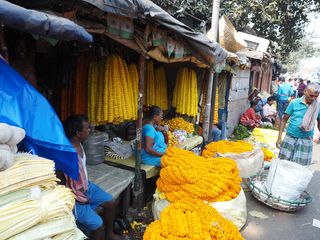
Kolkata • Flower market
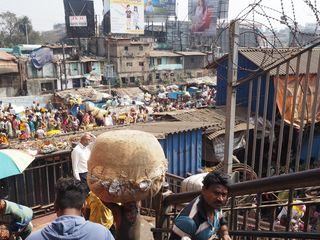
Kolkata • Flower market
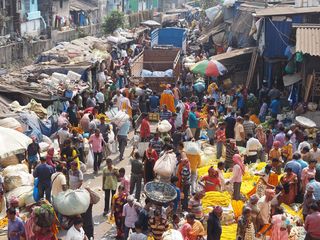
Kolkata • Flower market
Tradition profile
Flower market
Tradition category: Flower market
Tradition family: Traditional markets and fairs
Tradition genre: Trade and Local Creativity
Cultural heritage: Hindu
Geographic location: Kolkata • West Bengal •
• Links to •
• List of videos about Kolkata on this site •
Kolkata • Urban Life and Trading Traditions
Kolkata • Colonial Heritage and Legacy of the Raj
Kolkata • Religious Diversity and Urban Traditions
History of the Flower Market Tradition in Kolkata
Political and Social Context of Emergence
The tradition of the flower market in Kolkata developed within the broader historical evolution of the city as a major commercial and administrative center in eastern India. During the eighteenth and nineteenth centuries, Kolkata emerged as the principal capital of British colonial rule in the Indian subcontinent. Rapid urban growth, increasing population density, and the expansion of trade networks created the conditions for specialized urban markets capable of supplying goods required for daily life and religious practices.
In Bengali society, flowers have long held an important role in religious and cultural rituals. They are widely used in Hindu worship, temple offerings, household shrines, festivals, weddings, and other ceremonial occasions. The demand generated by these practices created a constant need for fresh flowers in the urban environment. The emergence of a specialized flower market can therefore be understood as the result of a convergence between religious traditions, economic activity, and urban development.
The establishment of the flower market near the Hooghly River was not accidental. The river functioned as one of the principal transportation routes connecting rural agricultural areas with the city. Flower cultivation had long existed in the villages of Bengal, where farmers grew varieties such as marigolds, jasmine, roses, and lotus flowers. These flowers were transported by boat to the river ghats, where traders distributed them to urban markets.
Various communities participated in this trade network. Rural cultivators, urban merchants, transporters, and artisans involved in garland-making formed an interconnected economic system. The organization of the market also reflected the social structure of the region, where certain occupational groups traditionally specialized in particular forms of trade and craft production.
Historical Events and Transformations
During the nineteenth century, the flower market tradition became firmly integrated into the economic life of Kolkata. The expansion of infrastructure under British colonial administration, including railways, roads, and port facilities, strengthened the city’s position as a regional commercial hub. These developments facilitated the daily supply of flowers from surrounding rural districts.
Religious festivals played a crucial role in sustaining this demand. Celebrations such as Durga Puja, Kali Puja, and other major Hindu festivals require large quantities of flowers for ritual decoration and offerings. Temples, religious institutions, and private households all contributed to the steady consumption of floral products.
Political transformations during the twentieth century also influenced the social context in which the tradition continued. The end of British colonial rule and the independence of India in 1947 marked a major turning point in the history of Kolkata. The partition of Bengal created large demographic shifts, bringing new populations into the city. These changes intensified urban density but also reinforced the continuity of religious and cultural practices that relied on flowers.
Despite economic challenges and urban pressures, the flower market continued to function as an important economic institution. Its resilience reflects the enduring cultural significance of flowers within the social and religious life of the region.
Global Context and Cultural Comparisons
The existence of specialized flower markets is not unique to Kolkata. In many parts of the world, flowers play an important role in rituals, ceremonies, and symbolic expressions. Markets dedicated to floral trade can be found in various Asian cities where religious traditions incorporate floral offerings.
During the nineteenth century, the growth of major port cities around the world often led to the development of specialized urban markets. As urban populations expanded, supply networks evolved to meet the cultural and economic needs of residents. Kolkata’s flower market developed within this broader global pattern of urban specialization.
However, the particular religious context of the Indian subcontinent gives flower markets a distinctive role. In Hindu ritual practice, flowers are considered appropriate offerings to deities and are used extensively in temple worship and domestic rituals. This religious significance contributes to the sustained demand that supports the continuity of the market.
Transformations and Adaptations
Over time, the flower market tradition has adapted to changing social and economic conditions. Transportation systems have evolved from river-based distribution to more complex networks involving roads and railways. This has expanded the geographical range from which flowers are supplied.
The growth of the metropolitan region of Kolkata has also influenced the scale of the market. Increasing urban population has led to a corresponding increase in demand for floral products. At the same time, new commercial practices and logistical systems have developed to accommodate larger volumes of trade.
Despite these changes, the essential structure of the tradition has remained remarkably stable. The early morning arrival of flowers, the rapid negotiation between wholesalers and retailers, and the preparation of garlands and ritual decorations continue to define the daily rhythm of the market.
In recent decades, the market has also attracted attention from visitors, photographers, and researchers interested in documenting urban cultural traditions. This visibility has contributed to a broader recognition of the market as a distinctive feature of Kolkata’s cultural landscape.
Role in Contemporary Society
Today the flower market remains an important element of the city’s economic and cultural life. Thousands of traders, workers, and buyers participate in its activities each day. The market supplies flowers to temples, religious institutions, households, wedding ceremonies, and public festivals.
The tradition also plays a role in sustaining economic connections between rural and urban communities. Flower cultivation in agricultural areas surrounding Kolkata continues to support the livelihoods of numerous farming families who depend on the city’s markets for income.
In addition to its economic function, the market represents a visible expression of cultural continuity. The use of flowers in religious ceremonies remains widespread, and the market ensures the daily availability of these materials for ritual purposes.
Preservation and Contemporary Challenges
Despite its vitality, the flower market tradition faces several modern challenges. Rapid urbanization and increasing pressure on urban land can affect the physical spaces where traditional markets operate. Infrastructure constraints, traffic congestion, and environmental concerns also influence the functioning of the market.
Another challenge concerns the transmission of traditional knowledge. Skills associated with flower garland making, trade organization, and market practices have historically been passed down through family networks. Changes in economic opportunities may affect the willingness of younger generations to continue these occupations.
Local authorities and cultural organizations have expressed interest in preserving traditional markets as part of the city’s living cultural heritage. Efforts to improve sanitation, waste management, and infrastructure have been introduced in order to support the sustainability of the market while maintaining its traditional character.
Although the flower market tradition does not currently benefit from formal international heritage recognition, it is widely regarded as an important element of Kolkata’s cultural identity. Its continued activity illustrates the enduring relationship between commerce, religion, and social life in one of the major urban centers of eastern India.
Characteristics of the Flower Market Tradition in Kolkata
Origins and Context of Emergence
The flower market tradition in Kolkata developed within a cultural environment where flowers have long played a central role in social and religious life. The practice emerged gradually as the city expanded during the nineteenth century, when Kolkata became one of the most important urban and commercial centers of eastern India. The concentration of population, religious institutions, and ceremonial activities created a sustained demand for fresh flowers used in rituals and social events.
Religious traditions in Bengal rely extensively on floral offerings. Flowers are presented to deities in temples, placed in domestic shrines, and used in various ceremonies marking important moments in personal and communal life. These practices required a steady supply of fresh floral materials, encouraging the development of specialized urban markets where flowers could be traded and distributed daily.
The emergence of the flower market was therefore linked to both religious practice and the economic structure of the city. The surrounding rural districts of Bengal provided ideal conditions for flower cultivation, while the urban center offered a large and stable consumer base. Over time, these rural and urban networks formed a structured system of production, transport, and distribution centered around the market.
Constituent Elements and Practices
The functioning of the flower market tradition follows a highly organized daily cycle. Activity typically begins before dawn, when flowers harvested during the night or early morning arrive from rural cultivation areas. Producers, transporters, and wholesalers gather in the market space to begin the distribution process.
Transactions occur rapidly because freshness is essential for both aesthetic and ritual purposes. Flowers are sorted by type, color, and quality before being sold in bulk or assembled into specific forms required for religious ceremonies. One of the most visible practices associated with the market is the creation of garlands. Skilled artisans assemble flowers into decorative chains used to adorn temples, statues of deities, and ceremonial spaces.
These garlands require specialized techniques that are transmitted through apprenticeship within families or professional networks. The process involves careful selection of flowers, threading methods that prevent damage to delicate petals, and the creation of balanced patterns that enhance visual appeal. Such craftsmanship represents a form of practical knowledge that has been preserved across generations.
Although the market itself is primarily a commercial environment, its activity is closely linked to ritual practices occurring throughout the city. The flowers sold in the market immediately enter a broader system of religious and social use, connecting the market to temples, households, and public celebrations.
Symbolism and Cultural Meanings
Flowers in Bengali culture carry strong symbolic meanings. Within Hindu traditions, flowers are regarded as pure offerings suitable for presentation to divine figures. Their fragrance, color, and ephemeral nature are often associated with spiritual devotion and the expression of respect toward deities.
Different flowers convey different symbolic associations. Marigolds, commonly used in garlands, are associated with auspicious occasions and religious ceremonies. Jasmine flowers are often linked to devotion and spiritual purity. Lotus flowers possess deep symbolic significance in many Indian religious traditions, representing spiritual awakening and divine beauty.
The colors used in floral decorations also convey meaning. Yellow and orange flowers frequently appear in religious celebrations and temple rituals, while red flowers are associated with vitality and devotion. Through these symbolic elements, the flower market participates indirectly in the visual and ritual language of Bengali religious culture.
Beyond their religious significance, flowers also carry social meaning. Floral decorations are widely used in weddings and community festivals, where they signify celebration, prosperity, and hospitality. The market therefore contributes to both religious expression and social ritual.
Evolution and External Influences
Over time, the flower market tradition has adapted to changing social and economic circumstances. During the colonial period, improvements in transportation infrastructure expanded the geographical reach of flower cultivation. Railways and improved road networks allowed flowers to be transported from more distant rural areas into the city.
In the twentieth century, urban growth and population expansion increased the scale of the market. As Kolkata developed into a large metropolitan center, demand for flowers grew accordingly. Modern transportation and communication networks have further integrated rural production areas into the city’s supply chain.
Despite these transformations, the fundamental structure of the tradition has remained stable. The early morning arrival of flowers, the negotiation between traders, and the preparation of garlands continue to define the daily rhythm of the market.
Comparisons can be drawn with flower markets in other regions of Asia, particularly in cities where religious practices rely on floral offerings. However, the specific ritual significance of flowers within Hindu traditions gives the Kolkata market a distinct cultural role.
Social Organization and Community Impact
The flower market tradition involves a wide range of participants whose activities are interconnected. Rural cultivators grow the flowers, transporters deliver them to the city, wholesalers distribute them within the market, and artisans transform them into garlands and ceremonial arrangements.
These economic roles often correspond to long-standing occupational traditions within local communities. Families involved in flower cultivation or garland making frequently continue these activities across generations, creating a stable network of knowledge and skills.
The market also plays an important role in supporting local livelihoods. Numerous workers depend on the daily activity of the flower trade, including transporters, vendors, and artisans. In this sense, the tradition contributes to both cultural continuity and economic sustainability.
In addition to its economic significance, the market functions as a social gathering space where participants exchange information, maintain community relationships, and reinforce shared cultural practices.
Statistics, Anecdotes, and Notable Aspects
The flower market in Kolkata is widely considered one of the largest wholesale flower markets in India and among the most active in Asia. Thousands of traders and buyers participate in its operations each day, particularly during the early morning hours when commercial activity reaches its peak.
During major religious festivals, the volume of flowers traded increases dramatically. Events such as Durga Puja require vast quantities of floral decorations, leading to heightened activity within the market.
A distinctive visual feature of the market is the large quantity of marigold garlands arranged in bright orange and yellow bundles. These displays have become widely recognized images associated with the cultural landscape of Kolkata.
Recognition and Preservation Challenges
Today the flower market tradition remains an important part of Kolkata’s living cultural heritage. It represents a continuous link between agricultural production, religious practice, and urban commerce.
However, the tradition also faces several contemporary challenges. Rapid urban development and increasing pressure on public space can affect the operation of traditional markets. Infrastructure limitations, sanitation concerns, and environmental management issues also influence the sustainability of the market.
Another challenge concerns the transmission of traditional knowledge. Younger generations may pursue alternative occupations, which can reduce the continuity of skills such as garland making and specialized flower trade.
Local authorities and community organizations have introduced initiatives aimed at improving infrastructure, waste management, and working conditions within the market. These efforts seek to maintain the vitality of the tradition while adapting it to the needs of a modern urban environment.
Although the flower market tradition is not formally recognized as an international heritage element, it is widely regarded as a distinctive cultural feature of Kolkata. Its continued existence demonstrates the enduring relationship between commerce, ritual practice, and community life in one of India’s major metropolitan centers.
 Links to the main sections of the site