Français (France)
  Nederlands (nl-NL)
 00:00 • intro | 00:31 • Sri Ekambaranathar temple | 05:20 • Kailasnathar temple
Personal creation from visual material collected during my trip India • South India • Tamil Nadu and Kerala (2018)
Map of places or practices in Kanchipuram on this site
• Use the markers to explore the content •
Kanchipuram and the Sacred Temple Landscapes of Tamil Nadu
Kanchipuram occupies an important place in the religious and architectural history of South India. Located in northern Tamil Nadu, the city developed over many centuries as a major centre of Hindu scholarship, temple construction and pilgrimage. Its urban landscape remains closely connected to large religious complexes that continue to structure both ceremonial life and the organisation of the historic city. The video explores part of this heritage through two major monuments: the Sri Ekambaranathar Temple and the Kailasanathar Temple.
The images reveal different aspects of Kanchipuram’s identity, from monumental Dravidian temple architecture to the relationship between sacred spaces and the surrounding urban environment. The city’s religious importance is reflected not only in the scale of its temples, but also in the continuity of ritual practices still visible around these active places of worship.
Major Temple Complexes and Sacred Spaces
The Sri Ekambaranathar Temple forms one of the principal Shaivite sanctuaries of Kanchipuram. Dedicated to Shiva in the form of Ekambareswarar, the temple is associated with the traditional group of sacred temples representing the five natural elements, where it symbolises earth. The complex is characterised by large enclosure walls, extensive courtyards and a monumental gopuram rising above the surrounding cityscape.
The visual sequences allow a gradual understanding of the temple’s spatial organisation. Entrance towers, pillared halls, processional routes and successive courtyards create a layered progression toward the innermost sacred areas. The presence of the ancient sacred mango tree inside the complex also illustrates the importance of mythology and symbolic traditions associated with the temple.
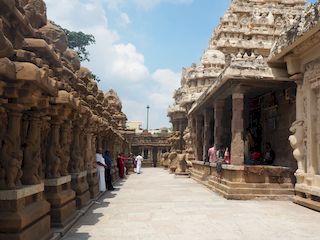
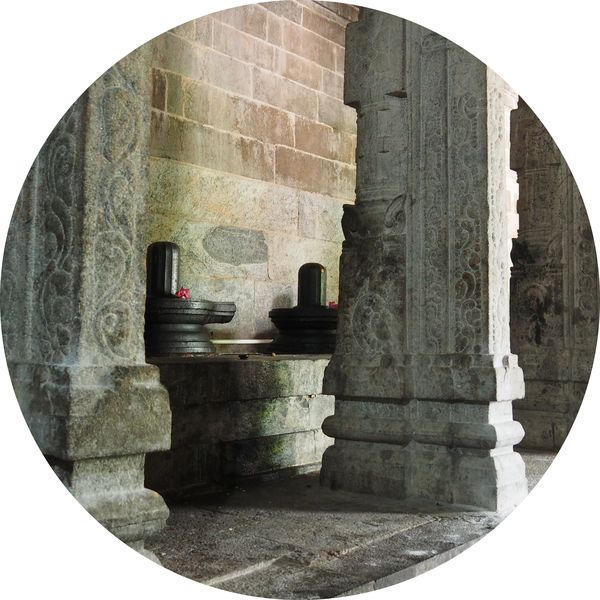
The Kailasanathar Temple presents a different architectural atmosphere. Considered one of the earliest surviving major monuments of Pallava architecture in Kanchipuram, it preserves a more compact and sculpturally dense composition. Its sandstone structures, exterior reliefs and smaller subsidiary shrines provide valuable insight into earlier stages of South Indian temple development.
The sculpted walls display numerous representations of Shiva, divine attendants and religious iconography integrated directly into the architectural surfaces. Rather than relying primarily on monumental scale, the temple emphasises sculptural detail, rhythmic wall articulation and carefully organised sacred volumes. The arrangement of secondary shrines surrounding the central sanctuary reinforces the impression of an enclosed ceremonial environment structured through repetition and symmetry.
Historical Development and Religious Importance
Kanchipuram’s importance expanded considerably during the Pallava period between the sixth and ninth centuries. The city became one of the major political and religious centres of the dynasty, and several important temples were either constructed or enlarged during this time. The Kailasanathar Temple remains one of the clearest surviving examples of this architectural phase, when stone temple construction in South India reached a new level of technical and artistic sophistication.
Later dynasties, including the Cholas and the rulers of Vijayanagara, continued transforming the city’s religious landscape. Large gateway towers, expanded ceremonial halls and additional enclosure walls were progressively added to several temple complexes. The Sri Ekambaranathar Temple especially reflects these later phases of enlargement and monumentalisation.
Kanchipuram also maintained an important role as a centre of religious learning and pilgrimage. Shaivite and Vaishnavite traditions both developed strongly within the city, contributing to the concentration of temples that still defines its urban identity today. The ceremonial use of the monuments remains visible through processional spaces, ritual circulation routes and areas designed for gatherings of pilgrims and devotees.
The city’s streets and historic neighbourhoods evolved in close relation to these religious institutions. Markets, residential quarters and ceremonial routes developed around the temple complexes, creating an urban structure strongly connected to sacred geography. This relationship between monumental architecture and daily urban life remains one of the defining characteristics of Kanchipuram.
What the Videos on This Site Make Especially Clear
The videos presented on travel-video.info frequently rely on carefully animated photographs and progressive visual transitions that allow a more detailed reading of architectural spaces. This approach is particularly effective in Kanchipuram, where the complexity of temple layouts and sculptural decoration requires slow visual observation rather than rapid movement.
The gradual camera motions help reveal the proportions of gateway towers, the alignment of columns and the layered organisation of courtyards and ceremonial halls. Architectural details that are often difficult to observe during a quick visit become more legible through controlled framing and slower visual progression.
At the Kailasanathar Temple, the use of animated still photography highlights the sculptural density of the exterior walls and the relationship between the central sanctuary and the surrounding subsidiary shrines. At the Sri Ekambaranathar Temple, the same visual method helps clarify the scale of the enclosure walls, the organisation of the temple complex and the interaction between sacred structures and open ceremonial spaces.
The visual construction of the video also makes it easier to understand how these monuments are integrated into the wider urban landscape of Kanchipuram. The relationship between monumental architecture, circulation routes and the historic city gradually becomes clearer through successive perspectives and detailed close views.
A Major Religious Centre of South India
Kanchipuram remains one of the most important sacred cities of Tamil Nadu and South India. Its temples preserve architectural traditions developed over many centuries while continuing to function as active religious institutions. Through the Sri Ekambaranathar and Kailasanathar temples, the video offers a detailed introduction to the city’s monumental heritage and to the enduring relationship between religion, architecture and urban life in one of the historic centres of the Tamil world.
Links to related pages







Music:
- - YouTube video library - Butterflies in Love
- - YouTube video library - Clouds
- - YouTube video library - Evil March, (© Evil March by Kevin MacLeod is licensed under a Creative Commons Attribution 4.0 license. https://creativecommons.org/licenses/by/4.0/
- Source: http://incompetech.com/music/royalty-free/index.html?isrc=USUAN1100727
- Artist: http://incompetech.com/)
Disclaimer: Despite its appropriateness, copyright issues prevent the use of indian traditional music in "Kanchipuram, holy city • Tamil Nadu, India", hence the use of royalty-free music. Despite our careful selection, some might regret this decision, which is necessary to avoid potential lawsuits. Although difficult, this decision is the only viable solution.