

 Français (France)
  Nederlands (nl-NL)
 The Sri Ekambaranathar Temple is one of the largest and oldest temples in Kanchipuram, located in the state of Tamil Nadu, India. Dedicated to Shiva, this temple is a significant pilgrimage site for Hindu devotees. It is especially known for its massive entrance tower, known as a gopuram, which rises to an impressive height and is adorned with intricate sculptures. The temple also features numerous shrines and courtyards, each richly decorated with frescoes and sculptures depicting Hindu deities. The Sri Ekambaranathar Temple plays a central role in the religious festivals and celebrations of Kanchipuram, attracting thousands of visitors every year.

Kanchipuram • Sri Ekambaranathar Temple

Kanchipuram • Sri Ekambaranathar Temple
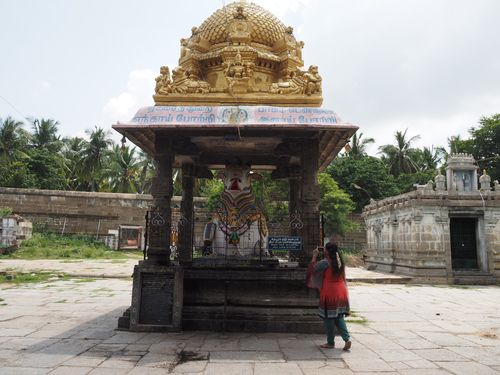
Kanchipuram • Sri Ekambaranathar Temple
Monument profile
Sri Ekambaranathar Temple
Monument categories: Hindu Temple, Dravidian temple
Monument family: Temple
Monument genre: Religious
Cultural heritage: Hindu
Geographic location: Kanchipuram • Tamil Nadu • India
Construction period: 9th century AD
• Links to •
• Dynasties that contributed to the construction of the monument •


• List of videos about Kanchipuram on this site •
Kanchipuram, holy city • Tamil Nadu, India
• References •
UNESCO: Temples of Kanchipuram
• Sources •
Books and Publications
- Ayyar, P.V. Jagadisa. South Indian Shrines: Illustrated. Asian Educational Services, 1982.
- Balasubrahmanyam, S. Early Chola Temples: Parantaka I to Rajaraja I (A.D. 907-985). Thomson Press, 1971.
- Saravanapavan, V. Temples of Tamil Nadu. Government of Tamil Nadu, 1998.
- Subramanian, K.R. The Pallavas of Kanchi. Asian Educational Services, 1989.
Digital Sources
Political and Social Motivations Behind the Construction of the Sri Ekambaranathar Temple: Historical Impact and Preservation Challenges
The Sri Ekambaranathar Temple, located in Kanchipuram, Tamil Nadu, India, is a significant historical and architectural landmark. Its construction and subsequent transformations reflect the political, social, and cultural dynamics of the region over centuries.
Political and Social Motivations
The construction of the Sri Ekambaranathar Temple in the 9th century was driven by the Pallava dynasty's desire to assert their political power and religious devotion. By building grand temples, the Pallavas sought to legitimize their rule and demonstrate their piety. Temples like Ekambaranathar served as centers of social and religious life, attracting pilgrims and reinforcing the city’s status as a holy site. This bolstered the region's socio-economic stability and political influence.
Major Historical Events
Several key historical events have shaped the Sri Ekambaranathar Temple:
- Pallava Period (6th - 9th Century): Initial construction and establishment of the temple, highlighting Pallava architectural prowess.
- Chola Period (10th - 13th Century): Significant expansions and renovations, illustrating the prosperity and power of the Chola dynasty.
- Muslim Invasions (14th Century): Periods of devastation and subsequent rebuilding, indicating the temple’s resilience and the region’s tumultuous political landscape.
- Vijayanagara Period (14th - 17th Century): Restoration and enhancements by the Vijayanagara rulers, adding new structures and sculptures, and reflecting cultural exchanges and regional stability.
Global Context and Comparisons
During the 9th century, while the Sri Ekambaranathar Temple was being developed, other parts of the world were also witnessing significant architectural and cultural advancements:
- Europe: The Carolingian Renaissance was in full swing, marked by the construction of large monasteries and churches, such as the Abbey of Saint Gall, promoting Christianity and scholarly activities.
- Mesoamerica: The Maya civilization was flourishing, with cities like Tikal and Palenque reaching architectural zeniths, characterized by pyramids, palaces, and advanced urban planning.
- China: The Tang dynasty was at its peak, known for monumental constructions like the Great Wild Goose Pagoda in Xi'an, showcasing Buddhist influences and Chinese architectural innovations.
- Islamic World: The Abbasid Caliphate was promoting cultural and scientific advancements, with notable architectural achievements like the Great Mosque of Samarra in Iraq.
These global developments reflect a broader trend of using monumental architecture to assert political power, religious devotion, and cultural sophistication.
Major Transformations and Cultural Influences
Over the centuries, the Sri Ekambaranathar Temple has undergone numerous transformations:
- Pallava Era: Original construction with distinctive Dravidian architectural features.
- Chola Era: Expansion and embellishment, introducing elaborate sculptures and frescoes.
- Vijayanagara Era: Additions such as the tall gopurams (entrance towers), reflecting a blend of Dravidian and Vijayanagara styles.
- Modern Era: Ongoing conservation efforts to preserve the temple's historical and architectural integrity.
Each transformation mirrors the prevailing political powers and their cultural influences, from Pallava to Chola and Vijayanagara, illustrating a rich tapestry of regional and external artistic traditions.
Cultural Significance and Current State of Conservation
Today, the Sri Ekambaranathar Temple remains a vital cultural and religious site. It attracts thousands of pilgrims and tourists, emphasizing its enduring significance. The temple’s state of conservation is generally good, but continuous efforts are needed to address issues like structural erosion, environmental damage, and the impacts of tourism.
Preservation Challenges
Key challenges in preserving the Sri Ekambaranathar Temple include:
- Environmental Degradation: Pollution and natural erosion threaten the structural integrity and intricate carvings.
- Tourism Pressure: High footfall can lead to physical wear and tear of the temple structures.
- Modernization: Balancing the need for modern amenities with historical preservation can be difficult.
- Funding and Expertise: Ensuring sufficient resources and skilled personnel for ongoing conservation efforts.
Addressing these challenges requires a collaborative approach involving local authorities, conservation experts, and the community to maintain the temple's historical and cultural legacy.
In conclusion, the Sri Ekambaranathar Temple of Kanchipuram stands as a testament to the region's historical and cultural evolution. Its architectural grandeur and resilience through centuries of political and social changes highlight its significance. The ongoing preservation efforts are crucial in maintaining its status as a revered cultural monument.
Architectural and Technological Advancements of the Sri Ekambaranathar Temple in Kanchipuram: A Testament to the Pandya Era
The Sri Ekambaranathar Temple in Kanchipuram, Tamil Nadu, is a magnificent example of the technological and architectural innovations of the Pandya period. This article explores the materials and construction techniques used, the unique blend of artistic traditions, and the significance of the temple's design and layout. Additionally, it delves into notable statistics and anecdotes related to its construction, and discusses the temple's international recognition and preservation challenges.
Technological Advancements and Construction Techniques
The construction of the Sri Ekambaranathar Temple showcases the technological prowess and innovative spirit of the Pandya era. Built primarily from granite, a durable and locally available material, the temple's architecture reflects the advanced quarrying and stone-cutting techniques of the time. The use of granite not only provided structural integrity but also allowed for intricate carvings and detailed sculptures.
The Pandya architects employed sophisticated methods such as interlocking stones and precise jointing techniques to ensure the stability and longevity of the temple. These methods allowed the construction of towering gopurams (entrance towers) and expansive mandapams (pillared halls) that could withstand the test of time.
Unique Architectural Features and Decorative Motifs
The Sri Ekambaranathar Temple is renowned for its distinctive architectural features and decorative motifs, which illustrate a unique blend of regional traditions and foreign influences. Key elements include:
- Gopuram: The towering entrance gate, intricately carved with figures from Hindu mythology, showcasing the skill of Pandya sculptors.
- Mandapam: The thousand-pillared hall, each pillar adorned with exquisite carvings of deities, animals, and floral patterns, reflecting the artistic finesse of the era.
- Sanctum Sanctorum: The innermost shrine housing the deity, constructed with a precision that ensures spiritual and architectural harmony.
These elements highlight the integration of Dravidian architectural styles with influences from neighboring regions, creating a unique and harmonious design.
Notable Structure and Layout
One of the most notable aspects of the Sri Ekambaranathar Temple is its vast courtyard layout, designed to accommodate large numbers of devotees and facilitate grand religious processions. The temple complex includes multiple shrines, water tanks, and corridors, creating a sacred and serene environment for worshippers.
A remarkable feature is the Aayiram Kaal Mandapam, or the thousand-pillared hall, which stands as a testament to the engineering and artistic capabilities of the Pandya period. The pillars are not only functional but also serve as canvases for intricate carvings, each telling stories from Hindu epics and showcasing the cultural richness of the time.
Statistics and Anecdotes
One of the intriguing anecdotes about the temple is the legend of the mango tree within its precincts, believed to be over 3,500 years old. This tree is said to symbolize the temple's eternal nature and its deep-rooted significance in Hindu mythology.
The gopuram of the temple, standing at approximately 60 meters, is one of the tallest structures of its kind, reflecting the grandeur and ambition of the Pandya rulers. The sheer scale and intricacy of the carvings on this structure continue to awe visitors and scholars alike.
International Recognition and Preservation
While the Sri Ekambaranathar Temple has not yet been inscribed as a UNESCO World Heritage Site, it holds significant international recognition due to its historical and architectural importance. This recognition has led to increased efforts in its preservation and conservation, ensuring that the temple remains a vibrant center of cultural and religious activity.
Efforts to preserve the temple include regular maintenance of its stone structures, restoration of damaged sculptures, and measures to protect it from environmental and human-induced damage. These initiatives are crucial in maintaining the temple's integrity and ensuring that it continues to inspire future generations.
Preservation Challenges
The preservation of the Sri Ekambaranathar Temple faces several challenges:
- Environmental Factors: Weathering and pollution pose significant threats to the granite structures and intricate carvings.
- Tourism Impact: The high influx of visitors can lead to wear and tear of the temple's facilities and artworks.
- Resource Allocation: Ensuring adequate funding and expertise for ongoing conservation efforts is a continuous challenge.
- Addressing these challenges requires a balanced approach that respects both the temple's cultural significance and the practical needs of its preservation.
In conclusion, the Sri Ekambaranathar Temple in Kanchipuram stands as a monumental testament to the technological advancements and architectural brilliance of the Pandya period. Its unique blend of artistic traditions, coupled with its grand scale and intricate details, underscores its importance in India's cultural heritage. Ongoing efforts to preserve and protect this historical site are essential in maintaining its legacy for future generations.