

 Français (France)
  Nederlands (nl-NL)
 The Kailasanathar Temple, located in Kanchipuram, Tamil Nadu, India, is a Hindu temple dedicated to Lord Shiva. Renowned as one of the oldest temples in the region, it is celebrated for its unique architecture and intricate carvings, representative of the Pallava dynasty. This sacred site holds significant cultural and historical value, drawing pilgrims and visitors for its spiritual atmosphere and cultural importance.

Kanchipuram • Kailasanathar Temple

Kanchipuram • Kailasanathar Temple
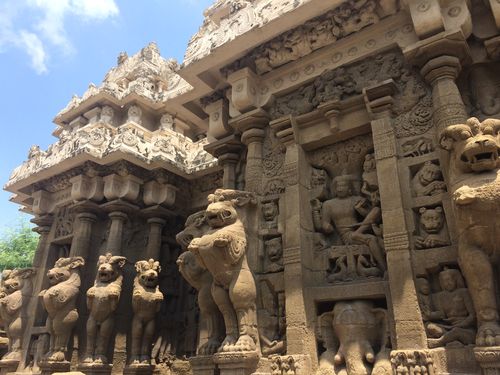
Kanchipuram • Kailasanathar Temple
Monument profile
Kailasanathar Temple
Monument categories: Hindu Temple, Dravidian temple
Monument family: Temple
Monument genre: Religious
Cultural heritage: Hindu
Geographic location: Kanchipuram • Tamil Nadu • India
Construction period: 7th century AD
• Links to •
• Dynasties that contributed to the construction of the monument •

• List of videos about Kanchipuram on this site •
Kanchipuram, holy city • Tamil Nadu, India
• References •
UNESCO: Temples of Kanchipuram
The Kailasanathar Temple: Political Symbolism, Historical Evolution, and Modern Challenges
The Kailasanathar Temple, located in Kanchipuram, Tamil Nadu, India, is a monument of immense historical, religious, and cultural significance. Built in the 7th century CE under the reign of Pallava King Narasimhavarman II (Rajasimha), it stands as one of the earliest examples of Dravidian temple architecture. The temple’s construction was driven by political ambitions and social objectives, and its enduring presence reflects the changing dynamics of power and cultural influences over centuries.
Political and Social Motivations Behind Its Construction
The construction of the Kailasanathar Temple was underpinned by strategic political and social goals:
- Political Significance: The Pallavas sought to assert their dominance and legitimacy through the construction of grand temples. The Kailasanathar Temple symbolized their role as protectors of Hindu dharma and demonstrated their architectural and cultural sophistication.
- Social Integration: The temple served as a hub for community gatherings and religious ceremonies, reinforcing social cohesion. It also attracted pilgrims and scholars, making Kanchipuram a center of spiritual and intellectual activity.
By dedicating the temple to Shiva, the Pallavas reinforced their association with divine authority, ensuring loyalty from their subjects and projecting their influence across the region.
Historical Events and Their Impact
Several key events shaped the history of the Kailasanathar Temple and its surrounding region:
- Pallava Era (7th–9th centuries): During this period, Kanchipuram flourished as a religious and cultural center. The temple, with its pioneering architectural style, became a template for later Dravidian temples.
- Chola Period (10th–13th centuries): With the rise of the Chola dynasty, the focus shifted to other temples, but the Kailasanathar Temple retained its spiritual importance.
- Colonial Period: During British rule, Kanchipuram’s prominence waned, but the temple gained attention from European archaeologists and historians for its historical significance.
Global Context and Comparisons
In the 7th century, the construction of the Kailasanathar Temple paralleled significant cultural and architectural developments across the world:
- Tang Dynasty in China: This period saw the construction of Buddhist temples and the flourishing of art in cities like Chang’an.
- Byzantine Empire: The Hagia Sophia in Constantinople symbolized the union of political power and religious devotion in the Christian world.
- Mesoamerican Civilizations: The Mayan civilization was building monumental temples in cities like Tikal and Palenque.
The Kailasanathar Temple stands out for its intricate stone carvings and innovative use of materials, laying the foundation for later South Indian temple architecture.
Transformations Over the Centuries
The temple has undergone several transformations that reflect shifts in political and cultural influences:
- Structural Changes: Subsequent rulers made minor additions, but the core architecture remains a testament to Pallava ingenuity.
- Cultural Adaptations: The motifs and sculptures reflect a blend of regional artistic traditions and subtle external influences, such as Greco-Buddhist elements in some animal figures.
- Modern Restorations: Efforts to preserve the temple have focused on stabilizing its sandstone structure and protecting its intricate carvings from further erosion.
Cultural Importance and Current State
Today, the Kailasanathar Temple is an important site for the study of Indian temple architecture. Its pioneering design, including the circumambulatory corridor and niches housing deities, has influenced numerous later temples in Tamil Nadu. Although it is not a UNESCO World Heritage Site, it is widely recognized as a masterpiece of Pallava art and architecture.
Challenges in Preservation
The Kailasanathar Temple faces several challenges:
- Environmental Degradation: The sandstone used in its construction is highly susceptible to weathering caused by wind and rain.
- Human Impact: Increasing tourist activity risks damaging delicate carvings and frescoes.
- Resource Constraints: Conservation efforts rely on limited funding and expertise, making it difficult to implement large-scale restoration projects.
Conclusion
The Kailasanathar Temple is a timeless symbol of the Pallava dynasty’s architectural innovation and cultural vision. Its intricate carvings, pioneering design, and enduring spiritual significance make it a vital part of India’s heritage. As modern challenges threaten its integrity, sustained efforts are required to preserve this historical treasure for future generations, ensuring that its legacy continues to inspire.
Kailasanathar Temple: Architectural Innovation and Technological Brilliance of the Pallava Era
The Kailasanathar Temple, located in Kanchipuram, Tamil Nadu, is a masterpiece of early Dravidian architecture. Constructed in the 7th century CE under the reign of Pallava King Narasimhavarman II (Rajasimha), this temple is celebrated for its innovative design, intricate carvings, and pioneering use of materials and techniques. It is one of the earliest stone temples in South India and a precursor to the grand architectural traditions that followed.
Technological Advancements and Construction Materials
The construction of the Kailasanathar Temple showcases the technological advancements of the Pallava dynasty:
- Materials: The temple was predominantly built using sandstone, a material that allowed intricate carvings but required meticulous skill to handle due to its susceptibility to weathering.
- Techniques: The temple employs a block-building technique, where finely cut stones were stacked and interlocked without mortar. The carvings were directly etched into the sandstone, demonstrating exceptional craftsmanship.
- Innovations: The temple introduced structural elements such as a circumambulatory passage (pradakshina) around the sanctum, reflecting both ritualistic and architectural advancements.
Architectural Features and Artistic Fusion
The Kailasanathar Temple reflects a blend of regional traditions and external influences, making it a unique architectural gem:
- Central Shrine and Vimana: The sanctum (garbhagriha) is crowned by a pyramidal vimana with multiple tiers, representing the divine mountain Kailash. The vimana’s design inspired subsequent South Indian temples.
- Intricate Sculptures: The temple is adorned with detailed bas-reliefs depicting scenes from Hindu mythology, various forms of Shiva, and divine beings. These carvings exhibit a narrative style that combines aesthetic beauty with spiritual depth.
- Influences: Certain motifs, such as mythical animals and floral designs, hint at influences from Greco-Buddhist art, reflecting the Pallavas’ openness to cultural exchanges through trade and diplomacy.
Notable Structure and Layout
The layout of the Kailasanathar Temple is both functional and symbolic:
- Sanctuary and Pradakshina: The temple’s sanctum is surrounded by a circumambulatory passage, allowing devotees to perform rituals while engaging with the divine sculptures.
- Surrounding Shrines: The walls of the temple complex are lined with 58 small shrines, each containing a unique depiction of Shiva or related deities, emphasizing the multiplicity of divine forms.
- Pioneering Design: This architectural layout served as a blueprint for later Dravidian temples, including those built under the Chola and Vijayanagara dynasties.
Statistics and Anecdotes
- Earliest Stone Temple: The Kailasanathar Temple is considered one of the first temples in South India to be constructed entirely from stone, marking a shift from earlier rock-cut cave temples.
- Cultural Anecdote: Legend suggests that King Narasimhavarman II personally oversaw the construction of the temple, intending it to be a showcase of Pallava architectural prowess and devotion to Shiva.
International Recognition and UNESCO Status
Although the Kailasanathar Temple is not yet a UNESCO World Heritage Site, its architectural significance has drawn international acclaim. Scholars and architects recognize it as a vital milestone in the evolution of South Indian temple design. Its influence can be seen in later monuments like the Brihadishwara Temple in Thanjavur and the Meenakshi Temple in Madurai.
Challenges in Conservation
The temple faces several challenges that threaten its long-term preservation:
- Erosion: The sandstone material is highly vulnerable to natural weathering, particularly due to rain and wind.
- Tourism Impact: Increased foot traffic risks damaging the delicate carvings.
- Conservation Funding: Limited financial resources hinder large-scale restoration efforts.
Conclusion
The Kailasanathar Temple is a cornerstone of Dravidian architecture and a testament to the technological and artistic innovations of the Pallava era. Its pioneering design, intricate carvings, and enduring spiritual significance ensure its place as a cultural treasure. Preserving this monument is not only vital for understanding South India’s architectural evolution but also for celebrating the ingenuity and devotion of its creators.