Français (France)
  Nederlands (nl-NL)
 00:00 • intro | 00:09 • Erice, Norman fortress in Sicily | 01:18 • Castello del Balio | 02:20 • the alleys of Erice | 04:22 • San Martino church | 05:22 • San Giuliani church | 05:55 • San Pietro church | 06:44 • Assumption Cathedral
Personal creation from visual material collected during my trip Italy: Seductive Sicily (2022)
Map of places or practices in Erice on this site
• Use the markers to explore the content •
Erice: streets, churches, and fortified memory in a Sicilian hill town
A highland city between history and landscape
Rising above Trapani and the western coast of Sicily, Erice preserves one of the most distinctive medieval urban ensembles on the island. Built on a mountain summit, the town combines defensive walls, paved lanes, towers, churches, and compact squares within a landscape shaped by altitude and wide sea views. Its strategic position explains both its military value and the richness of its historical development.
This video offers a gradual exploration of the old town through its streets, religious monuments, and fortified landmarks. It helps the viewer understand how Erice developed as a defended settlement while maintaining a strong civic and spiritual identity. Stone architecture, Norman heritage, and the atmosphere of a mountain town all remain clearly visible in the present urban fabric.
Main monuments and spaces shown in the video
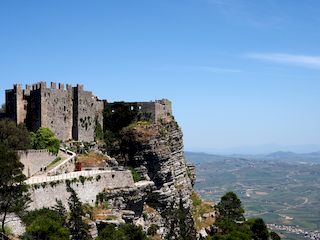
The Castello del Balio occupies one of the most commanding positions in Erice. Built near earlier fortifications, it recalls the town’s defensive role and the need to control both inland routes and maritime approaches. Its strong masonry forms and elevated setting make it one of the defining landmarks of the town.
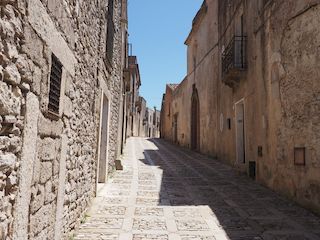
The streets of Erice are themselves a major element of the heritage. Their narrow, winding layout follows the terrain and links small squares, gateways, stairways, and sudden openings toward the surrounding landscape. They reflect an urban structure shaped by defense, climate, and everyday movement.
The churches of San Martino, San Giuliani, and San Pietro illustrate the religious density of the town. Each contributed to the organization of local districts and to the spiritual life of the community. Their presence shows that Erice was not only a fortress, but also a living town structured around parishes, confraternities, and civic traditions.
The Cathedral of the Assumption occupies a more prominent role. Through its scale and position, it represents both religious authority and urban prestige. It stands as one of the key monuments through which Erice expressed continuity and status across the centuries.
Historical, urban, and architectural context
The site of Erice was occupied long before the medieval period. Its commanding height made it attractive as a settlement and strategic lookout. Several Mediterranean civilizations left traces here, including the Elymians, Carthaginians, Romans, and Byzantines.
Much of the townscape visible today was shaped during the Middle Ages, especially under Norman rule. After the Norman conquest of Sicily in the eleventh and twelfth centuries, many elevated strongholds were reinforced and reorganized. In Erice, this included stronger defenses, renewed urban structures, and the development of Christian religious institutions.
The town’s architecture relies heavily on local stone, well suited to the climate of the summit. Narrow streets reduce exposure to wind and strong sun, while tightly grouped buildings create shelter and density. Churches introduce larger volumes, decorated portals, towers, and bell structures that punctuate the urban skyline.
Across later centuries, Erice experienced periods of prosperity, demographic decline, and renewed interest as a heritage town. Because large-scale modern expansion remained limited, much of its historic character survived with unusual coherence.
What the videos on this site make especially clear
Videos created largely from carefully selected and animated photographs are especially effective for a place like Erice. They make it easier to understand urban routes that can seem complex during a short visit through narrow streets and changing levels.
Slow movements reveal the texture of stone walls, paving, stairways, doorframes, and church façades. They also allow the viewer to appreciate the contrast between enclosed passages and sudden panoramic openings toward the Sicilian countryside and coastline.
This approach makes the relationship between monuments and topography particularly clear. The viewer understands how the castle dominates the settlement, how churches structure neighborhoods, and how streets connect the different levels of the hilltop site.
The sequence of images also highlights Erice as a unified urban organism rather than a series of isolated monuments. Defense, worship, housing, and circulation appear as interconnected parts of one historical town.
One of Sicily’s most evocative medieval towns
Erice brings together fortifications, religious heritage, and a remarkably preserved historic street network within a compact mountain setting. Its distinctive atmosphere comes as much from its history as from its dramatic position above the sea. Those wishing to continue the discovery can explore the dedicated pages on the castle, churches, and streets for a deeper understanding of this singular Sicilian town.
Links to related pages


Audio Commentary Transcript
Located at the summit of Mount Erice, the medieval town of the same name has dominated Sicily since the early second millennium. In a European context marked by intense conflicts, the arrival of the Normans in Sicily in the 11th century was a pivotal event. These northern conquerors, known for their military expertise, quickly recognized the strategic importance of this location. Under their rule, Erice was transformed into a robust fortress, designed to secure the acquired territories. Today, Erice serves as a crucial testimony to these times of conquests and defenses, offering a unique insight into the military architecture and urban planning of the medieval period.
The narrow, winding streets of Erice, beyond their picturesque charm, played a crucial role in the city's defense during the Middle Ages. These passageways not only allowed for better control over the movements of enemy armies, making direct attacks more difficult, but also facilitated communication and rapid movement of defenders within the citadel. Located in an elevated position, the Castello del Balio offers a commanding view over the entire region, encompassing both sea and land. This strategic vantage point allows for extensive surveillance, crucial for defending the city in a context of medieval conflicts.
Once crucial strategic axes for the medieval defense of Erice, the city's alleys now serve a different purpose. Where they were once designed to orchestrate defense movements and complicate enemy assaults, they now attract visitors from around the world. These narrow passageways, lined with cobblestones and flanked by ancient buildings, offer an immersion into the past while being one of the main tourist attractions of the city. Their importance has shifted, turning these once functional pathways into charming witnesses of Sicilian history, making Erice a must-visit destination for those seeking to experience the authentic charm of Sicily.
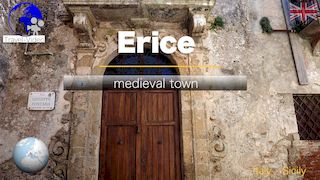
While exploring the cobblestone alleys of Erice, it is not uncommon to encounter an ancient door. Behind these doors, various spaces are revealed: some house cozy interiors, others lead to the welcoming halls of restaurants, while yet others open onto imposing churches. These religious buildings, often centuries old, bear witness to the rich history and architectural heritage of the city.
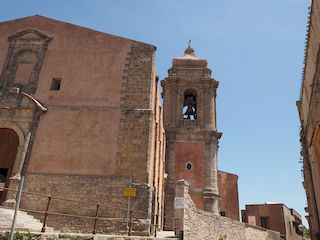
The San Martino Church in Erice dates back to the 12th century and was founded during the Norman period. It has undergone several modifications over the centuries, particularly in the 18th century, which gave it its current appearance. Although modest in appearance, it houses religious works and architectural elements of interest.
Erected in 1076 by Roger II in gratitude for the victory over the Muslims, marking the conquest of the citadel, the Church of San Giuliano in Erice features architectural characteristics typical of the Norman era in Sicily, with Romanesque influences visible in its robust structure and round arches. Its bell tower, added in 1770, reflects the stylistic evolution of the period.
The Church of San Pietro in Erice, erected during the Renaissance, exemplifies the architectural revival of the period, marked by a return to classical influences. Utilizing round arches, a legacy of Romanesque architecture, the church adopts a more subdued and balanced approach, typical of the Italian Renaissance, without the complex ornamentation often associated with this era. This simplicity reflects a blend of tradition and innovation.
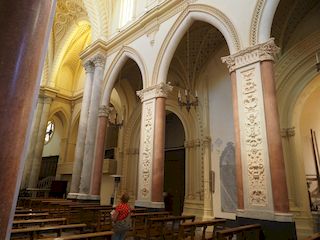
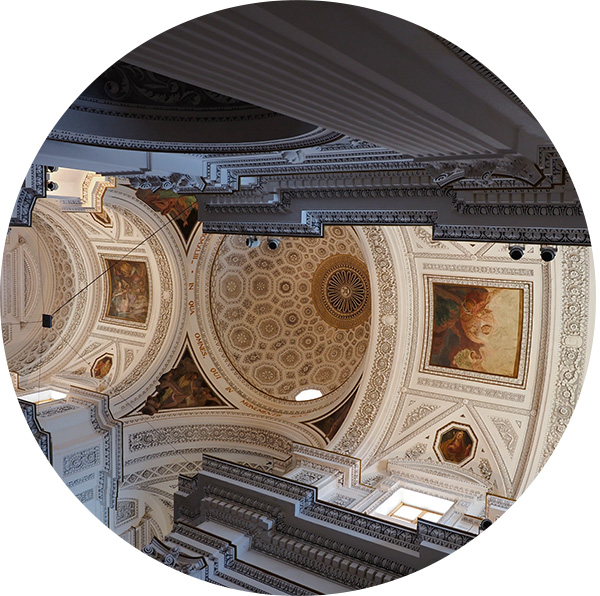
The Cathedral of Erice, built in 1314 under Frederick III of Aragon, is a striking example of Sicilian Gothic architecture. Its austere exterior made of local stone contrasts with the more refined interior, renovated in the 19th century in a neo-Gothic style. Next to it, the campanile, originally a medieval watchtower, overlooks the town. Dating back to the 13th century, it was used for surveillance before becoming a bell tower. Together, these two structures reflect both the spirituality and the military past of Erice, majestically dominating the Sicilian landscape.
Music:
- - YouTube video library - No.7 Alone With My Thoughts - Esther Abrami
- - YouTube video library - The Battle of 1066 - Patrick Patrikios
Disclaimer: Despite its appropriateness, copyright issues prevent the use of italian traditional music in "Erice • Streets and Churches of the Medieval City", hence the use of royalty-free music. Despite our careful selection, some might regret this decision, which is necessary to avoid potential lawsuits. Although difficult, this decision is the only viable solution.