

 Français (France)
  Nederlands (nl-NL)
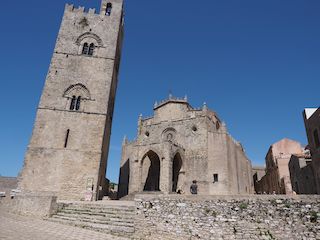
 The Cathedral of the Assumption is located in Erice, a historic town in Sicily, Italy. This iconic landmark, also known as Matrice Vecchia, stands as a significant site of worship and local history. The cathedral is noted for its striking architecture and its bell tower, known as Torre di Re Federico. It plays a key role in the cultural and religious life of Erice, drawing visitors and worshippers throughout the year for various celebrations and events.
Monument profile
Cathedral of the Assumption
Monument category: Cathedral
Monument family: Church, cathedral, basilica, chapel
Monument genre: Religious
Cultural heritage: Christian
Geographic location: Erice • Sicily • Italy
Construction period: 14th century AD
• Links to •
• List of videos about Erice on this site •
Erice • Streets and Churches of the Medieval City
The Political and Social Motivations Behind the Construction of the Cathedral of the Assumption in Erice
Construction and Historical Context
The Cathedral of the Assumption, also known as Matrice Vecchia, was constructed in Erice, Sicily, around 1314 under the reign of Frederick III of Aragon. The primary political motivation behind its construction was to consolidate and demonstrate the power of the Aragonese crown over Sicily following the War of the Sicilian Vespers (1282-1302), which had ended Angevin rule in favor of the Aragonese. The cathedral symbolized the assertion of royal authority and the unification of the local population under the Catholic faith, serving as a central place of worship and a physical manifestation of the new regime's stability.
Key Historical Events and Regional Impact
Throughout the centuries, the Cathedral of the Assumption has witnessed numerous significant historical events that have shaped the political and social landscape of the region. Notably, during the 16th century, when Sicily became part of the Spanish Empire, the cathedral played a central role in promoting Counter-Reformation ideals. It became a focal point for religious and cultural activities, helping to solidify Catholic orthodoxy in a region exposed to various cultural influences due to its strategic Mediterranean location.
Globally, this period was marked by the Renaissance in Europe, the exploration and colonization of the Americas, and the consolidation of nation-states. Similar to other regions in Europe and beyond, Sicily experienced a blending of local traditions with external influences, particularly from Spain. The construction of grand cathedrals during this era was a widespread phenomenon, reflecting the intertwined nature of religion and state power across different cultures.
Architectural Transformations and Reflections of Power
Over the centuries, the Cathedral of the Assumption underwent several major transformations. The most notable changes occurred in the 18th century, when Baroque elements were introduced during renovations, reflecting the dominant artistic and cultural trends of the time, influenced by Spanish rule. These modifications highlight how shifts in political power and cultural preferences were often reflected in religious architecture.
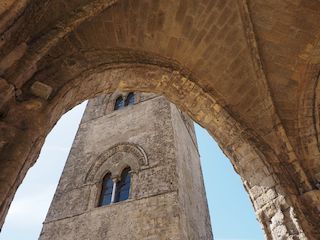
The separation of the cathedral’s bell tower, known as Torre di Re Federico, from the main building is a significant architectural feature. Originally designed for both religious and defensive purposes, the tower’s presence underscores the dual role of the cathedral as both a spiritual center and a symbol of military power. The various architectural styles present in the cathedral today bear witness to the complex history of the region, where different rulers left their mark on the structure.
Cultural Significance and Current State of Preservation
The architectural and historical significance of the Cathedral of the Assumption has elevated it to a cultural landmark in Sicily. Although not listed as a UNESCO World Heritage site, the cathedral enjoys widespread recognition for its historical value and cultural importance. This recognition has attracted scholars and tourists alike, contributing to its preservation and the promotion of Erice as a cultural destination.
The cathedral is currently in relatively good condition, thanks to ongoing conservation efforts. However, it faces several challenges, including exposure to harsh weather conditions at its elevated location, which leads to erosion and wear. Additionally, the increasing number of tourists poses a risk to the structural integrity of the monument, necessitating careful management and preservation strategies.
Preservation Challenges in the Modern Era
The preservation of the Cathedral of the Assumption’s historical integrity is challenged by modern threats such as environmental degradation and the pressures of mass tourism. Conservation efforts must balance the need to protect the monument with the demands of making it accessible to visitors. Utilizing modern conservation techniques, such as monitoring environmental conditions and using compatible materials for restoration, is essential to maintain the cathedral’s authenticity for future generations.
Architectural Innovation and Cultural Fusion in the Cathedral of the Assumption in Erice
Technological Advancements and Construction Techniques
The Cathedral of the Assumption in Erice, Sicily, is a striking example of the technological advancements and architectural innovation of the early 14th century. Constructed around 1314 during the reign of Frederick III of Aragon, the cathedral showcases the evolution of Gothic architecture in Sicily. The use of pointed arches and ribbed vaults, which were relatively new innovations at the time, allowed for the creation of taller, more spacious interiors that could support large stained-glass windows. These features not only enhanced the grandeur of the structure but also demonstrated the technical prowess of the builders.
The primary material used in the construction was the local limestone, known for its durability and ease of carving. This choice of material was practical given Erice's elevated position, which exposed the structure to harsh weather conditions. The thick walls and the massive stone blocks used in the construction helped to ensure the cathedral's stability over the centuries.
A Fusion of Regional Traditions and Foreign Influences
The Cathedral of the Assumption is a remarkable blend of regional Sicilian artistic traditions and foreign influences, reflecting the island's complex history. The architectural design combines elements of Gothic style, introduced by the Aragonese, with Norman and Arab influences, which were deeply embedded in Sicilian culture due to earlier periods of conquest and rule.
The façade of the cathedral, with its elegant pointed arches and austere yet powerful structure, is complemented by intricate decorative elements that reveal Arab-Norman motifs. These include geometric patterns and stylized floral designs that were common in Islamic art, demonstrating the cultural synthesis that characterized much of Sicily during this period.
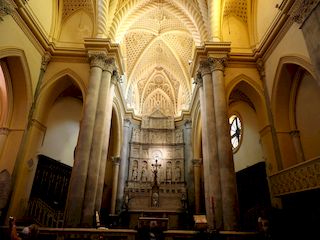
Inside, the use of natural light through strategically placed windows creates a spiritual atmosphere, highlighting the religious significance of the space. The separation of the bell tower, known as Torre di Re Federico, from the main body of the cathedral is another notable feature, serving both religious and defensive purposes—a common practice in medieval Sicily, where churches often doubled as fortresses.
Notable Structure and Plan
The cathedral's plan follows the typical basilica layout with a nave and two side aisles, culminating in a semicircular apse. This traditional layout is enhanced by the Gothic ribbed vaults, which create a sense of upward movement, drawing the eye toward the heavens—a symbolic gesture of the era's deep spiritual aspirations.
One particularly interesting anecdote about the cathedral is the rapid pace of its construction. Local legends suggest that it was completed in just a few years, an impressive feat given the scale of the building and the technological limitations of the time. This speaks to the organizational skills of the builders and the strategic importance of the cathedral as a symbol of Aragonese power.
International Recognition and Preservation
While the Cathedral of the Assumption is not officially listed as a UNESCO World Heritage site, it enjoys considerable international recognition due to its historical and architectural significance. The fusion of different cultural influences within its design makes it a unique example of Sicilian medieval architecture and a point of interest for scholars and tourists alike.
The absence of UNESCO status does present challenges in terms of securing international funding for preservation. However, local and regional efforts have been substantial in maintaining the structure's integrity. Modern conservation techniques are used to address the wear and tear caused by environmental factors and the increasing number of visitors.
Conclusion
The Cathedral of the Assumption in Erice is more than just a religious structure; it is a testament to the technological advancements and cultural exchanges that defined medieval Sicily. Its architectural features, blending Gothic, Norman, and Arab influences, not only reflect the island's diverse heritage but also contribute to its standing as a monument of significant historical value. The continued preservation of this site is crucial to ensuring that its unique architectural innovations and cultural significance are appreciated by future generations.