

 Français (France)
  Nederlands (nl-NL)
 The Church of San Giuliani in Erice, Sicily, is an 11th-century religious building. It represents Norman architecture and reflects the Christian influence in the region. The church is a significant part of Erice's historical heritage, recognized for its cultural and spiritual value.
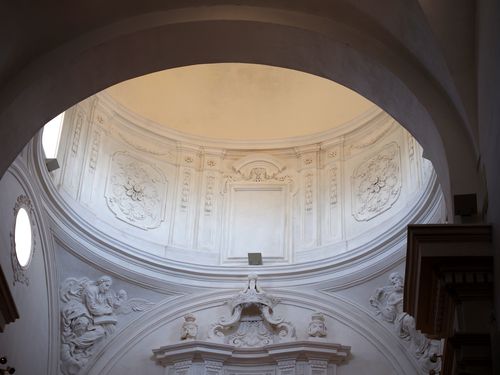
Erice • San Giuliani church: cupola
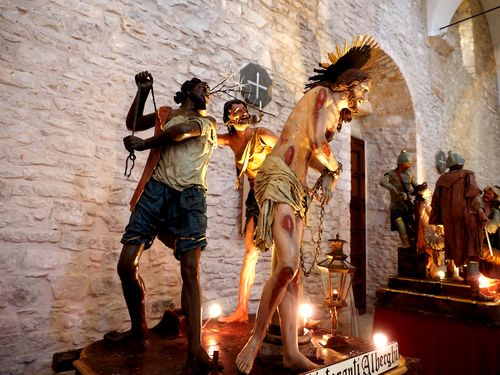
Erice • San Giuliani church: scene of the passion of Christ
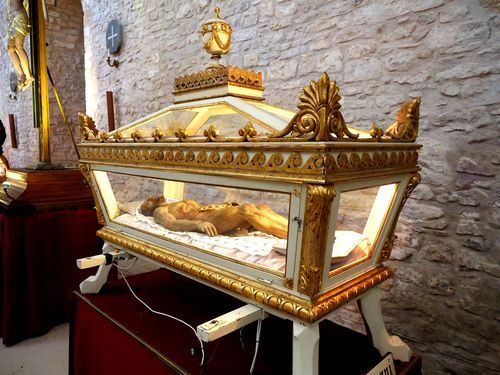
Erice • San Giuliani church: Recumbent figure of Jesus after the crucifixion
Monument profile
San Giuliani church
Monument category: Church
Monument family: Church, cathedral, basilica, chapel
Monument genre: Religious
Cultural heritage: Christian
Geographic location: Erice • Sicily • Italy
Construction period: 11th century AD
• Links to •
• List of videos about Erice on this site •
Erice • Streets and Churches of the Medieval City
The Political and Social Motivations Behind the Construction of San Giuliani Church in Erice
Political and Social Motivations
The San Giuliani Church in Erice, Italy, was constructed in the 11th century, during a period of significant political and social change on the island of Sicily. The primary motivation behind its construction was the consolidation of Norman power following their conquest of Sicily. After the Normans, led by Roger I, seized control of the island from the Muslims in the late 11th century, they sought to solidify their authority and integrate Sicily into the broader Christian world. Building churches like San Giuliani was a strategic move to assert Norman dominance, demonstrate their piety, and strengthen the Christian presence in a region that had been under Islamic rule for more than two centuries.
Socially, the construction of San Giuliani Church served to unify the local population under the banner of Christianity. It became a focal point for the community, helping to integrate the diverse cultures that existed in Sicily at the time, including Greek, Arab, and Latin influences. The church provided a space for religious worship and community gatherings, reinforcing social cohesion and stability in a region that had experienced significant upheaval.
Historical Events and Their Impact on Erice
Throughout its history, San Giuliani Church has witnessed and been shaped by various significant historical events. One of the most impactful was the transition from Norman to Angevin and then to Aragonese rule in Sicily. Each of these ruling powers brought with them different cultural and architectural influences, which are reflected in the modifications made to the church over the centuries. For instance, during the Aragonese period, Gothic elements were introduced into the church’s architecture, reflecting the broader European trends of the time.
These changes were not merely aesthetic; they symbolized the shifting power dynamics in the region. The church, originally built as a statement of Norman power, evolved to incorporate elements from subsequent rulers, thereby becoming a living testament to the complex and layered history of Sicily.
Contextualizing the Era Globally
The 11th century, when San Giuliani Church was built, was a time of great geopolitical change not just in Sicily but across the world. In Europe, the Christian kingdoms were expanding their influence through the Crusades, which began in 1096. This was a time of intense religious conflict and cultural exchange between the Christian and Muslim worlds. In the East, the Byzantine Empire was struggling to maintain its territories, while in Asia, the Song Dynasty in China was experiencing a golden age of cultural and technological advancements. In the Americas, the Mayan and Aztec civilizations were flourishing, though they were largely isolated from the events in Europe and Asia.
In comparison to these regions, Sicily was a melting pot of cultures, a crossroads between East and West, where Norman, Arab, Byzantine, and later Spanish influences converged. The construction and subsequent transformations of San Giuliani Church reflect this unique position of Sicily in the medieval world.
Major Transformations and Cultural Influences
Over the centuries, San Giuliani Church has undergone several significant transformations, each reflecting the changes in political power and cultural influences in Sicily. Initially constructed in the Norman style, the church later saw the introduction of Gothic elements during the Angevin and Aragonese periods. These architectural modifications were often driven by the desire of new rulers to leave their mark on the region, blending their own cultural heritage with the existing local traditions.
For example, the use of pointed arches and more intricate stonework during the Gothic period added a layer of refinement to the original Norman structure, symbolizing the growing connection between Sicily and the rest of Europe. These transformations not only enhanced the aesthetic appeal of the church but also served as a visual record of the island’s history, marking the transition of power and the fusion of diverse cultural elements.
Cultural Significance and Current State of Conservation
Today, San Giuliani Church is a culturally significant monument that embodies the rich and complex history of Erice and Sicily as a whole. Its architectural features and historical layers make it an important symbol of the island’s past, illustrating the ways in which different cultures and powers have shaped its identity over the centuries.
The current state of conservation of San Giuliani Church is relatively stable, though it faces several challenges. The natural aging of materials, combined with the effects of climate change and increased tourism, poses a threat to the integrity of the structure. Preservation efforts must balance the need to maintain the church’s historical authenticity with the practical requirements of modern conservation techniques.
Challenges and Future Preservation Strategies
Preserving San Giuliani Church requires careful management of both the physical structure and the surrounding environment. Specific challenges include protecting the church from moisture damage, temperature fluctuations, and the wear and tear caused by visitors. Additionally, as the church is not currently listed as a UNESCO World Heritage site, it does not benefit from the same level of international support and recognition that other historic sites might receive.
Future preservation strategies should focus on maintaining the traditional methods of restoration while incorporating modern technology to monitor and protect the building. Public awareness and sustainable tourism practices will also be crucial in ensuring that San Giuliani Church remains a well-preserved and celebrated monument for generations to come.
Conclusion
The San Giuliani Church in Erice stands as a powerful symbol of the political and cultural shifts that have shaped Sicily over the centuries. Its construction was driven by the Normans’ desire to assert their power and integrate the island into the Christian world, and its subsequent transformations reflect the diverse influences that have left their mark on the region. As a monument of great historical and cultural significance, San Giuliani Church continues to be a vital link to Sicily’s rich past, deserving of careful preservation and international recognition.
The Technological Innovation and Cultural Fusion in the Architecture of San Giuliani Church in Erice
Illustration of Technological Advancement and Innovation
The San Giuliani Church in Erice, Italy, is a prime example of the technological innovation and architectural advancement characteristic of the 11th century. Constructed during the Norman period, the church embodies the technical prowess and aesthetic ambitions of the time. The use of local limestone, a material chosen for its durability and abundance in the region, was central to the construction. This stone was meticulously cut and assembled to create the robust walls and vaulted ceilings that define the church’s structure.
The Normans introduced advanced building techniques, including the use of pointed arches and ribbed vaults, which allowed for greater height and stability in the construction. These innovations not only reflected the grandeur and power of the Normans but also marked a significant departure from the simpler Romanesque styles prevalent in earlier periods. The use of ribbed vaults, in particular, enabled the creation of more expansive and open interior spaces, enhancing the church's acoustics and its ability to host large congregations.
A Unique Blend of Regional and Foreign Artistic Traditions
The architectural features of San Giuliani Church illustrate a unique blend of regional artistic traditions and foreign influences, a testament to the cultural crossroads that Sicily represented during the Middle Ages. While the overall structure of the church is distinctly Norman, elements of Arab and Byzantine influence are evident in its decorative motifs and architectural details.
The pointed arches and ribbed vaults introduced by the Normans are combined with intricate geometric patterns and floral carvings that bear the imprint of Islamic art, a legacy from the period of Arab rule in Sicily. These decorative elements, while subtle, add a layer of complexity and beauty to the church, reflecting the synthesis of different cultural influences. The presence of Gothic elements, such as the use of pointed arches, further illustrates the ongoing integration of new styles and techniques as the region came under the influence of the Angevin and Aragonese rulers.
Notable Structure and Layout
San Giuliani Church features a simple yet effective basilica plan, characterized by a central nave flanked by two aisles. This layout, typical of Norman churches, was designed to create a sense of grandeur and openness, drawing the eye towards the altar and the vaulted ceiling above. The church’s structure is reinforced by thick stone walls, which not only support the weight of the vaulted ceiling but also serve as a defense mechanism, reflecting the need for security during a tumultuous period in Sicilian history.
One notable aspect of the church’s architecture is its use of advanced masonry techniques, which ensured the precise alignment and stability of the stone blocks. This attention to detail is evident in the smooth transitions between the different sections of the church, from the entrance to the apse, and in the seamless integration of structural and decorative elements. The church’s acoustics, enhanced by the vaulted ceilings, were also a significant consideration in its design, ensuring that the spoken and sung liturgies could be heard clearly throughout the space.
Cultural Recognition and Impact on Preservation
Although San Giuliani Church is not currently listed as a UNESCO World Heritage site, it is recognized for its historical and cultural significance, particularly as a representation of Norman architecture in Sicily. The church’s blend of architectural styles and its well-preserved state contribute to its recognition as an important cultural monument, attracting visitors and scholars alike.
The preservation of San Giuliani Church presents several challenges, primarily related to the natural aging of materials and the impact of climate change. The limestone used in the construction is susceptible to erosion and weathering, requiring ongoing maintenance and conservation efforts. Additionally, the increase in tourism poses a risk to the preservation of the church’s delicate architectural details, necessitating careful management to balance accessibility with the need for protection.
Conclusion
The architecture of San Giuliani Church in Erice stands as a testament to the technological innovation and cultural fusion that defined Sicily during the Norman period. The use of advanced construction techniques and the integration of diverse artistic influences reflect the church’s significance as both a religious and cultural landmark. While the church faces modern challenges in terms of preservation, its historical importance and architectural beauty ensure that it remains a vital part of Sicily’s rich heritage.