

 Français (France)
  Nederlands (nl-NL)
 Castello del Balio, located in Erice, Sicily, is a historical site offering panoramic views of the surrounding area. Originally built for defensive purposes, it is an integral part of Erice's heritage and is surrounded by gardens that enhance its beauty. The castle is a popular destination for its stunning landscapes and cultural significance in the region's history.

Erice • Castello del Balio

Erice • Castello del Balio
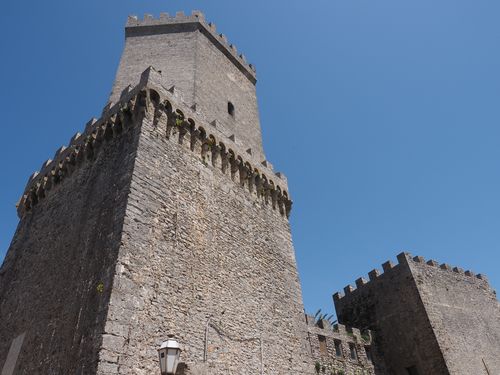
Erice • Castello del Balio
Monument profile
Castello del Balio
Monument categories: Fort, City walls
Monument family: Fort, Fortifications or Citadel
Monument genre: Military
Cultural heritage: Christian
Geographic location: Erice • Sicily • Italy
Construction period: 12th century AD
• Links to •
• List of videos about Erice on this site •
Erice • Streets and Churches of the Medieval City
The Political and Social Motivations Behind the Construction of Castello del Balio in Erice
Political and Social Motivations
The construction of Castello del Balio in Erice, Sicily, dates back to the 12th century, during the Norman rule over the island. The primary political motivation behind the castle’s construction was to consolidate Norman power in Sicily after their conquest. The Normans sought to secure their control over strategic locations, and Erice, with its elevated position offering commanding views of the surrounding area, was an ideal site for a defensive stronghold. The castle served both as a military bastion and an administrative center where the bailli, or steward, managed the region on behalf of the ruling Norman authority.
Socially, the Castello del Balio symbolized stability and protection for the local population. It provided a refuge against external threats, such as pirate incursions and regional conflicts, and reinforced the Christian presence in an area that had been under Muslim control for centuries. The construction of the castle was also a statement of the Normans' intent to establish a lasting legacy in Sicily, integrating the local population into the broader feudal system that characterized Norman rule.
Historical Events and Their Impact on Erice
Over the centuries, Castello del Balio has witnessed several significant historical events that have shaped the political and social landscape of Erice and Sicily. Following the Norman period, Sicily came under the control of the Angevins, Aragonese, and later the Spanish. Each of these powers brought with them different cultural and architectural influences, which are reflected in the modifications made to the castle over time.
For example, during the Aragonese period in the 14th century, the castle was fortified to address the evolving military threats of the time. Gothic elements were introduced, reflecting the broader European trends and the cultural exchanges between Sicily and the continent. These transformations were not merely aesthetic but also practical, enhancing the castle’s defensive capabilities and adapting it to the changing needs of its occupants.
Global Context and Comparison with Other Regions
The construction of Castello del Balio in the 12th century occurred within a global context marked by the expansion of Christian kingdoms and the Crusades. While the Normans were establishing their dominance in Sicily, similar processes were underway in other parts of Europe. In Spain, Christian kingdoms were engaged in the Reconquista, seeking to reclaim territory from Muslim rulers. Meanwhile, in Asia, the Song Dynasty in China was at the height of its cultural and technological achievements, and in the Americas, the Maya civilization was flourishing, although largely isolated from the events in Europe and Asia.
Compared to these regions, Sicily held a unique position as a cultural crossroads between Europe, North Africa, and the Byzantine Empire. The Castello del Balio reflects this rich cultural tapestry, incorporating various architectural influences over the centuries, making it a symbol of Sicily’s role as a melting pot of civilizations.
Major Transformations and Cultural Influences
Throughout its history, Castello del Balio underwent significant transformations that reflect the shifts in power and cultural influences in Sicily. Originally constructed by the Normans, the castle was later modified and fortified by the Aragonese to include more sophisticated defensive features, such as reinforced walls and watchtowers. These additions were crucial in enhancing the castle’s ability to withstand sieges and attacks, responding to the military challenges of the time.
The castle’s architecture also absorbed elements from the Gothic and Baroque styles, reflecting the changing tastes and influences of successive rulers. These transformations were not just architectural; they also signaled the evolving role of the castle from a purely defensive structure to an administrative and symbolic center of power.
Cultural Significance and Current State of Preservation
Today, Castello del Balio is considered an important cultural landmark, representing the complex history of Erice and Sicily. The castle attracts many visitors for its panoramic views and historical architecture, offering a glimpse into the island’s rich past. The current state of the castle is relatively well-preserved, though ongoing efforts are required to maintain its structural integrity in the face of modern challenges.
Challenges of Preservation and Future Strategies
Preserving Castello del Balio poses several specific challenges. The natural wear and tear caused by the climate, particularly erosion from wind and humidity, threaten the structural integrity of the castle. Additionally, the increasing number of tourists puts additional strain on the site, requiring careful management to balance accessibility with preservation.
Future conservation strategies should focus on combining traditional restoration techniques with modern monitoring and maintenance methods. Involving the local community and raising public awareness about the significance of the monument are also crucial for ensuring its preservation for future generations.
Conclusion
Castello del Balio in Erice is more than just a medieval fortress; it is a testament to the architectural ingenuity and cultural fusion that characterize Sicily’s complex history. Its construction, utilizing advanced techniques for the time, and its blend of artistic influences illustrate the richness and diversity of the traditions that have shaped the region. Preserving this monument is essential to ensure that this unique heritage continues to inspire and educate future generations while highlighting Sicily’s role as a crossroads of civilizations.
Architectural Innovation and Cultural Fusion at Castello del Balio in Erice
Technological Advancements and Construction Techniques
The Castello del Balio in Erice, Sicily, stands as a testament to the technological advancements and architectural innovation of the medieval period. Constructed in the 12th century by the Normans, the castle was strategically designed to maximize its defensive capabilities while reflecting the grandeur of its time. The primary material used in its construction was local limestone, chosen for its durability and availability in the region. This stone was meticulously cut and assembled to create the thick, imposing walls that characterize the castle, providing both strength and resistance to potential attackers.
One of the most notable techniques employed in the construction of Castello del Balio was the use of scarp walls—walls that are inclined outward. This design feature was crucial for enhancing the defensive strength of the castle, making it more difficult for siege weapons to breach the walls. Additionally, the layout of the castle took full advantage of Erice’s elevated position, with watchtowers strategically placed to offer panoramic views of the surrounding area, allowing for early detection of any approaching threats.
A Unique Blend of Regional Traditions and Foreign Influences
The architecture of Castello del Balio is a remarkable example of how regional traditions and foreign influences can be harmoniously integrated into a single structure. While the overall design reflects the military architecture typical of the Norman period, the castle also incorporates elements from Arab, Byzantine, and later Gothic styles, reflecting the diverse cultural history of Sicily.
The Normans, who ruled Sicily after its conquest from the Arabs, adopted and adapted many of the architectural and artistic traditions they encountered on the island. This is evident in the decorative elements of the castle, such as the use of pointed arches—a hallmark of Norman architecture—blended with intricate geometric patterns that are reminiscent of Islamic art. The influence of Byzantine architecture can also be seen in certain interior features, such as mosaics and the layout of specific rooms, which reflect the blend of cultural influences that characterized Sicily during the medieval period.
Notable Structure and Layout
The layout of Castello del Balio is designed to take full advantage of its strategic location atop a rocky plateau. The castle’s plan includes a series of concentric walls and defensive structures, with the inner keep serving as the last line of defense. This multi-layered defense system was a significant technological innovation at the time, reflecting the advanced military engineering skills of the Normans.
One particularly interesting anecdote about the castle’s construction involves the use of hidden passageways and escape routes. These were built into the walls and foundations of the castle, allowing defenders to move unnoticed or retreat in the event of a siege. This feature highlights the strategic thinking that went into the castle’s design, ensuring that it could withstand prolonged attacks while providing safe havens for its inhabitants.
International Recognition and Conservation
Although Castello del Balio is not currently listed as a UNESCO World Heritage site, it holds significant cultural and historical value, contributing to its recognition on an international level. The castle’s architecture, which showcases a unique blend of styles and influences, has made it a subject of interest for historians, architects, and tourists alike. The surrounding gardens, which were added in later centuries, further enhance the site’s aesthetic appeal, blending Italian and Arabic landscape design traditions.
The preservation of Castello del Balio faces several challenges, primarily due to its age and the natural wear and tear caused by the elements. The limestone walls are particularly susceptible to erosion from wind and rain, necessitating ongoing conservation efforts. The increasing number of visitors also poses a risk to the site’s structural integrity, requiring careful management to balance tourism with preservation.
Conclusion
Castello del Balio in Erice is not just a medieval fortress; it is a symbol of architectural innovation and cultural fusion. The use of advanced construction techniques and the integration of diverse artistic influences reflect the rich history of Sicily as a crossroads of civilizations. The castle’s design, which combines defensive strength with aesthetic beauty, continues to inspire admiration and respect, making it a crucial part of Sicily’s cultural heritage. Preserving this monument is essential to ensure that its historical significance and architectural brilliance are appreciated by future generations.