Français (France)
  Nederlands (nl-NL)
 Explore Agra, the heart of the Mughal Empire, in our video under 9 minutes. Dive into the majestic history of Agra Fort and the Taj Mahal, an eternal symbol of love. A captivating visual journey awaits, unveiling the wonders of this ancient city.
00:00 • intro | 01:04 • Agra fort | 04:14 • Taj Mahal
Personal creation from visual material collected during my trip India • Rajasthan and Varanasi (2015)
Map of places or practices in Agra on this site
• Use the markers to explore the content •
Agra, Between the Taj Mahal and the Red Fort, Jewels of Mughal India
A Major City of Imperial Indian History
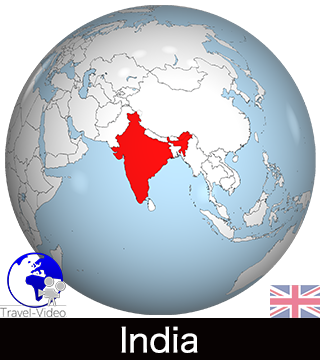
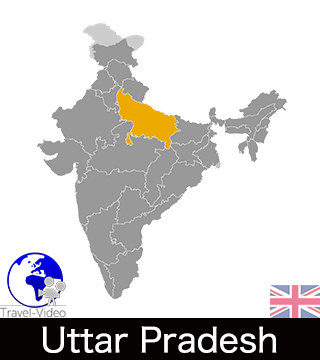
Located in Uttar Pradesh, Agra is one of the most emblematic cities in the history of India. For several periods, it served as a capital of the Mughal Empire and became the setting for some of the finest monuments of South Asia. Among them, the Taj Mahal and the Red Fort of Agra stand out as two masterpieces that reflect political authority, artistic refinement and the strategic importance of the city between the sixteenth and seventeenth centuries.
Built along the banks of the Yamuna River, Agra was once a major administrative, commercial and cultural centre. Palaces, gardens, mausoleums and fortified enclosures formed part of a sophisticated urban landscape shaped by imperial ambition. This video presents two of its most celebrated sites and helps explain how military architecture, royal residence and funerary symbolism coexisted within the same historic city.
Two Complementary Monuments of the Mughal Age
The Red Fort of Agra is one of the grand fortified complexes of Islamic India. Built mainly in red sandstone during the reign of Akbar in the late sixteenth century, it combines massive walls, monumental gateways, courtyards and elegant palace structures. Behind its defensive exterior lies a true royal city where ceremonial, political and residential functions were closely connected.
Within the fort, later emperors introduced new marble palaces and refined audience halls, especially under Shah Jahan. Open pavilions, symmetrical gardens and terraces overlooking the river reveal a court culture in which architecture played a central role in representing imperial prestige.
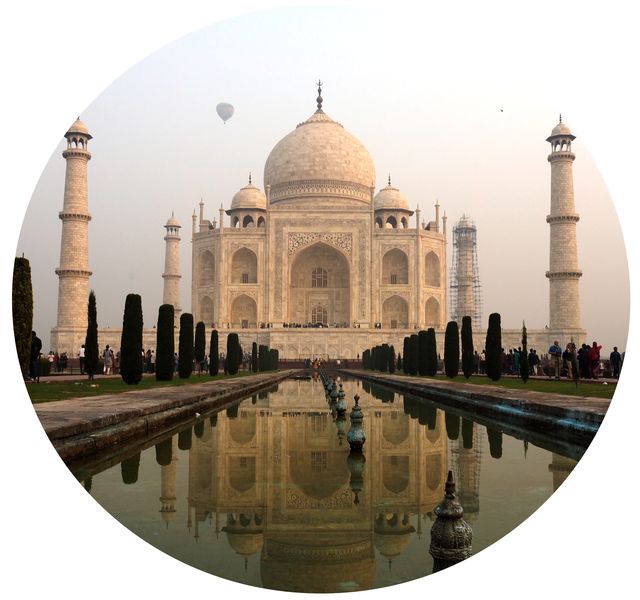
The Taj Mahal belongs to a different yet related architectural world. Commissioned by Shah Jahan in memory of his wife Mumtaz Mahal during the seventeenth century, it has become one of the most famous monuments on earth. Its white marble surfaces, perfect proportions and carefully planned garden setting have made it a universal symbol of beauty and remembrance.
While the fort expresses sovereignty, defence and royal administration, the Taj Mahal represents dynastic memory, spiritual meaning and the search for ideal form. Together they summarise two essential dimensions of Mughal civilisation.
Historical and Cultural Context
Agra gained prominence during the late Delhi Sultanate and became one of the principal centres of the Mughal Empire after the sixteenth century. Under Akbar, the city was transformed into an active imperial capital attracting administrators, craftsmen, merchants and scholars from many regions.
The Mughal rulers developed a court culture that blended Persian, Central Asian and Indian influences. This synthesis is clearly visible in Agra’s monuments. Red sandstone dominates many earlier constructions, while white marble, inlaid stone decoration and increasingly delicate forms became more prominent in the following century.
The Taj Mahal was built during a period of artistic and economic confidence. The Red Fort, by contrast, reflects several generations of evolving imperial power. Tradition also associates the fort with the final years of Shah Jahan, who is said to have been confined there with distant views toward the mausoleum he had commissioned.
Although the imperial court later shifted to other capitals, Agra remained an important urban centre. Today it continues to embody the grandeur of Mughal India and attracts visitors from around the world.
What the Videos on This Site Make Especially Clear
The videos presented on this site are often created from carefully selected photographs arranged in a thoughtful sequence. This approach is particularly effective for Agra, where two very different monuments can be understood in relation to one another.
For the Red Fort, broader views help explain the scale of the ramparts, the layered organisation of its enclosures and the logic of a fortified palace-city. Closer images then reveal arches, carved details, marble halls and ornamental screens that might otherwise receive less attention.
In the case of the Taj Mahal, the visual progression highlights the importance of perspective. The central axis, reflecting pools, minarets and gradual approach toward the mausoleum appear as parts of a carefully composed landscape. The monument can thus be appreciated not only as a building, but as a complete spatial design.
Changes of light also bring out the contrast between materials. The red sandstone of the fort shifts in tone throughout the day, while the white marble of the Taj Mahal responds delicately to shadow, sunlight and atmosphere. These variations help reveal the intentions of Mughal architects.
Finally, moving from one site to the other makes their geographic proximity more understandable while emphasizing their different purposes within the same imperial capital.
Two Masterpieces That Explain an Empire
Agra offers an exceptional introduction to Mughal history through two of the most celebrated monuments in Asia. The Red Fort evokes power, strategy and court life, while the Taj Mahal expresses memory, funerary art and architectural perfection.
The detailed pages linked to this video provide the opportunity to explore each site more closely, from historical development and design principles to their enduring place in the heritage of India.





Audio Commentary Transcript
The Agra Fort is the largest fort in India with its walls 23 meters high and 2.5 kilometers long. This fort is a UNESCO World Heritage Site. The origin of the fort dates back to the 11th century. It has been enlarged many times since that time. The last reconstruction was completed in 1573 after 8 years of hard work for more than 4000 men. Red sandstone from neighboring Rajasthan was used while the fort was originally brick.
The Taj Mahal is certainly the most famous monument in all of India. This white marble mausoleum was built by the Mughal Emperor Shah Jahan in memory of his wife Arjumand Banu Begam, who died in childbirth while giving birth to their fourteenth child. The construction of the monument lasted more than 20 years and mobilized 20,000 people on the site. Among these craftsmen, some came from Europe and Central Asia. The monument was completed in 1654.
Music:
- - Suresh Prajapati (Inde) - Indian Classical Instrumental - Flute Tabla Raga 1, Suresh Prajapati
- (Inde) - Musik Fur Vina - Krti: Samkari Niv'ani, Museum Collection Berlin (MC 8)
- - Lakshmi Shankar (Inde) - Inde du Nord (North India) - Season and Time - Raga Khafi, Ocora