Français (France)
  Nederlands (nl-NL)
 00:00 • intro | 00:52 • street scenes | 02:35 • cows in town | 06:50 • Jain Shri Neminath Digambar Mandir temple | 11:11 • Rasjwadah palace | 13:22 • Kanch Mandir
Personal creation from visual material collected during my trip India - Kumbh Mela • Madhya Pradesh • Maharashtra • Goa (2018)
Map of places or practices in Indore on this site
• Use the markers to explore the content •
Indore between Jain Heritage, Urban Life and Maratha Architecture
A major city of central India between commerce, religion and historical legacy
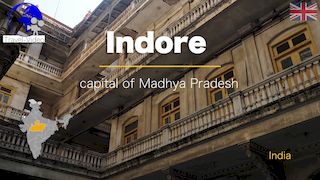
Located in the state of Madhya Pradesh, the city of Indore occupies an important place in the economic and urban organization of central India. This video presents different aspects of the city, from everyday street scenes to monuments connected with its princely past and the long-established presence of Jain communities. The result is a broader portrait of an Indian metropolis where commercial activity, religious traditions, and historical architecture coexist within a dense and active urban environment.
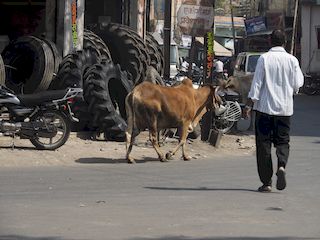
The film also highlights elements that remain characteristic of daily life in many Indian cities, including the presence of cows in urban streets. These scenes illustrate both the religious and cultural significance associated with cattle in Hindu society and the way traditional practices continue to interact with modern urban spaces.
Through its temples, markets, traffic, and former royal buildings, Indore reveals several dimensions of the history of Madhya Pradesh, a region shaped by merchant networks, regional dynasties, and influential religious communities.
Jain temples and princely architecture in the urban landscape
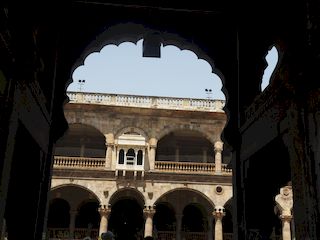
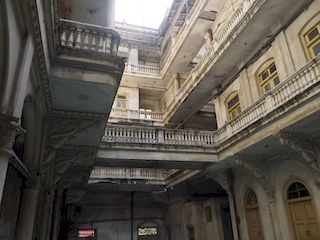
Among the monuments visible in the video is the Rajwada Palace, one of the best-known historical landmarks of the city. This former residence of the Holkar rulers reflects the political importance of the Maratha dynasty that controlled much of the Malwa region between the eighteenth and nineteenth centuries. The architecture combines Maratha, Mughal, and regional influences visible in the façades, balconies, gateways, and interior organization of the palace complex.
The video also presents the Kanch Mandir, a Jain temple especially known for its interior decoration composed of mirrors, glass mosaics, and reflective surfaces. The extensive use of glass distinguishes the sanctuary from many other religious buildings in the region. The decorative richness of the temple reflects both the prosperity of its patrons and the historical role played by Jain merchant communities within Indore.
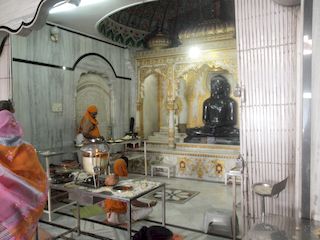
Another important religious site shown in the film is the Jain Shri Neminath Digambar Mandir. Associated with the Digambara Jain tradition, the temple illustrates the long-standing presence of Jainism in the commercial and urban development of the city. Its architecture and religious spaces reveal part of the cultural diversity that characterizes Indore today.
Historical and cultural context of Indore
The development of Indore is closely connected to the rise of the Holkar dynasty, a Maratha ruling family that established political authority over the Malwa region during the eighteenth century. Thanks to its strategic location between northern and western India, the city gradually became an important administrative and commercial center. Trade networks contributed significantly to the prosperity of local merchant communities, including influential Jain families involved in religious patronage and temple construction.
The present-day urban landscape combines historical buildings with expanding commercial districts and modern infrastructure. The street scenes visible in the video show the constant interaction between dense traffic, religious activity, local commerce, and historical architecture. Monuments are not isolated from the life of the city but remain integrated into its daily rhythm.
Jainism occupies a particularly important place in the cultural identity of Indore. Wealthy merchant patrons financed richly decorated temples intended not only as places of worship but also as visible expressions of community prestige. This tradition explains the quality of decorative work, sculptural detail, and interior ornamentation visible in several of the city’s religious buildings.
The coexistence of Hindu and Jain elements within the urban environment also reflects the historical diversity of central India, where different religious traditions developed side by side within major commercial centers.
What the videos on this site make particularly easy to observe
The animated photographic sequences used in these videos make it possible to observe the architectural and urban contrasts of Indore with particular clarity. Slow transitions and carefully framed images help reveal the façades of the Rajwada Palace, the reflective interior surfaces of Kanch Mandir, and the decorative details of Jain religious architecture.
This visual approach also improves the readability of the city itself. Street scenes, market activity, religious spaces, and traffic patterns can be observed progressively rather than through rapid moving footage. The relationship between monuments and their surrounding urban environment therefore becomes easier to understand.
The use of animated photography is especially effective for architectural subjects involving sculptural detail, symmetry, or interior decoration. Light reflections inside Kanch Mandir, carved elements on temple façades, and the spatial organization of ceremonial spaces remain visible long enough to allow careful observation.
The transitions between everyday urban scenes and historical monuments also reinforce the continuity between contemporary life and older cultural traditions still present within the city.
A contemporary city shaped by historical and religious influences
This exploration of Indore presents more than a simple collection of monuments. Through princely architecture, Jain temples, and scenes of daily urban activity, the video reveals how historical power, commercial development, and religious traditions continue to shape one of the major cities of central India. The associated detailed pages further expand the understanding of the monuments and cultural heritage visible throughout the journey.
Links to related pages
• Main dynasties that ruled the region •



Audio Commentary Transcript
The Rajwad Palace, also named Holkar Palace, is one of the beautiful attractions of the city of Indore. The construction is around 200 years old ,and the structure mixes Mughol, French and Marathi elements. The Marathi Empire developed around the end of the 16th century in northern India, succeeding the Mughals, and disappearing with the British conquest.
At the beginning of the 20th century, the wealthy merchant and industrialist Sir Seth Hukumchand built two white stone palaces in Indore, the Shish Mahal and the Kanch Ka Mandir. It is the interior of these palaces that is most remarkable (but we were unable to take photos there) because it is completely covered with glass panels and mosaics (including the floors, columns, walls and ceilings).
Music:
- (Inde) - North Indian Folk Music - Kajri, Odeon (3 C064-17859)
- (Inde) - Inédit 2 - Kawwali Chant Soufi - Man Kountou Mawala Ali Mawla, Inédit (MCM 002)
- (Inde) - Rajasthan vol 1. Musiciens professionnels populaires. - Musique Martiale avec Timbales et Hautbois, Ocora (OCR 81)
- - Zakir Hussain; Shivakumar Sharma (Inde) - Hundred strings of santoor - Raga Mishra Khamaj 2, Chhanda Dhara (SNDC 7786)