

 Français (France)
  Nederlands (nl-NL)
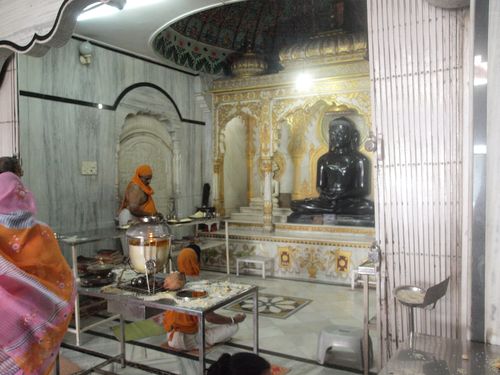
 The Jain Shri Neminath Digambar Mandir, located in Indore, Madhya Pradesh, India, is a significant place of worship for the Jain community. Dedicated to Shri Neminath, the twenty-second Tirthankara in Jainism, the temple serves as a central hub for religious practices and spiritual reflection. Its design embodies the principles of simplicity and devotion that are key to the Jain tradition. Visitors are drawn to this site for its peaceful atmosphere and cultural significance.


Monument profile
Jain Shri Neminath Digambar Mandir
Monument categories: Pilgrimage site, Jain temple
Monument families: Temple • Pilgrimage site or memorial
Monument genres: Religious
Cultural heritage: Jain
Geographic location: Indore • Madhya Pradesh • India
Construction period: Unknown era
• Links to •
• List of videos about Indore on this site •
Indore, economic capital • Madhya Pradesh, India
Jain Shri Neminath Digambar Mandir: Political and Social Significance Through History
Political and Social Motivations Behind Its Construction
The Jain Shri Neminath Digambar Mandir, located in Indore, Madhya Pradesh, India, is dedicated to Shri Neminath, the 22nd Tirthankara in Jainism. Although its exact construction date remains uncertain, it is believed to have been built during a period of significant cultural and economic growth in the region. The temple’s construction was driven by the influence of the Jain merchant class, who sought to establish religious centers reflecting their economic strength and cultural prominence. Politically, such projects were often supported by regional rulers to foster alliances with the influential Jain community, which played a pivotal role in trade and administration.
Historical Events and Regional Impact
Over centuries, the region of Indore witnessed the rule of several dynasties, including the Mughals, Marathas, and British. Each of these periods left a distinct imprint on the temple and its surrounding community. Under the Maratha rule, the Jains enjoyed relative freedom to expand their religious practices, contributing to the growth of temples like the Jain Shri Neminath Digambar Mandir. The arrival of the British introduced modernization efforts, but also brought challenges to traditional systems, reshaping the socio-political landscape of Indore.
Global Context and Comparisons
The temple’s construction coincided with a global period of religious and cultural renewal. In the 18th and 19th centuries, as colonial powers reshaped much of the world, religious structures in regions such as Southeast Asia and the Middle East were also being constructed or renovated as symbols of identity and resilience. Similarly, the Jain Shri Neminath Digambar Mandir reflects the Jain community's efforts to preserve and celebrate their spiritual heritage amidst evolving political dynamics.
Transformations of the Monument Over Centuries
The temple has undergone significant changes, both structurally and symbolically. Renovations and expansions added intricate carvings, frescos, and auxiliary structures that highlight artistic advancements over time. The influence of external cultures, such as Mughal ornamental styles and Maratha architectural sensibilities, is visible in the temple's design. These transformations mirror the shifts in power and cultural exchange that defined the region’s history.
Cultural Importance and Current State of Preservation
The Jain Shri Neminath Digambar Mandir remains a vital spiritual and cultural hub for the Jain community. Its enduring significance is attributed to its role in religious rituals, community gatherings, and cultural preservation. The temple is in reasonably good condition, thanks to the ongoing efforts of local Jain organizations and devotees. However, some areas require restoration to address natural wear and tear.
Challenges to Preservation
Modern challenges to the temple’s preservation include urbanization, pollution, and the impact of climate change. Urban sprawl threatens the temple's surroundings, while increasing pollution poses risks to its intricate carvings and frescos. Conservation efforts also face financial and technical constraints, as preserving the temple's historical integrity requires skilled artisans and sustainable funding.
Conclusion
The Jain Shri Neminath Digambar Mandir is more than just a religious structure; it is a testament to the social, political, and cultural evolution of Indore. Its architecture and history reflect the resilience and adaptability of the Jain community through centuries of change. Preserving this monument is essential to safeguarding a vital piece of India’s cultural and spiritual heritage, ensuring it continues to inspire future generations.
Architectural Excellence and Cultural Synthesis: Jain Shri Neminath Digambar Mandir in Indore
Technological Advancements and Architectural Innovation
The Jain Shri Neminath Digambar Mandir, located in Indore, showcases the technological and architectural ingenuity of its era. Constructed with advanced techniques for its time, the temple demonstrates a deep understanding of material science and structural design. The use of high-quality sandstone and marble, both durable and aesthetically pleasing, highlights the sophistication of the artisans. Intricate carving techniques, employed to create detailed motifs and symmetrical patterns, reflect the advanced craftsmanship of the period. The temple’s ability to blend functionality with artistic elegance underscores its significance as a masterpiece of engineering and design.
Materials and Techniques Reflecting Grandeur
The primary materials used in the temple’s construction include locally sourced sandstone and imported marble. These materials were carefully chosen for their strength, versatility, and visual appeal. The artisans utilized precision carving to produce elaborate designs on pillars, domes, and ceilings, incorporating motifs that represent spiritual themes. Techniques such as interlocking stone masonry ensured the structure's stability while avoiding the use of binding materials like cement, a testament to the technological prowess of the builders.
A Unique Blend of Regional and Foreign Traditions
The architecture of the Jain Shri Neminath Digambar Mandir reflects a harmonious fusion of regional styles and foreign influences. Traditional Jain aesthetics, emphasizing symmetry, geometry, and spiritual symbolism, are evident throughout the temple. Meanwhile, external influences, including Mughal floral patterns and Maratha design elements, can be observed in the ornamental details. This blend of styles underscores the cultural interactions that shaped the region’s artistic heritage and highlights the temple’s role as a conduit for preserving and evolving these traditions.
Notable Structure and Layout
The temple follows a traditional Jain architectural layout, with a sanctum sanctorum (garbhagriha) at its core, surrounded by intricately carved halls (mandapas) and corridors. The shikhara (spire) above the sanctum is adorned with layers of sculptural details that symbolize the ascent towards spiritual enlightenment. The symmetrical alignment of the columns and the dome’s acoustics demonstrate a meticulous understanding of geometry and engineering. The orientation of the temple, designed to capture natural light, enhances the visual and spiritual experience for devotees.
Anecdotes and Historical Significance
While precise records of the temple’s construction are scarce, oral traditions suggest that its builders were master artisans who viewed their work as a form of devotion. Anecdotes speak of carvings so intricate that they required months to complete a single panel. Such attention to detail not only elevated the temple's artistic value but also symbolized the community's dedication to their spiritual practices.
International Recognition and UNESCO Consideration
Although the Jain Shri Neminath Digambar Mandir has not been inscribed as a UNESCO World Heritage Site, its architectural brilliance and cultural importance have earned it national recognition. The temple serves as a prominent spiritual and cultural landmark, attracting visitors and scholars interested in Jain heritage. Inclusion in the UNESCO list would further elevate its status, providing additional resources and global attention for its preservation.
Challenges to Preservation
Preserving the temple faces modern challenges, including urban development, pollution, and climate change. The intricate carvings are particularly vulnerable to weathering and air pollution, while expanding urban infrastructure poses a threat to its surrounding environment. Sustained conservation efforts, supported by local and national initiatives, are essential to maintaining the integrity and historical significance of the temple.
Conclusion
The Jain Shri Neminath Digambar Mandir stands as a testament to the architectural innovation and cultural synthesis of its time. Its materials, techniques, and artistic elements reflect a deep connection to spiritual and cultural ideals, making it a symbol of the region’s rich heritage. Ensuring the preservation of this architectural marvel is crucial for safeguarding its legacy and promoting a broader appreciation of Jain art and culture.