Français (France)
  Nederlands (nl-NL)
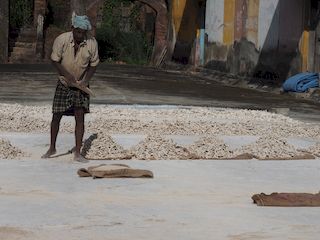
 00:00 • intro | 00:51 • Kathakali Theater | 01:00 • makeup actors | 01:39 • the performance | 08:51 • Dhobi Khana | 12:51 • the sea and the beach | 14:32 • Chinese fillets | 17:17 • the tomb of Vasco da Gama | 17:54 • the jewish quarter and the ginger factory
Personal creation from visual material collected during my trip India • South India • Tamil Nadu and Kerala (2018)
Map of places or practices in Kochi on this site
• Use the markers to explore the content •
Kochi Between Performance Arts, Maritime Memory and Layered Heritage
A Coastal City Shaped by Exchange
Kochi holds a distinctive place on the southwest coast of India. Known historically as an active port on the Arabian Sea, the city developed through centuries of contact with merchants, sailors, religious communities and colonial powers. Its urban landscape reflects these encounters through temples, churches, old trading streets, working waterfronts and enduring local traditions.
This video approaches Kochi through several complementary perspectives. Rather than focusing on a single monument, it presents performing arts, urban labour, coastal life and historic neighbourhoods. The result is a broader portrait of a city where everyday practices and long historical processes remain closely connected.
Main Places and Themes Seen in the Video
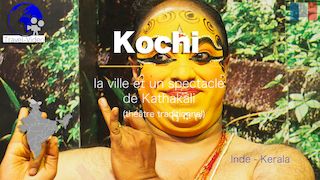
A major section is devoted to Kathakali, one of Kerala’s most celebrated artistic traditions. The film does not limit itself to the stage performance. It also highlights the preparation of the actors, especially the elaborate make-up process. In Kathakali, colours, facial designs and costume elements help identify character types, moral qualities and narrative roles. Watching the transformation from performer to character is essential to understanding the art form.
The performance itself reveals a theatre language based on gesture, eye movement, posture, rhythm and musical accompaniment. Even viewers unfamiliar with the stories can perceive the discipline and precision required.
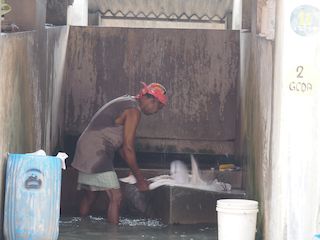
The video then shifts to Dhobi Khana, where washing, drying, folding and sorting clothes are carried out in an organised collective workspace. Such places represent a practical side of urban heritage often overlooked. They show how cities depend not only on monuments, but also on long-established systems of labour and service.
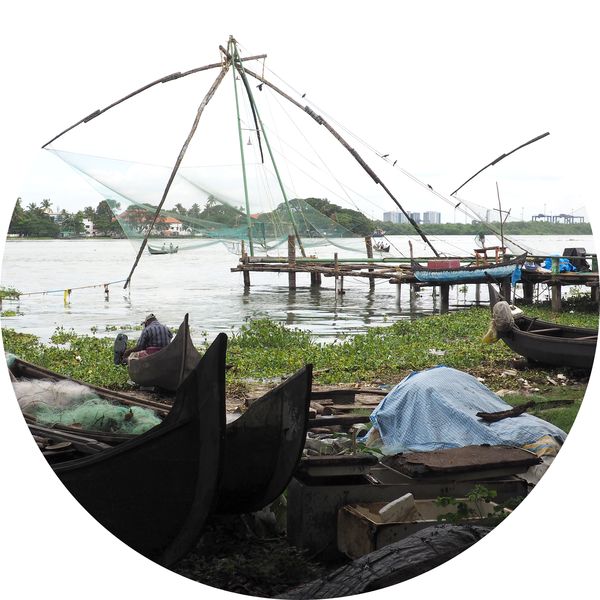
The coast appears through views of sea and beach, followed by the famous Chinese fishing nets of Kochi. These large cantilevered structures are among the best-known symbols of Kochi. Their mechanical simplicity and visual scale connect the city to maritime livelihoods and historic overseas contacts.
Another chapter recalls the early Portuguese period through St. Francis Church, associated with the first burial place of Vasco da Gama before his remains were transferred to Portugal. The journey continues into the old Jewish quarter, where warehouses, trading houses and streets linked to spice commerce evoke Kochi’s international commercial past. The mention of a ginger factory extends that story into the processing and export economy that shaped the region.
Historical, Urban and Cultural Context
Kochi’s rise was closely linked to geography. The sheltered coastal setting and access to inland spice-producing zones made it an important commercial gateway. Pepper, ginger, cinnamon and other goods moved through this port toward markets across the Indian Ocean and beyond.
From the early sixteenth century, Portuguese influence became significant, followed later by Dutch and British control in different phases. Each period left marks on architecture, administrative organisation and trade infrastructure. Churches, warehouses, fortifications and adapted street layouts still reflect these successive layers.
Kochi was also home to long-established mercantile communities, including Jewish groups whose presence contributed to the city’s plural character. Their neighbourhoods became part of a wider mosaic that included local Hindu, Muslim and Christian populations. This diversity helps explain why Kochi developed as both a commercial and cultural centre.
Kathakali belongs to the regional history of Kerala’s courtly and temple-linked performance traditions. Over time it became codified through schools, teachers and repertories. Today, performances in Kochi show how a classical form can remain active in modern cultural life while preserving inherited techniques.
Dhobi Khana and the fishing nets remind visitors that heritage is not limited to ceremonial architecture. Systems of work, technical knowledge and organised daily routines also preserve historical continuity. They reveal how a city functions as much through skilled practice as through its famous landmarks.
What the Videos on This Site Make Especially Clear
Videos built largely from carefully selected and animated photographs offer particular advantages for a place like Kochi. They allow viewers to pause visually on details that might be missed in rapid moving footage. The layered make-up of Kathakali, for example, becomes easier to study when each stage is clearly framed.
Gradual transitions also help explain relationships between very different settings. A theatre interior, an open-air laundry, a seafront fishing zone and an old trading street may seem unrelated at first glance. Seen in sequence, they become parts of the same urban story.
Changes of scale are equally valuable. Wide views place the fishing nets within the coastal landscape, while closer images reveal beams, ropes and counterweights. Architectural details in historic streets can likewise be connected to their wider neighbourhood context.
For complex historic cities, this method supports progressive understanding. The viewer does not simply see isolated attractions, but learns how spaces, activities and memory interact.
A Broader View of Kochi
This video presents Kochi as more than a port or a picturesque coastal destination. It emerges as a city where performance arts, maritime traditions, colonial-era traces and working urban culture continue to coexist. The related detailed pages offer the opportunity to explore each subject further and to understand more fully the many layers of Kochi and Kerala.
Links to related pages
• Main dynasties that ruled the region • •



Audio Commentary Transcript
Narakasuravadham
The son of the king of the sky is sitting quietly, when suddenly a beautiful woman appears, who slowly approaches him, dancing. They like each other from the first sight.
The king's son asks her: Are you a woman from heaven, or what world are you from?
From the heaven retorted the young woman. She was very fond of sex. This put the chip in the ear of the king's son who understood that she was not part of the kingdom of heaven.
In reality she is a demon, and the young man punishes her by disfiguring her and cutting her breasts.
A moral...? "Evil must always be punished" ...
Dhobi Khana
The Dhobi Khana of Cochin (FortCochin) is one of the last traditional washhouses in South India.
In its current form Dhobi Khana was created in 1976 and offers work to many families in the area.
Initially, the Dutch occupation troops created a laundry to wash soldiers' uniforms. It was around 1775.
Music:
- - Gerry Mulligan - Absolutely the best of Gerry Mulligan - Blues at the Roots
- (Inde) - India Folk Music - Dhun, Columbia Records (91 A 02021)
- - Suresh Prajapati (Inde) - Indian Classical Instrumental - Flute Tabla Raga 1, Suresh Prajapati
- (Inde) - India Folk Music - Kathakali (Malabar Village Dance Drama), Columbia Records (91 A 02021)
- - Giuseppe Verdi - Nabucco - Ouverture, Deutsche Grammophon (410512-2)