

 Français (France)
  Nederlands (nl-NL)
 The Jewish Quarter of Kochi is one of the best-known historic districts of the city. It reflects the cultural diversity that shaped this major port of Kerala over many centuries. Its commercial streets, old buildings, and urban atmosphere recall exchanges between local communities and merchants from different parts of the world. The district retains strong heritage and symbolic value in Kochi’s history. Today, it remains an important place for urban memory, craft activities, and the multicultural identity of the Malabar Coast.
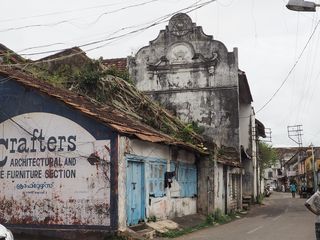
Kochi • Jewish Quarter
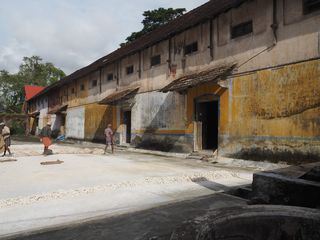
Kochi • Jewish Quarter
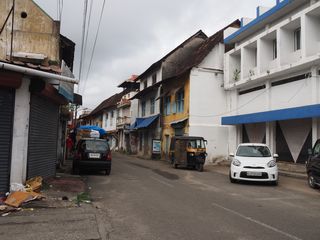
Kochi • Jewish Quarter
Monument profile
Jewish Quarter
Monument category: Historic urban landscape
Monument family: Historic or traditional habitat
Monument genre: Residential
Geographic location: Kochi • Kerala • India
Construction period: 16th century AD
• Links to •
• List of videos about Kochi on this site •
Kochi • Kathakali, Dhobi Khana and Jewish Quarter • Kerala
The Jewish Quarter of Kochi: Formation, Change and Urban Memory
Origins of the Quarter and Community Settlement
The Jewish Quarter of Kochi is generally identified with the historic area known as Jew Town in Mattancherry. Its emergence is closely linked to the relocation of Jewish merchant families from Cranganore (Kodungallur) during the early sixteenth century. Political instability, military conflict, and shifting commercial routes encouraged movement toward Kochi, whose harbour was becoming an increasingly important maritime centre.
The rulers of Kochi allowed the community to settle and trade within the growing port city. The quarter developed progressively rather than through a single planned foundation. Residential buildings, commercial premises and religious institutions were established over time, creating a distinct neighbourhood centred on the synagogue founded in the sixteenth century. The area thus functioned simultaneously as a place of residence, worship and commerce.
A Commercial District in the Indian Ocean Network
The quarter’s historical importance was primarily economic. Located close to the port and market areas, it participated in the export trade of pepper, ginger and other products associated with the Malabar Coast. Merchants based in the quarter maintained links with wider trading circuits reaching West Asia, Europe and other parts of South Asia.
Many buildings combined domestic and mercantile uses. Ground floors often served for storage, negotiation or retail activity, while upper levels or rear sections housed families. Streets became lined with warehouses, shops and houses belonging to traders, brokers and associated craftspeople.
The quarter’s prosperity depended on Kochi’s wider role as a port city where multiple communities interacted. Jewish merchants operated within a commercial environment that also included Hindu, Muslim, Christian and later European interests. This made the neighbourhood both a communal centre and part of a broader urban trading system.
Political Change and Urban Transformation
The district experienced successive political frameworks under Portuguese, Dutch and British influence. Portuguese control from the early sixteenth century altered regional power balances, though Jewish commercial activity continued. Later Dutch authority in the seventeenth century reshaped parts of Kochi’s urban and trading organisation, while British rule introduced new administrative and economic patterns.
Over these centuries, buildings were repaired, adapted or replaced according to commercial needs and family continuity. Fires, humidity, changing ownership and routine rebuilding affected the physical fabric, yet the quarter retained its specialised urban identity.
By the nineteenth and early twentieth centuries, Kochi remained commercially active, but global trade patterns had changed. The quarter no longer held the same strategic position it once possessed, though it continued as a recognised historic neighbourhood with active businesses and community institutions.
Global Historical Context
During the sixteenth century, when the quarter took clearer form, Portuguese maritime expansion was reshaping routes across the Indian Ocean. In Europe, long-distance oceanic trade grew rapidly. The Ottoman Empire remained a major commercial power linking Mediterranean and Asian markets. Across India, coastal states negotiated with emerging European naval powers.
Demographic Change, Heritage and Preservation
A major transformation occurred in the twentieth century when much of Kochi’s Jewish population emigrated, especially after the creation of the State of Israel in 1948. As resident numbers declined, the quarter gradually shifted from a living communal centre toward a heritage district marked by memory, commerce and tourism.
Today the Jewish Quarter remains significant for understanding Kochi’s multicultural history. Its streets, synagogue precinct, old merchant houses and trading spaces preserve evidence of a community that played a visible role in the port city’s commercial life for centuries.
The wider historic area of Fort Kochi and Mattancherry, including this district, was placed by India on UNESCO’s Tentative List in 2025 under the title Historic Port City of Fort Kochi and Mattancherry. This recognition highlights the urban value of the ensemble, even though the quarter itself is not listed as a separate World Heritage property.
Current preservation issues include maintaining historic buildings, managing commercial redevelopment, and transmitting the memory of a community now much smaller than in earlier centuries. The quarter endures as one of the clearest surviving testimonies to Kochi’s long connections with global maritime exchange.
Urban Form and Architectural Character of the Jewish Quarter in Kochi
Urban Setting and Spatial Organization
The Jewish Quarter of Kochi, commonly associated with Jew Town in Mattancherry, is an urban ensemble rather than a single monument. Its architectural value lies in the continuity of streets, plots, commercial buildings, houses and religious structures forming a coherent historic district. The quarter occupies a strategic position between former trading zones, waterfront routes and neighbouring palace areas, reflecting its historical role in mercantile exchange.
The principal street functions as a linear spine along which shops, warehouses and residences are aligned in continuous frontage. Buildings generally follow narrow rectangular plots extending backward from the street, creating a dense ribbon-like urban pattern. This arrangement maximizes commercial visibility while preserving deeper domestic or storage spaces. Secondary lanes and courtyards break this compact fabric and provide light, drainage and service access.
Street proportions are relatively intimate. Continuous facades, projecting roofs and close building lines create shaded pedestrian corridors adapted to the humid tropical climate. The district is read architecturally through rhythm rather than monumentality: repeated doorways, verandas, shutters and rooflines establish cohesion across structures of differing dates.
Building Types: Houses, Shops and Warehouses
The quarter contains mixed-use buildings in which commerce and residence are combined. Many structures present retail or storage functions toward the street, with living quarters located behind or above. This vertical or sequential zoning reflects long-term mercantile practice. Ground floors typically contain broad openings secured by timber shutters or doors, allowing goods to move directly from street to interior.
Domestic units often include entrance halls, central rooms and rear service courts. In some larger properties, internal courtyards improve ventilation and daylight penetration. Staircases, usually compact, connect upper residential levels where ceilings may be higher and openings larger to capture airflow.
Warehouses differ from houses through heavier walls, broader spans and simpler facades. Their interiors prioritize storage volume rather than decorative treatment. Thick masonry and limited openings help moderate heat and humidity, important for preserving spices, textiles or other traded goods.
The ensemble gains character from this constant alternation of commercial and domestic typologies. Rather than separating business from habitation, the quarter integrates them parcel by parcel.
Materials, Construction Techniques and Climatic Adaptation
Construction relies largely on materials common to the Malabar Coast: laterite block or brick masonry, lime mortar, timber framing and clay roof tiles. Laterite, easily quarried when moist and hardening after exposure, provides durable wall mass. Lime plasters historically protected masonry surfaces against moisture while giving facades a smoother finish.
Timber plays a major structural and architectural role. Beams, rafters, upper floors, doors, shutters and balcony elements frequently employ hardwoods available through regional trade networks. Timber also allows flexible repairs and replacement of decayed members in a humid environment.
Pitched tiled roofs are among the quarter’s most visible features. Deep eaves project over facades and sidewalks, shielding walls and openings from monsoon rain while casting shade. Roof slopes facilitate rapid water runoff, while ventilated roof volumes reduce internal heat accumulation.
Openings are calibrated for climate control rather than display alone. Timber shutters, louvered panels and high windows regulate airflow while limiting direct sun and heavy rain intrusion. Verandas and covered thresholds create transitional zones between street and interior.
Architectural Expression and Stylistic Layers
The quarter’s facades are generally restrained. Ornament is secondary to proportion, craftsmanship and practical detailing. Repetition of doors, windows and cornice lines creates order. Color treatments, often renewed over time, highlight shutters, frames and plastered wall planes rather than carved stone decoration.
European colonial influence appears selectively in elements such as symmetrical frontages, pilasters, fanlights, pedimented entrances or modified window proportions. These features coexist with Kerala building traditions including sloped roofs, timber joinery and inward-looking domestic plans. The result is not a single style but a layered urban language shaped by local practice and overseas contact.
A major architectural anchor is the synagogue precinct, whose presence organizes part of the quarter symbolically and spatially. Though distinct in function, it remains integrated into the same street fabric rather than isolated within a ceremonial square. This reinforces the district’s character as a lived mercantile neighbourhood.
Street-level shopfronts added or altered in later periods introduced signage, display openings and modern fittings. Even where interiors changed, many original structural shells survived behind renewed facades.
Transformation, Conservation and Present Condition
The quarter has undergone continuous modification rather than abrupt reconstruction. Families adapted houses to changing needs; warehouses became shops, residences or galleries; subdivided plots altered internal circulation. Such incremental change forms part of the district’s architectural history.
Twentieth-century demographic shifts reduced the resident Jewish population, affecting building use and maintenance patterns. Some properties lost original occupants and entered new commercial cycles. Tourism later encouraged restoration, repainting and adaptive reuse, sometimes preserving structures while simplifying historic interiors.
Conservation challenges include moisture damage, timber decay, insensitive replacement materials, overloaded services and pressure from retail modernization. Cement renders can trap humidity within older walls, while inappropriate roof substitutions may alter drainage behaviour. Preserving authenticity depends less on freezing appearances than on retaining plot structure, traditional materials, roof profiles, timber components and the mixed-use urban logic of the quarter.
Today the Jewish Quarter remains architecturally significant because its value lies in ensemble continuity: a historic street system, climate-responsive buildings, mercantile house forms and layered stylistic evidence of Kochi’s maritime past.