Français (France)
  Nederlands (nl-NL)
 00:00 • intro | 00:35 • streets and buildings | 02:13 • some old cars
Personal creation from visual material collected during my trip Cuba (2015)
Map of places or practices in Cienfuegos on this site
• Use the markers to explore the content •
Cienfuegos, Port City Elegance on Cuba’s Southern Coast
A distinctive Cuban historical city
Cienfuegos holds a special place among Cuba’s historic cities. Located on the island’s southern coast beside a broad natural bay, it developed as a commercial port, regional centre, and carefully planned urban settlement. Often called the Pearl of the South, it is known for a refined cityscape shaped by regular streets, open squares, elegant façades and a strong relationship with the sea.
Unlike older colonial cities that grew more organically, Cienfuegos presents a clear urban order. Its streets, public buildings and residential blocks reveal a deliberate vision of expansion and civic identity. The surrounding bay adds light, scale and openness, giving the city a character that differs from inland Cuban towns.
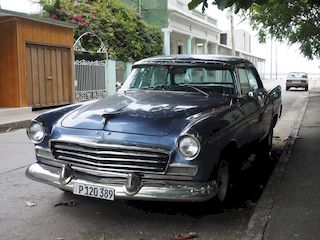
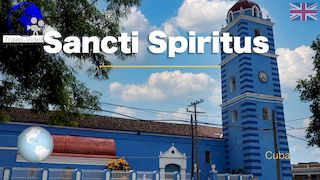
This video explores that atmosphere through street scenes, architecture and a few surviving classic cars that remain part of daily life.
Streets, buildings and urban rhythm
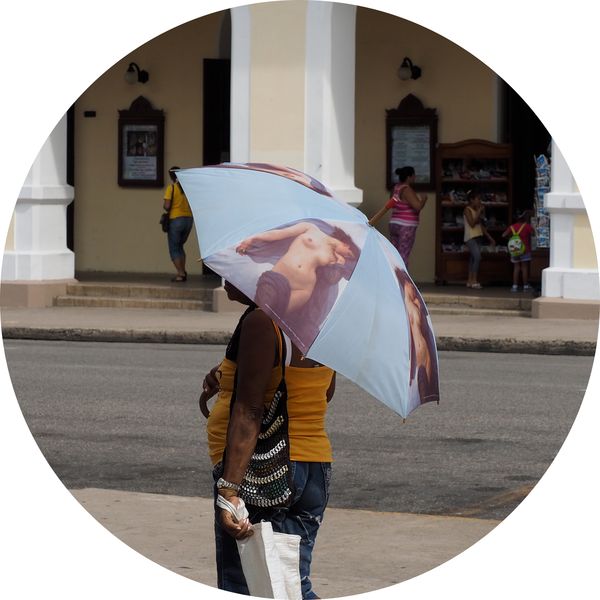
The sequences devoted to streets and buildings highlight one of Cienfuegos’ main strengths: visual coherence. Founded in the early nineteenth century, the city was laid out on a regular grid, creating long perspectives and balanced urban blocks. This structure makes the centre easy to read, whether on foot or through the camera lens.
The buildings visible along these streets reflect several architectural currents. Neoclassical influences appear in symmetrical façades, columns and restrained ornament. Later eclectic styles introduced balconies, decorative details and more expressive compositions. Arcaded walkways and shaded entrances respond both to climate and urban life.
Together, these elements create an environment where architecture is not isolated monument by monument, but experienced as a continuous streetscape. This quality played an important role in the recognition of the historic centre as a UNESCO World Heritage Site.
Classic cars and living urban memory
The older automobiles shown in the video are more than colourful details. Across Cuba, many mid-twentieth-century vehicles remained in use through decades of limited imports and local mechanical ingenuity. In Cienfuegos, they move through streets lined with nineteenth- and early twentieth-century architecture, creating an unusual continuity between different historical layers.
These cars have become part of the everyday visual identity of the country, yet they also reflect adaptation, maintenance culture and practical resilience. In a city like Cienfuegos, where urban harmony is especially visible, they add movement and human scale to the architectural setting.
Rather than functioning as museum objects, they remain integrated into ordinary life, which makes them particularly meaningful within the cityscape.
Historical development and maritime importance
Cienfuegos was founded in 1819 during the Spanish colonial period, with settlers including families of French origin who had moved through Louisiana and the Caribbean. The location was chosen for strategic and economic reasons: the bay offered excellent harbour conditions, while the surrounding region supported agriculture and trade.
The city prospered through sugar exports, commerce and maritime exchange. Economic growth financed civic buildings, theatres, warehouses, private residences and public spaces. Much of the centre still reflects this period of confidence and expansion.
During the twentieth century, Cienfuegos adapted to national political and economic changes, especially after the Cuban Revolution of 1959. Functions shifted, ownership patterns changed and public uses evolved, yet the essential urban framework remained intact.
Among the city’s notable landmarks is the Palacio de Valle, a later and highly distinctive building whose eclectic design contrasts with the more classical centre. Visitors interested in Cienfuegos’ architecture can explore it in greater detail through the related monument page.
What this site’s videos make especially clear
Cities are often better understood through sequences of views than through a single photograph. Videos built from carefully selected and animated still images allow the viewer to follow the logic of Cienfuegos gradually: street alignments, corner perspectives, façade rhythms and the relationship between open spaces and buildings.
This format is also well suited to architectural detail. Balconies, ironwork, mouldings, porticoes and window proportions can be observed more clearly when the image lingers or moves gently across a façade.
At the same time, the method helps connect architecture with atmosphere. The presence of vehicles, light, empty stretches of street or passing activity gives a more complete sense of how the city functions today.
A refined face of Cuba
Cienfuegos combines port history, elegant planning and a strong urban identity in one of Cuba’s most distinctive settings. It offers a perspective on the country shaped not only by monuments, but by the quality of an entire cityscape. For those wishing to continue the visit, the detailed pages linked to this video provide further insight into its remarkable heritage.
Links to related pages







Music:
- - YouTube video library - Ignosi, (© Ignosi by Kevin MacLeod is licensed under a Creative Commons Attribution 4.0 license. https://creativecommons.org/licenses/by/4.0/
- Source: http://incompetech.com/music/royalty-free/index.html?isrc=USUAN1100450
- Artist: http://incompetech.com/)
Disclaimer: Despite its appropriateness, copyright issues prevent the use of cuban traditional music in "Cienfuegos, the Pearl of the South • Cuba ", hence the use of royalty-free music. Despite our careful selection, some might regret this decision, which is necessary to avoid potential lawsuits. Although difficult, this decision is the only viable solution.
Audio Commentary Transcript
Cienfuegos is a city located on the southern coast of Cuba about 250 kilometers from Havana. The city has about 150,000 inhabitants. Since the 1960s, Cienfuego has become an important industrial hub, especially in the fields of energy and sugar. The city nickname is "The Pearl of the South". The city center is a UNESCO World Heritage Site for the quality of its historic buildings.