Français (France)
  Nederlands (nl-NL)
 00:00 • intro | 00:05 • Phonsavan Market | 00:55 • A market like any other... | 02:12 • ...yet not quite like the rest.
Personal creation from visual material collected during my trip Laos and Bangkok (2022)
Map of places or practices in Phonsavan on this site
• Use the markers to explore the content •
Phonsavan morning market, everyday practices and local traditions
A central place in daily life
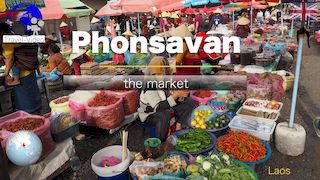
In the town of Phonsavan, the morning market is a key element of everyday life, where economic exchanges, food habits, and social interactions converge. More than a simple place of trade, it reflects the rhythms and organization of the surrounding rural region.
The video offers a focused immersion into this environment, capturing the activity that unfolds early in the day. Through a succession of scenes, it reveals how the market functions as both a practical space for supply and a social meeting point. This type of setting provides a direct insight into local ways of living, closely tied to the resources and traditions of the region.
A familiar structure with distinctive features
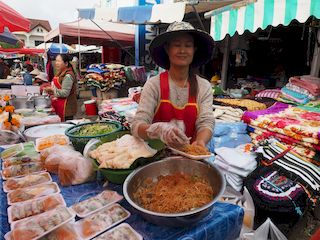
At first glance, the market of Phonsavan shares characteristics with many others across Southeast Asia. Stalls display fresh vegetables, herbs, fruits, and locally prepared products, arranged in a dense but functional layout. The organization appears intuitive, with sellers and buyers moving through narrow spaces shaped by habit rather than formal planning.
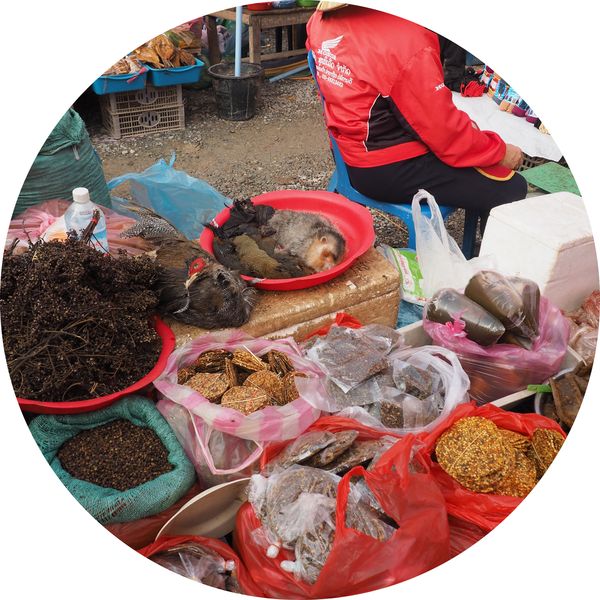
However, the video also highlights elements that distinguish this market from those more familiar to Western visitors. Among the products on display are foods that may seem unusual, including small rodents prepared for consumption. These offerings are part of established culinary traditions and reflect an approach to food based on available resources and longstanding practices.
This contrast between a recognizable market structure and unexpected products reinforces the idea that cultural differences are often expressed through everyday activities.
A market rooted in its environment
The functioning of the Phonsavan market is closely linked to its geographical and social context. The surrounding plateau region is characterized by agricultural production adapted to seasonal cycles. Many of the goods sold originate from nearby fields, forests, and villages, creating a direct connection between producers and consumers.
This proximity shapes the nature of exchanges. Transactions often occur within local networks, where familiarity and regular interaction play an important role. The market therefore operates not only as a place of commerce but also as a space where social ties are maintained and reinforced.
Food practices and cultural continuity
The diversity of products observed reflects a broader system of food practices in which the use of a wide range of natural resources is essential. Items that may appear uncommon from an external perspective, such as small animals, are integrated into local diets and culinary traditions.
These practices are linked to knowledge passed down over generations, involving methods of preparation, preservation, and consumption adapted to the environment. The market becomes a visible expression of this continuity, where traditional habits remain active within a contemporary setting.
Rather than being exceptional, these elements are part of a coherent system shaped by necessity, availability, and cultural transmission.
What the visual construction makes particularly clear
The video, built largely from carefully selected and animated photographs, allows for a precise observation of the market’s organization. Each sequence focuses on specific aspects, such as the arrangement of stalls, the variety of goods, or the gestures of vendors and customers.
This approach makes it easier to understand the spatial and functional logic of the market. The transitions between scenes guide the viewer through the environment in a structured way, revealing both the diversity and the coherence of the space.
By slowing down the visual rhythm, the video highlights details that might otherwise be overlooked, including textures, colors, and interactions. This method provides a clearer and more analytical reading of the market and its activities.
A revealing glimpse into local life
The morning market of Phonsavan offers a direct and concrete insight into local ways of life. Through its products, exchanges, and practices, it reflects a system deeply rooted in its environment and cultural context.
The video captures this complexity without isolating the market from its surroundings, showing it instead as an integral part of daily life. For a more detailed understanding, the related page dedicated to the market provides additional information on its specific features and traditions.
Links to related pages







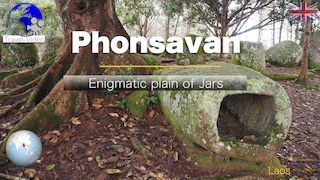



Audio Commentary Transcript
If there is one universal human activity that encompasses both culture and economy, it is the market. The market in Phonsavan, located in the heart of Xieng Khouang Province in Laos, exemplifies this tradition. The consumption of dishes such as insect larvae and field rats, although surprising to a Western eye, is rooted in food traditions that predated modern conflicts. These practices, enriched by historical trials such as the bombings during the Vietnam War, show how necessity often shaped and integrated survival food habits into local cuisine. Today, these foods are valued not only for their nutritional qualities but also for their role in local traditions and celebrations. This vibrant market thus reflects the resilience, cultural diversity, and culinary richness of the community.
This market features a variety of fresh products, including locally grown fruits and vegetables, often sold by the female farmers themselves. It also offers chili peppers, chicken, various types of meat, noodles, and a selection of prepared dishes, typical of local street food.
This market also reveals aspects less familiar to Western sensibilities, such as field rats, squirrels, toads, insect larvae, wild birds, and other animals that may seem hard to identify. Although surprising, these items are an integral part of the local culinary and cultural diversity.
Music:
- - YouTube video library - Darkest Child, (© Darkest Child by Kevin MacLeod is licensed under a Creative Commons Attribution 4.0 license. https://creativecommons.org/licenses/by/4.0/
- Source: http://incompetech.com/music/royalty-free/index.html?isrc=USUAN1100783
- Artist: http://incompetech.com/)
Disclaimer: Despite its appropriateness, copyright issues prevent the use of laotian traditional music in "Phonsavan, Morning Market & Traditions • Laos", hence the use of royalty-free music. Despite our careful selection, some might regret this decision, which is necessary to avoid potential lawsuits. Although difficult, this decision is the only viable solution.