Français (France)
  Nederlands (nl-NL)
 Phonsavan Market is an important commercial space located in the city of Phonsavan, the capital of Xieng Khouang Province in Laos. The market gathers traders, farmers, and small-scale vendors from surrounding villages who bring a wide range of goods for daily sale. Food products, vegetables, fruits, meat, spices, and household items form the core of the market’s activity. It plays a significant role in the local economy by facilitating the distribution of agricultural produce between rural areas and urban residents. The market also functions as a social meeting place where everyday interactions between vendors and customers illustrate the trading practices and consumption patterns typical of the region.

Phonsavan • the market of Phonsavan

Phonsavan • the market of Phonsavan
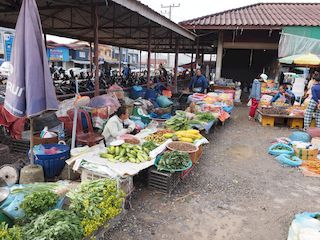
Phonsavan • the market of Phonsavan
Tradition profile
the market of Phonsavan
Tradition category: Local market
Tradition family: Traditional markets and fairs
Tradition genre: Trade and Local Creativity
Geographic location: Phonsavan • Laos
• Links to •
• List of videos about Phonsavan on this site •
Phonsavan, Mysterious Plain of Jars • Laos
Phonsavan, Morning Market & Traditions • Laos
History of the Tradition of Phonsavan Market
Political and Social Context of Emergence
The commercial tradition associated with Phonsavan Market developed within the broader economic and social landscape of the Xieng Khouang plateau in northeastern Laos. This highland region, characterized by scattered villages, upland agriculture, and diverse ethnic communities, has historically relied on local systems of exchange to connect rural producers with administrative and urban centers. In such a context, markets emerged as essential institutions for organizing the circulation of goods and for facilitating social interaction among communities.
Phonsavan, now the provincial capital of Xieng Khouang, gradually evolved as a focal point for regional activity. Its location within a plateau surrounded by agricultural settlements made it a natural meeting point for trade. Farmers from surrounding villages brought agricultural products such as rice, vegetables, herbs, and livestock to the town, while urban residents depended on these markets for food and daily necessities.
The establishment of a regular market responded to practical needs. Rural producers required accessible places where they could sell surplus crops, while urban populations needed reliable access to food supplies. In regions where transport infrastructure remained limited for long periods, central markets offered an efficient way to concentrate economic activity.
The emergence of markets in Phonsavan was also influenced by the presence of multiple ethnic groups, including Lao, Hmong, Khmu, and other communities living across the plateau. These groups maintained different agricultural practices and local economies, and markets served as shared spaces where their products, customs, and social networks intersected. As a result, the market became both an economic institution and a cultural meeting ground.
Major Historical Events Influencing the Tradition
The history of Phonsavan Market cannot be separated from the broader political history of Xieng Khouang Province, which experienced major upheavals during the twentieth century. During the French colonial period, Laos became part of French Indochina, and colonial authorities attempted to organize regional administration and commerce through the creation of administrative towns and market centers.
Markets such as the one in Phonsavan were encouraged because they facilitated economic regulation and taxation while also helping integrate rural production into broader colonial economic systems. Agricultural goods, forest products, and livestock were traded locally and sometimes transported to other parts of the colonial territory.
However, the region experienced profound disruptions during the conflicts that affected Indochina in the mid-twentieth century. Xieng Khouang became one of the most heavily bombed areas during the conflicts associated with the Vietnam War. Villages were displaced, agricultural activity was disrupted, and many traditional commercial networks were interrupted.
Following the establishment of the Lao People’s Democratic Republic in 1975, reconstruction efforts gradually restored economic life in the region. Phonsavan was developed as the new administrative center of the province, replacing older settlements that had been severely damaged. In this context, the local market re-emerged as a crucial institution for supporting daily life and rebuilding economic connections between rural communities and the urban center.
Over time, the market became an important hub where agricultural production, small-scale trade, and regional distribution intersected. Although its structure evolved, the basic function of connecting producers with consumers remained unchanged.
Global Context at the Time of Emergence
The development of markets in the Xieng Khouang region reflects a broader pattern observed in agricultural societies across the world. In many traditional economies, markets served as fundamental mechanisms for linking rural production to urban demand. These systems appeared in various forms across continents.
In medieval Europe, periodic markets and fairs played a similar role in organizing trade between rural farmers and growing towns. In the Middle East, urban bazaars functioned as complex commercial systems linking local trade with long-distance commerce. Across South and Southeast Asia, markets developed along trade routes, river systems, and administrative centers.
The emergence of markets in the highlands of Laos corresponds to this global phenomenon. In areas where agriculture was dispersed and transportation limited, centralized trading points allowed communities to exchange goods, share information, and maintain economic stability. Markets thus served both economic and social purposes, reinforcing the cohesion of regional networks.
Transformations of the Tradition
Over time, the Phonsavan Market tradition has undergone several transformations in response to economic, political, and social change. The gradual improvement of road infrastructure in Laos has allowed goods to move more easily between provinces, increasing the diversity of products available in the market.
Where once the market consisted primarily of agricultural goods produced within the immediate region, it now includes items transported from other parts of the country. Manufactured goods, packaged foods, and imported products have become increasingly visible alongside traditional produce.
Tourism has also influenced the market environment. The Xieng Khouang plateau is internationally known for archaeological sites such as the Plain of Jars, which attract visitors from around the world. Travelers often visit local markets to observe daily life and regional food culture. While the primary function of the market remains local commerce, some vendors have adapted their offerings to include items appealing to visitors.
Despite these changes, many traditional aspects of the market remain intact. Direct interaction between farmers and consumers continues to shape the economic character of the marketplace.
Role of the Tradition in Contemporary Society
Today, Phonsavan Market plays an important role in the daily life of the city and surrounding villages. It functions as the main location where residents purchase fresh produce, meat, fish, herbs, and other household goods. Farmers from nearby rural communities depend on the market to sell their harvests and maintain their livelihoods.
The market also serves as a social gathering place where residents meet, exchange news, and maintain relationships. In regions where villages are widely distributed across mountainous terrain, such meeting points are particularly important for maintaining social cohesion.
Cultural traditions are reflected in the types of food and agricultural products sold in the market. Local dishes, herbs, and preparation methods illustrate the culinary heritage of the different ethnic groups living in the region.
Current Preservation and Modern Challenges
Like many traditional markets throughout Southeast Asia, Phonsavan Market faces challenges related to modernization and economic change. The gradual expansion of urban infrastructure and the emergence of modern retail stores may alter consumption patterns over time.
Globalization has also introduced new products and distribution systems that sometimes compete with traditional marketplaces. However, markets such as Phonsavan continue to offer advantages that modern retail environments cannot easily replicate. These include the availability of fresh locally grown products, flexible pricing, and direct relationships between producers and consumers.
Although the market does not hold formal international heritage recognition, it represents an important example of living economic and cultural tradition within the province of Xieng Khouang. Local authorities and communities recognize its importance for sustaining regional livelihoods and preserving everyday cultural practices.
The long-term survival of the Phonsavan Market tradition will depend on the ability of local communities to maintain these commercial practices while adapting to changing economic conditions. Through its daily activity and social role, the market remains an essential component of the region’s cultural and economic identity.
Characteristics of the Tradition of Phonsavan Market
Origins and Context of Emergence
The tradition associated with the Phonsavan Market developed within the agricultural and social environment of the Xieng Khouang plateau in northeastern Laos. This highland region is characterized by scattered rural settlements, diverse ethnic communities, and a predominantly agrarian economy. In such landscapes, where villages are often separated by considerable distances, markets historically played a crucial role in organizing economic exchange and social interaction.
Phonsavan gradually emerged as the administrative and commercial center of Xieng Khouang Province. Its position within a plateau surrounded by agricultural villages made it a natural location for regional exchange. Farmers from surrounding settlements brought agricultural products to the town, creating a system of regular commerce that allowed rural producers and urban consumers to interact.
The initial function of the market was practical and economic. It provided a structured space where agricultural goods could be exchanged, sold, or redistributed. In societies where subsistence farming dominated local economies, markets allowed farmers to convert surplus production into income or to exchange goods that were unavailable in their own communities.
The emergence of the market tradition in Phonsavan was also influenced by the coexistence of several ethnic groups, including Lao, Hmong, Khmu, and others living across the plateau. These communities practiced different forms of agriculture and maintained distinct cultural traditions. Markets therefore became shared spaces where economic activity intersected with broader patterns of social and cultural interaction.
Constituent Elements and Practices
The daily functioning of the Phonsavan Market follows rhythms closely tied to rural life and agricultural production. Commercial activity typically begins early in the morning when vendors arrive from surrounding villages. Goods are transported by motorbike, small vehicles, or traditional means, depending on the distance from rural settlements.
Merchants organize their stalls using simple structures such as tables, mats, baskets, or temporary stands. Products are usually grouped according to type, creating sections for vegetables, fruits, herbs, meats, fish, spices, and prepared foods. The arrangement of goods is intended to make products visible and accessible to customers.
The practices associated with selling and purchasing goods involve a series of gestures and interactions common to many traditional markets in Southeast Asia. Vendors arrange their products carefully, sometimes stacking or displaying them in ways that emphasize freshness and abundance. Buyers inspect goods closely, often discussing quality and price before making a purchase.
Negotiation is an integral part of these exchanges. Prices are frequently discussed through informal bargaining, a practice that reflects both economic calculation and social interaction. These negotiations often occur in a conversational tone and may include friendly exchanges between regular customers and familiar vendors.
The roles within the market are distributed among various participants. Farmers bring agricultural produce directly from their fields, while permanent vendors maintain stalls that operate daily. Women frequently occupy central roles in market commerce, managing sales, preparing food, or coordinating family businesses.
Knowledge related to market activity is typically transmitted informally within families. Skills such as selecting produce, organizing a stall, interacting with customers, and managing prices are learned through observation and participation. Children often accompany their parents to the market, gradually acquiring the knowledge required to participate in commercial life.
Symbolism and Cultural Significance
Beyond its economic function, the Phonsavan Market carries symbolic meanings linked to community life and agricultural cycles. Traditional markets often reflect the relationship between land, food production, and social organization.
The visual diversity of products displayed across the market illustrates the agricultural richness of the surrounding plateau. Bright vegetables, seasonal fruits, aromatic herbs, and spices create a distinctive environment that reflects the productivity of local farming systems.
Social interactions within the market also carry cultural significance. Conversations between vendors and customers often extend beyond commercial transactions, including discussions about harvests, family matters, and local developments. These exchanges contribute to the market’s role as a space where community relationships are maintained.
Ethnic diversity is visible in various aspects of the market environment. Clothing styles worn by some vendors, the preparation of traditional dishes, and the types of ingredients offered for sale can reflect the cultural identities of different communities living in the region.
Evolution and External Influences
Over time, the Phonsavan Market tradition has adapted to broader economic and social changes in Laos. Improvements in road networks and transportation infrastructure have expanded the range of products available. Goods originating from other provinces or neighboring countries can now reach the market more easily.
Economic reforms implemented in Laos during the late twentieth century encouraged greater market activity and trade. These reforms increased the circulation of manufactured goods, packaged foods, and imported products alongside traditional agricultural items.
Tourism has also influenced the market environment. The Xieng Khouang plateau attracts visitors interested in historical and archaeological sites such as the Plain of Jars. Tourists often visit local markets to observe daily life and explore regional cuisine. Although the primary function of the market remains local commerce, the presence of visitors has encouraged some vendors to diversify their offerings.
Markets similar to the one in Phonsavan exist throughout Southeast Asia. In countries such as Thailand, Vietnam, and Cambodia, traditional markets perform comparable roles in linking rural production with urban consumption. These similarities illustrate the broader regional importance of marketplaces as social and economic institutions.
Social Organization and Community Impact
The Phonsavan Market contributes significantly to the organization of social and economic life in the region. It connects rural villages with the urban center, allowing agricultural producers to participate in the broader economy.
The market also facilitates the circulation of information. Residents often meet there to exchange news, discuss agricultural conditions, or share updates about community events. In mountainous regions where villages may be widely separated, these encounters strengthen social networks.
Economic opportunities generated by the market support many households. Selling agricultural produce, prepared foods, or handmade goods allows families to supplement their income and sustain local livelihoods.
During certain periods of the year, particularly around local festivals or community celebrations, market activity may increase. These occasions reinforce the link between commercial activity and the cultural life of the community.
Statistics, Anecdotes, and Notable Narratives
Although detailed statistical records are not always available for traditional markets, the scale of activity at the Phonsavan Market can be observed through daily participation. Dozens of vendors and numerous customers visit the market each day, particularly during morning hours when fresh produce is most abundant.
Local narratives often refer to long-standing family stalls that have operated for many years. These family businesses illustrate the continuity of commercial traditions across generations.
Experienced vendors are often recognized for their knowledge of seasonal products and their ability to guide customers in selecting ingredients. Their reputation contributes to the stability and reliability of the market environment.
Recognition and Preservation Challenges
Today the Phonsavan Market remains a vital element of the city’s economic and cultural landscape. It continues to provide fresh agricultural products and to support local trade networks connecting rural communities to the urban center.
However, traditional markets increasingly face challenges associated with modernization and urban development. The expansion of supermarkets, convenience stores, and modern retail infrastructure may gradually influence consumer behavior.
Despite these changes, traditional markets retain important advantages. They allow direct interaction between producers and consumers, offer locally grown products, and maintain flexible pricing systems that benefit both vendors and buyers.
Although the Phonsavan Market does not currently hold international heritage status, it represents a significant example of living cultural practice within Xieng Khouang Province. Local communities recognize its importance not only as an economic institution but also as a social space where traditions of exchange, communication, and cooperation continue to shape daily life.
The long-term preservation of this tradition will depend on balancing economic modernization with the maintenance of local commercial practices that have historically sustained community life in the region.
 Links to the main sections of the site